Silfab furloughs workers at South Carolina solar plant, citing material supply constraints
Key Takeaways
- •Silfab attributed the Fort Mill furloughs to temporary constraints on the availability of certain materials required for production and expects the situation to be resolved within three to four weeks.
- •The Fort Mill site had already temporarily idled production earlier this month for the same material-availability reasons, with workers performing maintenance and other tasks in the meantime.
- •Silfab, which is headquartered in Canada, established its South Carolina manufacturing base in 2023 amid a wave of U.S. solar factory announcements encouraged by federal incentives such as the Inflation Reduction Act's Section 45X tax credit.
- •New antidumping and countervailing duty investigations have caused the supply of solar cells entering the United States to fluctuate, and recently announced polysilicon tariffs will affect the pricing of all solar panels manufactured domestically.
- •Heliene, another Canadian-headquartered solar panel company operating in the United States, laid off nearly 100 workers at its Minnesota plant earlier this month, citing unforeseen business circumstances.
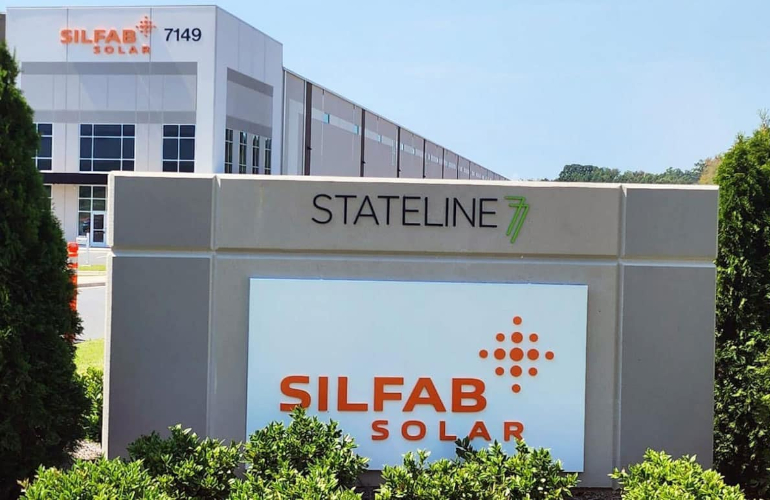
Solar panel manufacturer Silfab has furloughed workers at its cell and panel manufacturing facility in Fort Mill, South Carolina, according to local news organizations.
In a statement to WCNC Charlotte, a Silfab Solar spokesperson attributed the furlough to “temporary constraints affecting the availability of certain materials required for production.” The company temporarily idled production at the Fort Mill site earlier this month for the same reasons, with workers performing maintenance and other tasks in the meantime. Silfab now expects the furlough period to be resolved within three to four weeks. The company did not disclose how many workers were affected this week.
Silfab Solar is a Canadian-headquartered solar panel brand. It established its manufacturing base in South Carolina in 2023 — joining a wave of U.S. solar factory announcements encouraged by federal incentives such as the Inflation Reduction Act’s Section 45X advanced manufacturing production tax credit — and also operates a panel assembly plant in Burlington, Washington. Fort Mill is located in York County, just south of the North Carolina border and the Charlotte metropolitan area, where WCNC is based.
Cell manufacturing is a more specialized process than panel assembly: solar cells are the individual photovoltaic units that convert sunlight into electricity, while panel assembly packages those cells into finished modules. The inputs feeding cell production are also concentrated overseas: domestic wafer capacity — wafers being the silicon slices on which cells are fabricated — remains minimal in the United States, leaving U.S. cell makers reliant on imported material. Silfab has received pushback for siting cell manufacturing in the Fort Mill community, but the company has continued to seek approval from the South Carolina Dept. of Environmental Services and York County officials.
Silfab is not the only domestic solar manufacturer under pressure. Heliene, another Canadian-headquartered solar panel company operating in the United States, laid off nearly 100 workers at its Minnesota plant earlier this month, citing “unforeseen business circumstances.”
The broader U.S. solar industry is navigating multiple tariff investigations and supply chain constraints that appear to already be affecting domestic players. The launch of new antidumping/countervailing duty (AD/CVD) investigations into more countries has caused the supply of solar cells entering the United States to fluctuate. That matters for domestic producers because much of the U.S. industry has historically assembled modules from cells made abroad, leaving it exposed to swings in imported supply. AD/CVD measures are trade remedies typically applied to imports determined to be sold below fair value or subsidized by foreign governments. In addition, recently announced tariffs on polysilicon products — polysilicon being the key raw material from which solar cells are made — will affect the pricing of all solar panel products manufactured domestically.
