Heidelberg's Willem Vermaat: Transparency, Not AI, Is Shipping's Real Game-Changer
Key Takeaways
- •Willem Vermaat will join the Chartering Spotlight panel at Splash Singapore on September 24 alongside speakers from Vale, South32, and Western Bulk.
- •Vermaat contends that AI is most powerful in analyzing past data but falls short when charterers must make forward-looking decisions under uncertainty.
- •Geopolitical disruptions in the Red Sea, Strait of Hormuz, and Black Sea continue to reshape trade flows and freight pricing, making human experience critical in chartering.
- •Information in the dry bulk sector is deliberately withheld for commercial advantage, which limits the completeness of data fed into digital platforms.
- •Vermaat characterizes chartering as a blend of calculable science and intuitive art, with trust between counterparties being foundational to achieving genuine transparency.
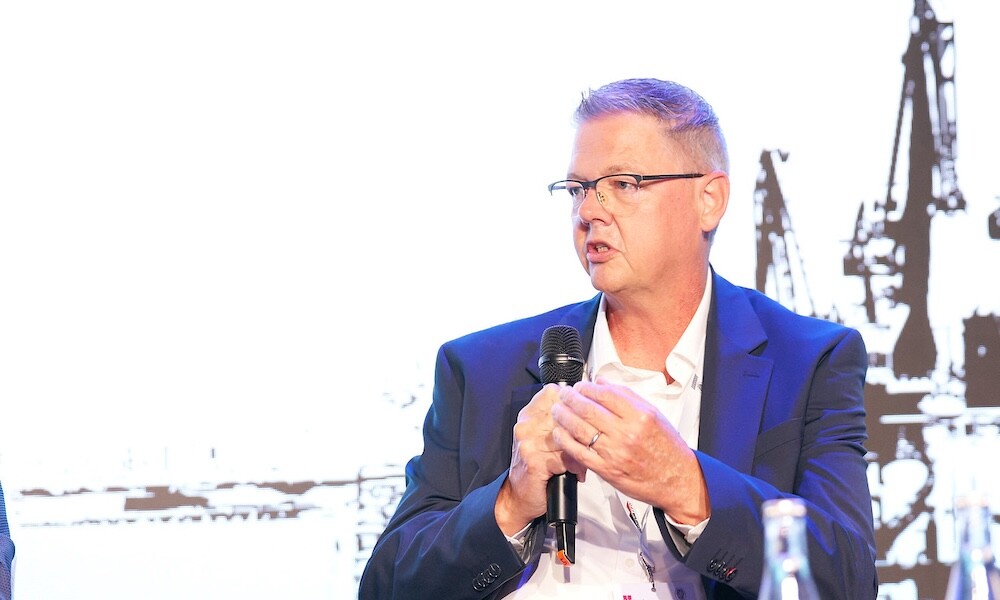
Willem Vermaat, shipping director at Heidelberg Materials Trading — the trading arm of one of the world's largest building materials companies — will make the case at next month's Splash Singapore that improved technology stands to make the shipping industry far more transparent — but that the most difficult chartering decisions will ultimately continue to rest on human judgement.
Speaking ahead of the Chartering Spotlight panel at Splash Singapore, scheduled for September 24 at the Fairmont Hotel, Vermaat argues that greater transparency, rather than artificial intelligence per se, may well prove to be the most consequential technological shift for shipping in the coming year.
Enhanced visibility into vessel performance, emissions, market dynamics, and freight economics has genuine potential to reshape how chartering decisions are approached, he believes. His perspective carries weight not only because Heidelberg Materials moves enormous volumes of cargo globally, but because the broader dry bulk and tanker sectors have seen a rapid proliferation of digital platforms — from companies such as ZeroNorth, Klaveness Digital, and Veson Nautical, all represented at the conference — promising to bring AI-driven analytics to voyage optimization and fleet performance. Yet the technology carries a fundamental limitation: it is most powerful exactly where charterers need it least — in hindsight.
"AI is, at its core, a very sophisticated rear-view mirror," Vermaat tells Splash. It can process market movements, fixtures, vessel positions, and historical correlations faster and more accurately than any human analyst. The difficulty, he notes, is that charterers must make decisions looking forward, not backward.
"You are not fixing a ship for last week," he says. "You are fixing it for a stem loading a month from now."
That distinction grows only more critical as supply chain disruption becomes routine. Vermaat anticipates that geopolitics will be a dominant theme at the Chartering Spotlight session in Singapore, citing the Red Sea, the Strait of Hormuz, and the Black Sea — along with weather-related upheaval — as recurring forces that reshape trade flows and freight pricing.
The open question, he suggests, is whether AI genuinely equips charterers to navigate that uncertainty or merely delivers more information at greater speed when markets stop behaving as predicted.
"All the data can point one way and the market goes the other," he says.
This is precisely where Vermaat sees lasting value in the human element. When cargo flows are rerouted in real time, experience, resilience, and the instinct for knowing when to act or hold back can outweigh sheer processing power.
"The algorithm looks away at exactly the moment the charterer earns their keep," he says.
Beyond the limitations of AI's predictive capacity lies a deeper challenge for the industry's data-driven ambitions: the quality of the information being fed into the systems. Vermaat points out that dry bulk remains a business in which information is deliberately guarded because it carries direct commercial value. ETAs are padded with buffers, berth productivity figures can be closely held, and cargo readiness is not always disclosed promptly.
"I do it too," he acknowledges.
Technology may therefore be operating on a cleaner picture than in the past, but not necessarily a complete one. "Better, more honest data sharing would improve the science end of the equation," he says.
Achieving that, however, demands trust between counterparties — something no algorithm can produce.
"Transparency requires trust, and trust is earned slowly and lost quickly," Vermaat says. "That's a people problem."
He frames chartering as a blend of science and art. The scientific dimension — cargo intake, voyage economics, bunker consumption, emissions, routing, and vessel performance — has always been calculable, and digital tools are increasingly able to perform that analysis faster and more precisely. The art lies in deciding what happens next.
At Splash Singapore, Vermaat says his primary interest is in encountering perspectives that challenge his own.
"The best discussions are the ones that make you rethink your views," he says. For him, a worthwhile conference moves beyond familiar talking points and confronts what is genuinely unfolding in the market.
And in chartering today, that means grasping both what technology can illuminate — and what transpires in the moments it cannot.
Vermaat joins this year's Chartering Spotlight panel alongside speakers from companies including Vale, South32, and Western Bulk.
Companies confirmed to attend Splash Singapore include: Aderco, AET, Alfa Laval, Al Seer Marine, Ambica Logistics, Anglo American, Anglo-Eastern Univan Group, Anline Shipping, AXSMarine, Baltic Exchange, Borealis Maritime, BPG Shipping, BW Group, Cetus Maritime, Complexio, Direct Search Global, Dualog, Erasmus Shipinvest Group, Faststream Recruitment Group, Fednav, Fleet Management, G2 Ocean, GlobalOre, Global Risk Management, Heidelberg Materials Trading, Idwal, Inmarsat, Inter-Asia Marine Transport, Intercargo, ISEACO, Klaveness Digital, Kpler, Liberian Registry, Lloyd's Register, M3 Marine, Mandarin Shipping, Manta Marine Technologies, Marcura, MarinePALS, Merchant Prospect, Mitsui OSK Lines, MOL Chemical Tankers, Norden, Nura International Shipping, Nura Shipco Management, OS Maritime Consultants, Pacific Basin Shipping, Paratus, Performance Shipping, Petro Inspect Asia, RightShip, Rio Tinto, Royal Ocean Marine Enterprise, Seanergy Maritime Holdings, Sedna, Singapore Maritime Foundation, SGX Commodities, ShipMoney, South32, Splash Maritime Group, Stamford Ship Management, Sturrock Grindrod Maritime, Suisse-Atlantique Group, Swire Shipping, Syroco, The Captain's Table, Tiger Group Investments, TMV, Tokei Kaiun, Tribini Capital, UNISEA, United Maritime Corporation, Vale, Veritas Petroleum Services, Veson Nautical, Viasat, Western Bulk, Wilhelmsen Group, Wirana Shipping Corporation, and ZeroNorth.
The full Splash Singapore agenda is available at splashsingapore.com/agenda. Registration, priced at S$750, can be completed at splashsingapore.com/book. Special hotel room rates for Splash Singapore attendees can be found at splashsingapore.com/venue.
