Shinhan Card and SBI to Pilot Yen Stablecoin Payments for Japan-Korea Travelers
Key Takeaways
- •Shinhan Card and SBI plan an early-stage pilot of a yen-peggedcoin for payments by travelers between Japan and South Korea, which is a trial rather than a finished consumer product.
- •The token would be pegged one-to-one to the Japanese yen, a comparatively rare design since the vast majority of stablecoins in circulation are pegged to the US dollar.
- •Shinhan Asset Management has already tested a won-denominated tokenized fund on Solana, and SBI VC Trade was the first company approved under Japan's stablecoin regime to distribute a foreign-issued stablecoin, Circle's USDC.
- •Key details remain unconfirmed, including the pilot timeline, the blockchain network the stablecoin would run on, how travelers would load and spend funds, and which merchants would accept it.
- •Any commercial rollout would require satisfying regulatory requirements in both Japan and South Korea, with stablecoin provisions currently under discussion in South Korea's National Assembly as part of broader digital asset legislation.
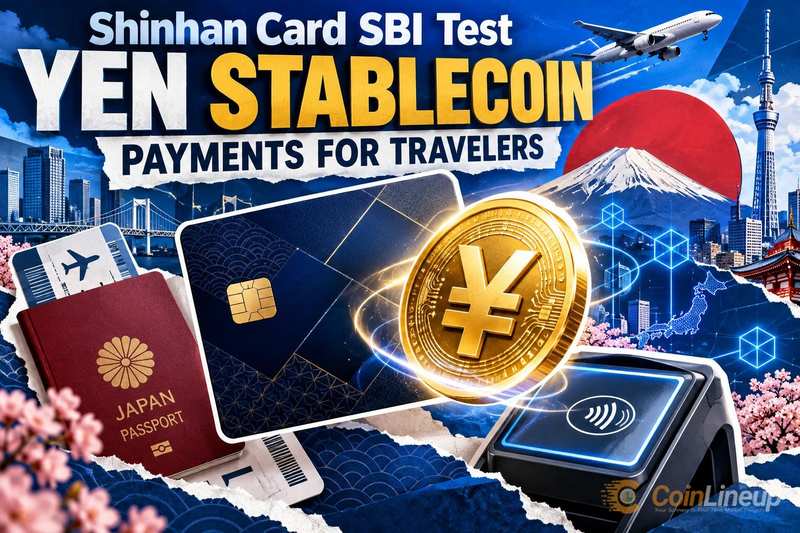
Shinhan Card, one of South Korea's largest credit card companies, and SBI, the Japanese financial group, are planning to pilot yen stablecoin payments designed for travelers moving between Japan and South Korea. The initiative is not a full product launch; it is an early-stage trial to determine whether a digital yen-pegged token can simplify how tourists spend money abroad.
A stablecoin is a type of cryptocurrency whose value is tied to a real-world currency. In this case, the token would be pegged to the Japanese yen, meaning one stablecoin would always equal one yen. That stability is what makes stablecoins more practical for everyday spending than volatile cryptocurrencies such as Bitcoin. Stablecoins are typically issued and transferred on blockchain networks, a feature that has made them a focus of payment experiments worldwide. The overwhelming majority of stablecoins in circulation are pegged to the US dollar, which makes a yen-denominated effort like this one a comparatively rare case.
Shinhan Card is part of the broader Shinhan Financial Group, which has shown consistent interest in blockchain-based finance. Shinhan Asset Management, for example, has already tested a won-denominated tokenized fund on the Solana blockchain, signaling that the group is actively exploring digital asset infrastructure across its subsidiaries.
SBI brings its own track record to the partnership. Its crypto unit, SBI VC Trade, became the first company approved under Japan's stablecoin regime to handle a foreign-issued stablecoin, distributing Circle's USDC. That regime was created through amendments to Japan's Payment Services Act that took effect in 2023, which treat stablecoins as regulated electronic payment instruments and restrict issuance to licensed entities such as banks and trust companies.
Why Yen Stablecoin Payments Could Matter for Japan-Korea Travelers
Paying abroad usually involves currency conversion fees, delays, and sometimes unfavorable exchange rates. A yen stablecoin could potentially let travelers spend directly in yen without going through traditional foreign exchange channels.
The Japan-Korea corridor is one of the busiest short-haul travel routes in Asia. Korean tourists are among the top visitor groups to Japan, and Japanese travelers frequently visit South Korea. A payment tool built specifically for this corridor could reduce friction for millions of trips each year.
The key word in the announcement is "test." The pilot is meant to explore whether the technology works at a practical level, not to guarantee a finished consumer product. Details about which merchants would accept the stablecoin, what fees might apply, and how travelers would load and spend funds have not been confirmed.
Stablecoin payments in the travel sector are not an entirely new concept. Other financial institutions have explored similar ideas around cross-border settlements, and the broader stablecoin banking space has drawn significant institutional attention as regulators in several countries work to establish clearer frameworks for digital currency use. South Korea is among them, with stablecoin provisions folded into broader digital asset legislation now under discussion in its National Assembly.
What Still Needs to Be Answered
Before the Shinhan Card and SBI pilot can be judged on its merits, several questions remain open. The timeline for the test has not been publicly confirmed, nor has the technical network the stablecoin would run on been disclosed, which matters because different blockchains carry different speeds, costs, and regulatory considerations.
It is also unclear how travelers would access the stablecoin. Would it be loaded onto an existing Shinhan Card product, or would SBI customers need a separate wallet app? These practical details will determine whether the product is genuinely convenient or just a proof of concept that never reaches regular users.
Regulatory approval is another open question. Japan and South Korea both have active frameworks for digital asset oversight, and any commercial stablecoin payment product would need to satisfy requirements in both jurisdictions before a real-world rollout.
For now, the announcement signals that two established financial institutions believe yen stablecoin payments are worth testing in a real travel context. Whether the pilot produces a usable product will depend on the results of that test and the regulatory path that follows.
For travelers between Japan and South Korea, the practical takeaway is simple: this is not something they can use today. But if the pilot moves forward and regulatory hurdles are cleared, it could eventually offer a cheaper, faster way to spend money abroad without relying entirely on traditional card networks and currency exchange desks.
Source: CoinLineup
Disclaimer: This article is for informational purposes only and does not constitute financial or investment advice. Cryptocurrency and digital asset markets carry significant risk. Always do your own research before making decisions.

