Shiba Inu (SHIB) Logs 351% Activity Spike in Eight Hours as Volatility Climbs
Key Takeaways
- •A short-term activity metric for SHIB jumped 351% within an eight-hour window, occurring immediately after the token was rejected from levels above $0.00000620.
- •SHIB fell 7.69% on September 23 after touching $0.00000624, then rebounded 2.3% the following day and currently trades near $0.00000589.
- •The token has crossed above its 200-day moving average near $0.0000056 and held that zone on a retest, positioning the level to potentially convert into support.
- •The Relative Strength Index sits in neutral territory, reading neither overbought nor oversold, while volatility is classified as high, leaving room for movement in either direction.
- •A persistent move above $0.0000060 would put $0.0000062–$0.0000063 back in focus, whereas failing to defend the 200-day average could send SHIB toward support at $0.0000054 and the moving-average cluster around $0.0000051–$0.0000052.
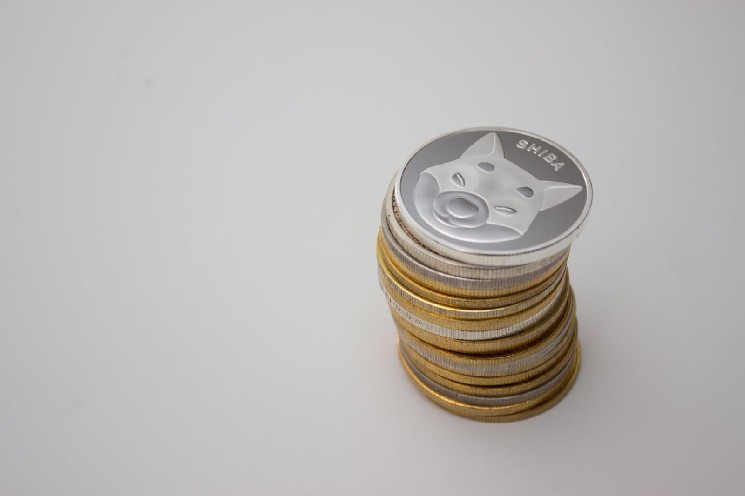
Shiba Inu (SHIB) Logs 351% Activity Spike in Eight Hours as Volatility Climbs
A short-term activity metric for Shiba Inu (SHIB) jumped 351% within an eight-hour window, signaling the start of another stretch of extreme volatility. The surge carries added weight because it came immediately after $SHIB was forcefully rejected from levels above $0.00000620. Spikes of this magnitude are typically read as a sign that market participation is accelerating sharply, a development that carries extra resonance for SHIB, one of the crypto market's best-known meme tokens and a name long associated with outsized short-term price swings.
Price stabilizes above a key long-term average
Following a recent slide toward $0.00000555, $SHIB is currently changing hands near $0.00000589. The token fell 7.69% on September 23 after touching $0.00000624, then rebounded 2.3% the following day. Trading activity also remains above the levels recorded in earlier September sessions.
The most consequential technical development concerns the 200-day moving average — one of the most widely followed long-term trend gauges in technical analysis, and a line traders routinely use to separate durable recoveries from short-lived relief moves. After spending months beneath the long-term indicator near $0.0000056, $SHIB has finally crossed above it. More notably, the most recent pullback retested essentially the same zone without producing a sustained breakdown — a behavior that creates a potential conversion of the level into support. For an asset that spent months on the wrong side of that gauge, reclaiming it and then holding it through a retest is the sequence technicians typically look for when a former ceiling begins turning into a floor. As long as the token holds above $0.0000056–$0.0000057, the September recovery structure remains intact.
Momentum improves but remains unsettled
Momentum, however, is far from stable. The Relative Strength Index (RSI) — a momentum gauge whose most extreme readings flag overbought or oversold conditions — sits in neutral territory rather than confirming an overheated market, meaning the token currently reads as neither overbought nor oversold. Current technical readings classify volatility as high. That combination leaves considerable room for movement in either direction.
For bulls, $0.0000060 stands as the first barrier. A persistent move above it would put $0.0000062–$0.0000063 back in focus, and clearing the recent high would establish a higher high above the August spike.
The downside case hinges on the 200-day average. If that level were not defended, conditions would shift rapidly, with $SHIB then encountering support at $0.0000054 and at the moving-average cluster around $0.0000051–$0.0000052.
The 351% intraday activity spike therefore arrives at a sensitivecture. Although $SHIB's structure has improved, the market has yet to establish a stable direction, as the sharp short-term fluctuations make clear. What to watch from here is whether the elevated activity persists beyond the initial eight-hour burst, and whether RSI shifts out of neutral as price works through the levels on either side of its range.

