National Sheriffs' Association Shifts to Neutral on the CLARITY Act
Key Takeaways
- •The National Sheriffs' Association informed the Senate Banking Committee that it has moved from opposing the CLARITY Act (H.R. 3633) to a neutral position.
- •The CLARITY Act aims to clarify U.S. crypto market structure, including which regulator oversees digital assets and how tokens are classified.
- •The bill passed the House in 2025 with bipartisan support and now awaits action in the Senate, with a key step scheduled for September 15.
- •The sheriffs' neutral stance removes one obstacle to the bill but does not guarantee its passage in the Senate.
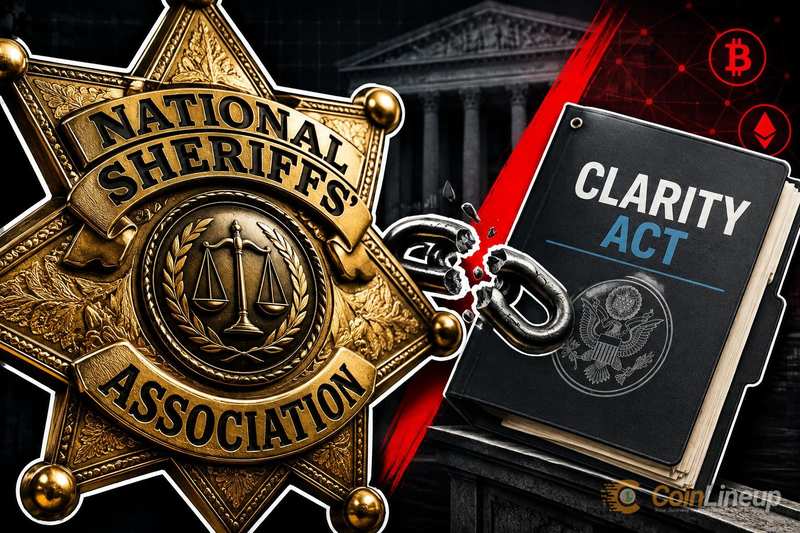
The National Sheriffs' Association has dropped its opposition to the CLARITY Act, a cryptocurrency market-structure bill moving through Congress. In a letter to the Senate Banking Committee, the law enforcement group stated it no longer stands against the measure — a shift that removes one obstacle from the bill's path.
What changed in the association's position
The National Sheriffs' Association is a national organization representing county sheriffs across the United States. In its letter to the Senate Banking Committee regarding the CLARITY Act, formally designated H.R. 3633, the group stepped back from its earlier opposition to the bill.
The association moved from opposing the legislation to a neutral position, CoinDesk reported. In practical terms, the sheriffs are no longer fighting the measure, though they are not endorsing it either.
The key developments:
- The National Sheriffs' Association no longer opposes the CLARITY Act.
- The group informed the Senate Banking Committee that it now holds a neutral stance.
- The change removes one source of law enforcement pushback as the bill advances.
Why the CLARITY Act matters to crypto policy
The CLARITY Act aims to establish clearer rules for how cryptocurrencies are regulated in the United States and sits at the center of the current congressional debate over crypto market structure. At the core of that debate is the question of which regulator oversees which digital assets — the Securities and Exchange Commission, the Commodity Futures Trading Commission, or some combination — and how tokens are classified between securities and commodities. The bill passed the House in 2025 with bipartisan support, leaving the Senate as its remaining hurdle.
Stakeholder positions can influence how lawmakers perceive a bill. When a law enforcement group opposes crypto legislation, that objection gives skeptical lawmakers a reason to hesitate; removing it can ease some of the friction surrounding the measure.
Timing is also significant. The bill faces a key Senate step on September 15, so a shift in stakeholder positions at this stage can affect how the measure is received.
What the policy shift could mean next
A neutral stance from the sheriffs does not guarantee the bill passes. It simply means one prominent law enforcement voice is no longer campaigning against it, as Semafor noted in describing the group's reversal.
For crypto policy observers, the move is a signal worth watching. Law enforcement concerns often center on how digital assets can be misused, so a group standing down can change the public narrative around a bill.
What this means in practice remains unclear. The letter reflects one organization's view, and the bill's final outcome will depend on the votes and negotiations ahead. The broader debate over U.S. crypto rules — from ETF flows to enforcement actions — continues to unfold across markets and Washington alike.
For everyday holders or those considering a first purchase, the practical takeaway is this: it is a step in a long legislative process, not a finished law. Clearer rules could eventually make the market safer for ordinary holders, but nothing changes for your wallet today.
