Jongno District Launches 'Gardener Village 2.0,' Expanding Community Gardens Across Central Seoul
Key Takeaways
- •Jongno District is expanding its public urban gardening initiative into a district-wide network of resident-tended micro-gardens.
- •The program began last year as a public-private partnership involving local nongovernmental groups and corporate sponsors.
- •The first phase focused on Bukchon, Seochon, Sajik-dong, and the Cheongjin-Insa-dong corridor.
- •A Gardener Training Course will run from September to November 2026, with applications accepted through late August.
- •Cheongjin Park will be upgraded with high-fidelity acoustics to support music-themed garden events and outdoor leisure activities.
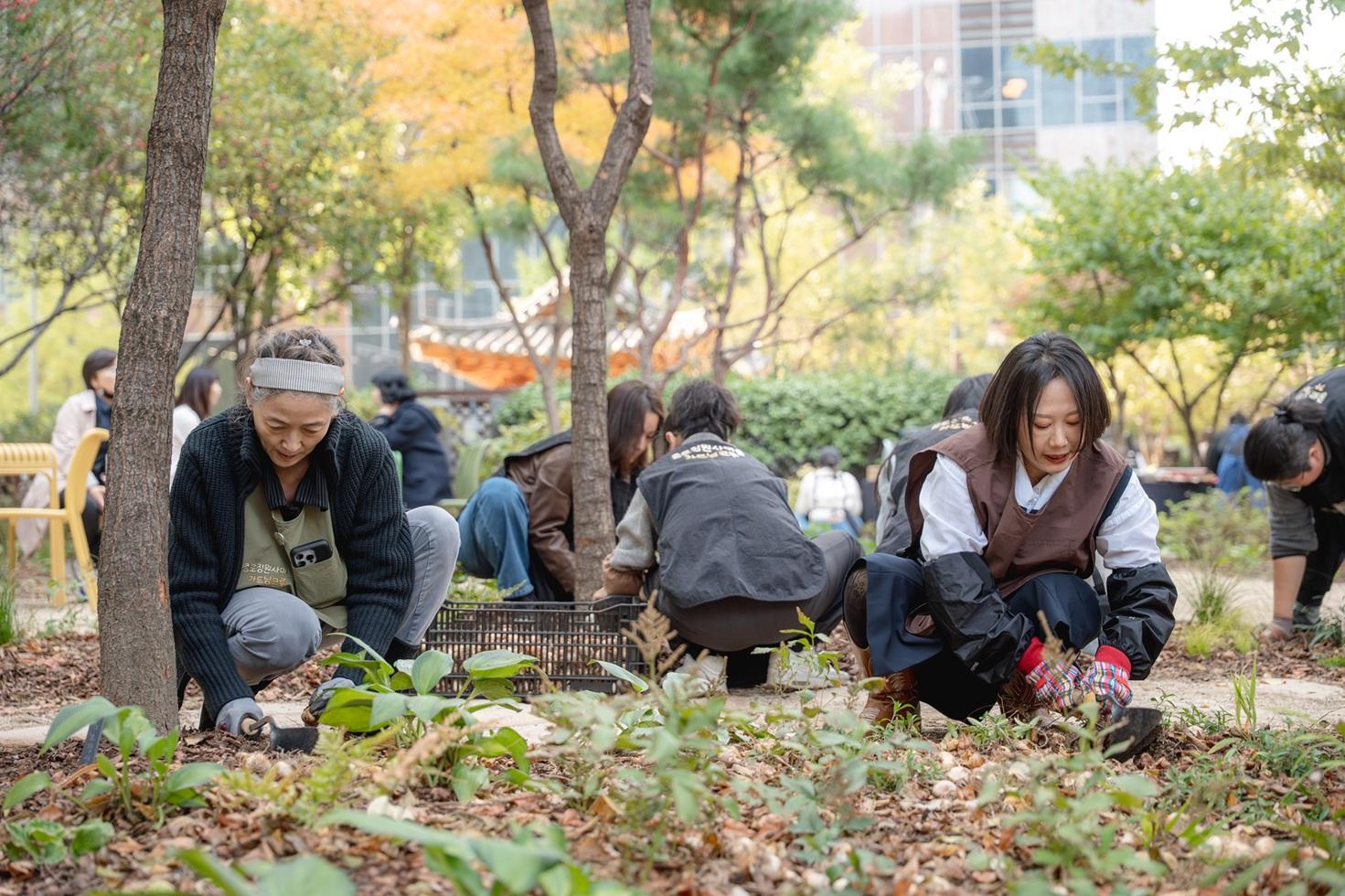
Jongno District, the historic heart of Seoul, announced Friday the rollout of "Jongno Gardener Village 2.0," a significantly expanded phase of its public urban gardening initiative that aims to convert municipal spaces and neighborhood alleyways across the district into resident-tended micro-gardens.
The program is aimed at a part of central Seoul where historic neighborhoods, office districts, parks, and narrow residential lanes sit close together, making small-scale public spaces an important part of everyday urban life. Rather than relying only on large parks, the district is seeking to add greenery through dispersed, locally maintained gardens that residents can encounter near homes, workplaces, and walking routes.
The program, originally launched last year as a public-private partnership, pairs civic engagement with corporate social responsibility. The district has collaborated with local nongovernmental organizations including Forest for Life and corporate sponsors such as Kakao Makers, establishing a governance framework that reduces municipal expenditure while delivering green amenities directly to residents.
During the first phase, volunteer gardening crews concentrated on four primary locations: Bukchon, Seochon, Sajik-dong, and the Cheongjin-Insa-dong corridor. Phase 2.0 broadens that approach, moving beyond individual hub gardens toward a district-wide network of green spaces that enables residents to cultivate public gardens along their own residential lanes and side streets.
"If the past year was spent sowing the seeds for Jongno's garden culture, this next phase will be the leap that fills our entire district with green vitality," said Yu Chan-jong, mayor of Jongno District. "We will spare no support to shape all of Jongno into a unified, sustainable garden city."
To underpin the expansion, the district will run its second-half 2026 Gardener Training Course from September through November, with public applications accepted through late August. The training component is central to the model because the expanded network depends on residents not only planting gardens but also maintaining them over time. The program expands an existing cohort of 50 certified resident gardeners trained over the past year. Those gardeners are scheduled to present their work at the upcoming 2026 Seoul International Garden Expo, giving the district an early public showcase for the resident-led approach.
The district is also developing the cultural dimension of its existing green areas. Cheongjin Park — a popular lunchtime destination for office workers near Gwanghwamun and Jonggak — will receive high-fidelity acoustic upgrades to support "music-filled garden" events and other outdoor leisure programming.
By integrating civic participation, public health considerations, and corporate backing, Jongno District officials said they aim to demonstrate that even a dense metropolitan center can accommodate meaningful green space.
Source: The Korea Times

