'Pretty Close to Done': GOP Insiders Weigh Abandoning North Carolina and Georgia Senate Races
Key Takeaways
- •Senate Republicans are debating whether to withdraw campaign investment from North Carolina and Georgia, where their nominees trail Democratic rivals Roy Cooper and Jon Ossoff.
- •Some party members want to redirect limited resources toward Democratic-held Senate seats in Michigan and New Hampshire while defending incumbent-held seats in Iowa, Ohio, Alaska.
- •President Donald Trump's declining approval ratings are cited by party insiders as a drag on Republican candidates and a factor widening the electoral battleground map.
- •Republicans currently hold 53 of the Senate's 100 seats, so Democrats need a net gain of four to win the majority along with committee chairmanships and confirmation power.
- •GOP senators including Kevin Cramer and John Cornyn expressed pessimism about the two Southern races, with Cornyn suggesting the Georgia contest is close to lost.
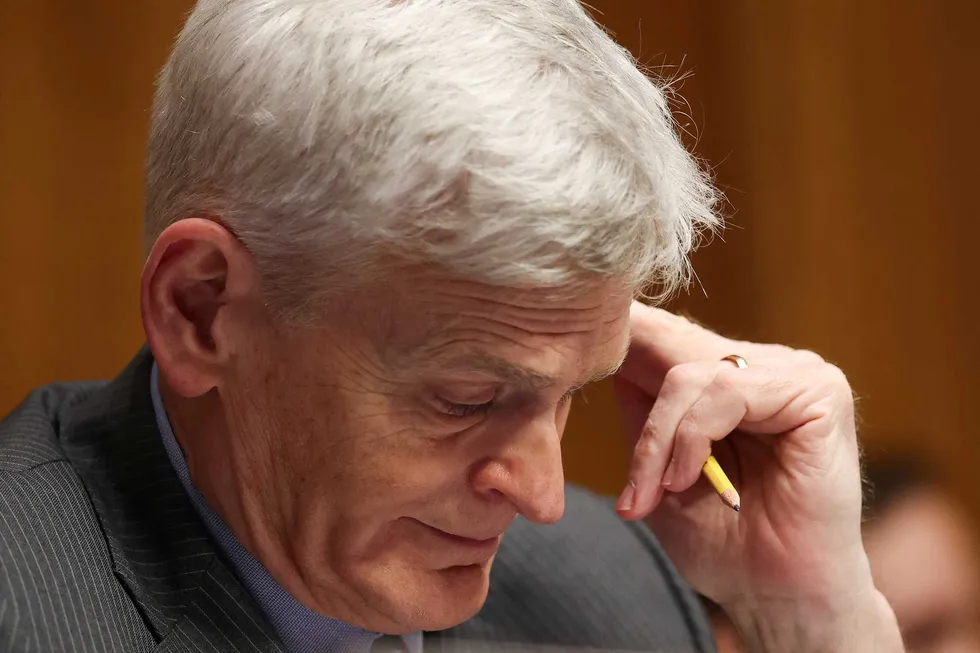
Senate Republicans are debating whether to cut their losses in North Carolina and Georgia — two Southern states once central to the party's Senate fortunes — as the November elections approach, according to Semafor report. Party insiders describe the dilemma as a contest between scarce campaign money and the drag of President Donald Trump's political standing.
Just 10 years ago, North Carolina and Georgia formed the bedrock of Republicans' Senate majorities. But with Trump's collapsing approval ratings hampering the party's candidates nationwide and widening the battleground map, some in the GOP want to adjust tactics and consider shifting money away from races where their candidates are to gain traction. The calculations come in a midterm cycle that has historically favored the party out of power.
"These are always tough decisions, but it's a zero-sum game. It's important that resources are directed where there's a high probability of a winning outcome," one Republican senator told Semafor. "North Carolina and Georgia have consistently shown us behind. It's not an easy environment."
According to the senator, who spoke to Semafor anonymously, the party appears to be directing resources toward Senate contests with somewhat brighter prospects in Michigan and New Hampshire — two Democratic-held seats — while fighting to hold onto seats in Iowa, Ohio, and Alaska.
"When it all settles, we're going to win those seats, objectively. But I think we're going to have a hard time in North Carolina and Georgia," the senator said.
Semafor reports that Republicans do not yet agree on their battleground blueprint. Some would prefer to keep hammering away at former North Carolina Democratic Gov. Roy Cooper and Georgia Sen. Jon Ossoff, both of whom have maintained steady leads over their GOP opponents. But with less than two months until Election Day, the party's internal divide reflects the urgency of its effort to hang onto at least one chamber of Congress next year — as the House looks increasingly likely to flip to Democrats. Republicans hold 53 of the Senate's 100 seats, meaning Democrats would need a net gain of four to take a majority — and with it, committee chairmanships and the power to confirm a president's nominees.
Neither North Carolina nominee Michael Whatley nor Collins in Georgia enjoys the advantage of incumbency, with its built-in name recognition and donor networks. Meanwhile, red-state incumbents Sens. Dan Sullivan (R-Alaska) and Jon Husted (R-Ohio) are facing unusually robust challengers.
Sen. Kevin Cramer (R-N.D.) told Semafor that Republicans must "take a hard look at North Carolina and Georgia" as they assess their chances.
"Move on? Maybe. Obviously we have limited resources, and we want to put them where we're likely to win. And it would really suck if we lose in Alaska, for example, where we aren't spending the resources," Cramer said.
Sen. John Cornyn (R-Texas) offered a bleaker assessment, telling Semafor that North Carolina and Georgia are simply "not looking good."
"Georgia looks like it's pretty close to done. And North Carolina seems to be close to that. I'm still hopeful that something will change. But you know, at some point things get baked in," Cornyn said.

