Republicans Break With Trump on Iran War Powers Resolution as Expert Calls It a 'Final Straw'
Key Takeaways
- •The Senate defeated a war powers resolution directing President Trump to withdraw U.S. forces from the Iran conflict by a single vote, with Democratic Senator John Fetterman casting the only vote against it within his party.
- •Four Senate Republicans supported the measure—Thom Tillis, Susan Collins, Lisa Murkowski, and Rand Paul—mirroring the four Republican crossovers who backed the resolution when it passed the House 214-208 in July.
- •Tillis argued the conflict, which began with strikes on Iran in February and has continued without congressional authorization, is hurting GOP candidates economically through higher gas, diesel, and fertilizer prices.
- •A CNN poll conducted by SSRS of 1,206 U.S. adults found that Republican support for the war has fallen by more than 10 percentage points since March.
- •Brookings fellow Jessica Riedl suggested the Republican defections could mark the party moving away from Trump, while strategist Rina Shah noted the broader GOP voted to continue a war most Americans want ended with midterm elections approaching.
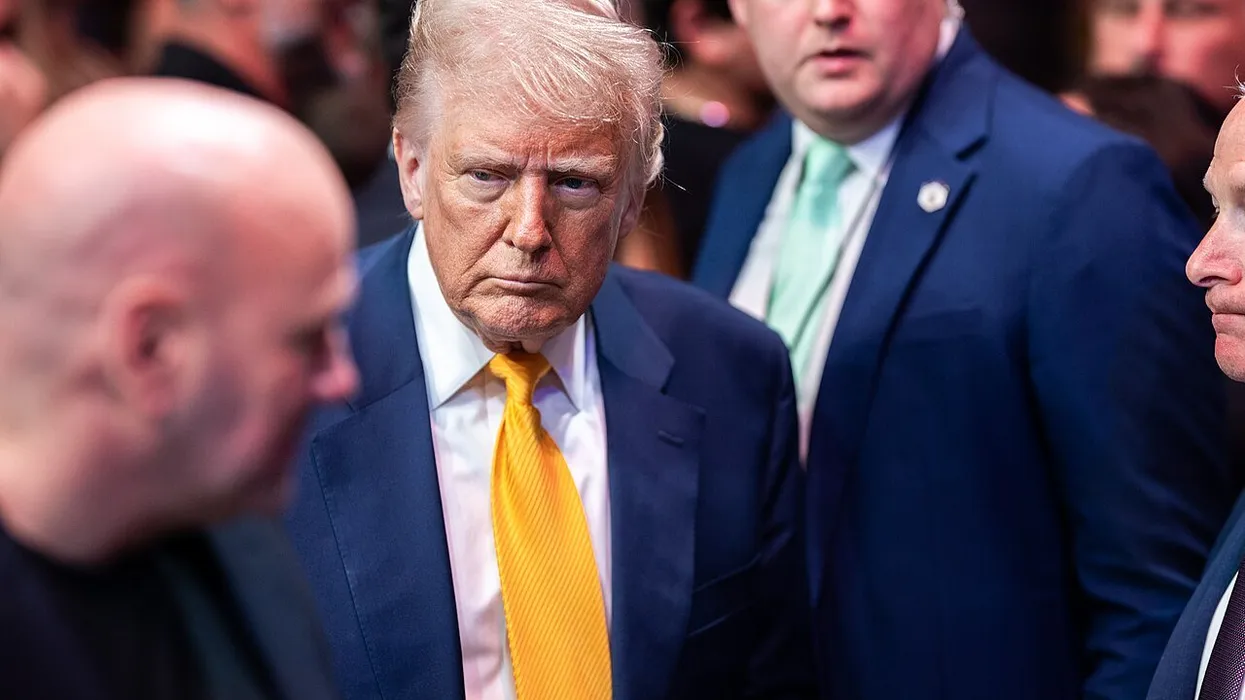
On Thursday, a Senate vote on a war powers resolution aimed at ending the conflict with Iran saw an unusual number of Republicans break ranks and side with Democrats, a development that a fellow at a leading think tank said may be "ending" the presidency of Donald Trump once and for all.
The resolution fell short by a single Democratic defection. Even so, Jessica Riedl, a Fellow at the Brookings Institution who previously served as Chief Economist for former Republican Senator Rob Portman, said the Republican defections were telling.
"We may be witnessing the Iran war (and gas prices) as a final straw essentially ending Trump's presidency," Riedl posted on X. "Most lame duck presidents see their own party usually move on around this time (see Bush with Katrina). It seems like Iran is the dam finally broke with Trump."
The resolution, which would have directed Trump to withdraw U.S. forces from the war, passed the House in July in a 214-208 vote, with four Republican lawmakers backing it. Then, according to the Hill, "Sen. Thom Tillis (R-NC) on Thursday voted for the war powers resolution for the first time, joining GOP Sens. Susan Collins (ME), Lisa Murkowski (AK) and Rand Paul (KY), who have voted for previous resolutions directing Trump to end the war." The effort was defeated after "centrist Sen. John Fetterman (D-PA), an ardent supporter of Israel, was the only Democrat to vote against it." Thursday's count turned on those individual calls: Tillis's first-time yes made him the fourth Senate Republican to back the measure, echoing the four Republican crossovers who supported it in the House in July, while Fetterman's lone defection supplied the single vote by which it fell short.
"Tillis said the conflict has dragged on for too long without congressional authorization and argued it has become a serious political liability for GOP candidates because of its impact on gas, diesel and fertilizer prices," the Hill reported. "We're reaching a point to where we just need answers. We got to know what success looks like," Tillis said, adding that there has been a "consistently downward-trending negative reaction" from the public since the first strikes against Iran in February. "We don't know how long it's going to go," he continued. "So, we're afraid it could be a forever war. It's a war that's obviously hurting people economically. Why are we doing this What is the goal?" Those price channels are what give the defection its political edge: gas and diesel feed into transportation and shipping costs across the economy, while fertilizer is a core input for crop production, so the conflict's costs land well beyond the battlefield.
According to the Hill, "Polls show support for the war dropping among Republicans. A CNN poll conducted by SSRS of 1,206 U.S. adults nationwide this month found that support among self-identified Republicans has dropped by more than 10 percentage points since March." The survey gave measurable weight to the political liability Tillis described.
While experts like Riedl see the Republican defections as a growing sign of Trump's decline, the broader party's vote to continue the war has not gone unnoticed, an unpopular position with the midterm elections looming. As Republican strategist Rina Shah noted on X, "Most Americans want this war ended. Congressional Republicans just voted to keep it anyway." What remains open after the vote are Tillis's own questions — what success looks like and how long the conflict lasts — now tied to measurable markers: Republican support in the polls, the size of the GOP defector bloc, and the fuel and fertilizer prices at the center of his argument.
This article originally appeared on Alternet.

