Senate Passes Stopgap Funding Bill to Avert U.S. Government Shutdown Through December 11
Key Takeaways
- •The Senate approved a continuing resolution by a 90–6 vote on August 8 to extend federal funding through December 11 at largely existing spending levels.
- •The House of Representatives still needs to pass the legislation before it can become law, and the two chambers have been working from different versions of the funding plan.
- •The December 11 deadline postpones the next budget confrontation until after the November midterm elections, reducing the likelihood of a politically disruptive shutdown during election season.
- •The Senate bill includes language blocking the Trump administration from finalizing a rule that would give political appointees greater control over certain federal research grants.
- •Substantial partisan disagreements over defense spending, domestic program funding, and overall budget priorities remain unresolved and will need to be addressed before the December deadline.
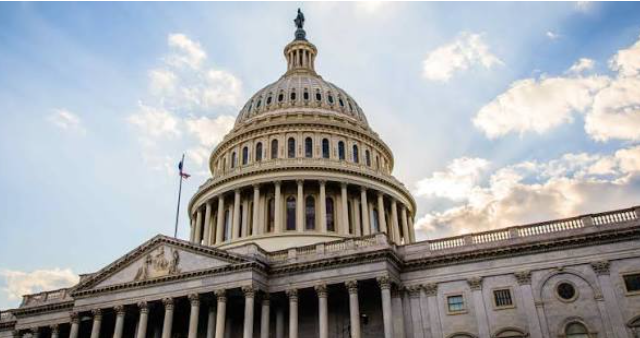
Senate Passes Stopgap Funding Bill to Avert U.S. Government Shutdown Through December 11
The United States Senate approved a temporary spending bill on Saturday, August 8, by a 90–6 vote, moving the federal government one step closer to avoiding another shutdown. The stopgap measure would keep federal agencies operating at largely existing funding levels through December 11, pushing the next major budget deadline past the 2026 midterm elections scheduled for November.
Source: X Post
Senate's Bipartisan Vote Provides Temporary Relief
The Senate's 90–6 vote demonstrates broad bipartisan support for keeping the government operational. The continuing resolution (CR), as such temporary measures are commonly known, would extend federal funding through December 11 while Congress works toward longer-term appropriations legislation.
Continuing resolutions have become a familiar feature of the U.S. budget process. In theory, Congress is expected to pass a series of annual appropriations bills covering federal agencies before the start of each fiscal year on October 1. In practice, lawmakers frequently struggle to complete the process on schedule, and political disagreements often delay negotiations for months. Since the modern congressional budget process was established under the Congressional Budget Act of 1974, Congress has relied on continuing resolutions in nearly every fiscal cycle, completing all twelve regular appropriations bills on time only a handful of times in the decades since. When deadlines approach, Congress typically turns to temporary funding legislation to prevent a shutdown.
The advantage of a CR is straightforward: it prevents an immediate shutdown. The disadvantage is that agencies must operate under previous funding levels rather than receiving resources for new priorities, which can complicate long-term budgeting.
The Government Is Not Fully Funded Yet
Despite the Senate vote, the United States government cannot yet be described as fully funded through December. The Senate and House have been working from different versions of the government funding plan, meaning additional congressional action is required before the stopgap legislation can become law.
The House of Representatives is scheduled to return from its August recess later this month. Until both chambers approve identical legislation and the measure is signed into law, uncertainty remains. The House version would fund the government for a different period, meaning lawmakers may need to resolve differences before a final bill can reach the president. The Senate vote therefore represents progress rather than a final resolution.
The current fiscal year ends on September 30.
Why the December 11 Deadline Matters
The December 11 deadline gives Congress several additional weeks to negotiate full-year spending bills and prevents a funding crisis from occurring immediately before or during the November midterm elections. Political leaders have strong incentives to avoid a shutdown during an election season, as it can disrupt federal services, create uncertainty for government workers, and become a major political liability for both parties.
By pushing the deadline to December, lawmakers have effectively postponed their most difficult spending decisions. However, they have not eliminated them. If lawmakers fail to reach an agreement by December 11, the threat of a government shutdown could return.
The Bigger Spending Fight Remains
The central disagreement in Washington is not simply whether the government should remain open, but how federal money should be allocated. The federal budget covers defense, transportation, health programs, scientific research, education, housing, and numerous other areas—each with competing political interests.
The temporary funding bill largely maintains existing spending levels, meaning many larger policy disputes remain unresolved. Congress will eventually have to decide how much money different agencies receive for the remainder of the fiscal year. Those decisions could involve billions of dollars across numerous federal departments.
Republicans and Democrats continue to disagree over the size and priorities of federal spending, particularly in areas such as defense, domestic programs, research funding, and executive authority.
Trump Administration Policies Add Another Layer
The spending negotiations are also occurring alongside disputes over the Trump administration's approach to federal programs. The Senate funding agreement includes language blocking the administration from finalizing a controversial rule that would give political appointees greater control over certain federal research grants during the temporary funding period. The issue has generated opposition among Democrats and scientific organizations.
Supporters of the restriction argue that the measure protects the existing grant process. Opponents of the administration's proposed changes argue that political considerations should not determine scientific research funding. The dispute could return when lawmakers negotiate longer-term appropriations.
Federal research funding has emerged as one of the more politically sensitive parts of the current budget fight.
Defense Spending Remains Unresolved
Defense remains one of the largest components of the federal budget. Congress must determine funding for military personnel, equipment, weapons, shipbuilding, and other national-security programs. The Senate's temporary bill includes provisions related to defense spending, but the broader debate over military priorities remains unresolved. With geopolitical tensions remaining high, defense funding could become one of the most closely watched parts of the December negotiations.
Domestic spending—including research funding, infrastructure, healthcare, and other programs—will also be closely contested and could become bargaining chips during negotiations.
Economic and Market Implications
Federal spending represents a significant portion of economic activity in the United States. Government employees receive wages, federal contractors provide services, agencies purchase goods and equipment, and programs distribute payments and benefits. A shutdown can therefore affect economic activity well beyond Washington.
Past shutdowns have demonstrated these costs concretely. The longest government shutdown in U.S. history, which lasted 35 days from December 2018 into January 2019, left roughly 800,000 federal workers furloughed or working without pay and disrupted services ranging from national parks to airport security screening. The Congressional Budget Office estimated that shutdown temporarily reduced economic output, though much of the lost activity was recovered once agencies reopened.
A government shutdown occurs when Congress fails to provide legal authority for federal agencies to continue spending. Some government functions continue because they are considered essential, while other activities may be delayed or suspended. Federal employees may be furloughed or required to work without immediate pay, depending on their roles. Government contractors can also experience delays. The economic impact varies depending on the length and scope of the shutdown.
Government funding disputes can also affect financial markets even when a shutdown is ultimately avoided. Investors typically prefer certainty, and political uncertainty can make businesses more cautious and create volatility across stocks, bonds, and other assets. The Senate's vote reduces the probability of an immediate shutdown and removes one source of near-term market uncertainty. However, the unresolved spending battle means investors still have reasons to monitor Washington, with December potentially becoming the next major political risk point.
Federal Workers Face Continued Uncertainty
The funding debate affects millions of federal workers. Even when a shutdown is avoided, the possibility of one creates uncertainty about whether agencies will receive funding on time. The temporary funding bill reduces that uncertainty in the near term by extending government operations, but because it is only a short-term solution, workers may need to watch Congress closely again as December approaches.
What Happens Next
The immediate focus now shifts to the House. Lawmakers will need to examine the Senate's bill and determine whether they can approve it or whether additional negotiations will be necessary. If the House approves the Senate version, the legislation can move toward the president's desk. If the House rejects it or makes changes, negotiations between the two chambers will continue.
Even though the Senate reached a strong bipartisan vote, the final outcome still depends on cooperation between both chambers. The Senate's action does not eliminate the need for Congress to pass full-year appropriations bills, and lawmakers still need to negotiate spending levels and policy provisions for the remainder of the fiscal year.
The 90–6 vote suggests many senators recognize the political and economic costs associated with allowing funding to expire. However, bipartisan support for a temporary solution does not necessarily translate into agreement over the final federal budget. Lawmakers can agree that the government should remain open while strongly disagreeing over how it should spend its money.
For financial markets, the Senate vote provides short-term reassurance. For federal employees, it reduces the immediate threat of disrupted operations. For Congress, however, the hardest work remains ahead. The next major test will come after the midterm elections, when lawmakers return to the negotiating table with December 11 approaching. Until then, Washington has bought itself more time—but the bigger spending fight is still waiting.
