Senate Omits CLARITY Act From Monday Floor Agenda as August Recess Approaches
Key Takeaways
- •The U.S. Senate did not schedule a Monday floor vote on the CLARITY Act, narrowing the legislative window available before the August recess.
- •The CLARITY Act aims to create a clearer legal framework for digital assets by defining the regulatory responsibilities of federal agencies over different categories of tokens and digital asset activities.
- •If the bill is not considered before the August recess, formal Senate consideration would likely resume after lawmakers return on September 14.
- •Congressional negotiations on the legislation continue behind the scenes, covering topics including market structure, securities classification, stablecoin regulation, and enforcement authority.
- •The bill's progress carries implications beyond cryptocurrency exchanges, affecting institutional investors, financial institutions, and America's competitive position in global digital asset markets.
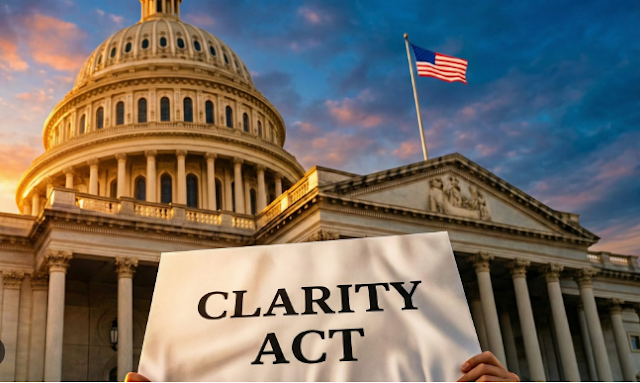
Senate Omits CLARITY Act From Monday Floor Agenda as August Recess Approaches
The U.S. Senate has not scheduled a floor vote on the CLARITY Act for Monday, adding fresh uncertainty to the future of one of the most significant cryptocurrency regulatory bills currently under consideration in Congress. With lawmakers preparing for the annual August recess, the bill's absence from the Senate's immediate legislative agenda has intensified speculation over whether the measure can advance before Congress temporarily suspends much of its legislative activity.
The scheduling update quickly attracted attention across the cryptocurrency industry after being highlighted by the X account of Cointelegraph, prompting investors, blockchain companies, financial institutions, and policy observers to reassess the timeline for long-awaited digital asset legislation.
Although the bill has not been removed from consideration, the lack of a Monday vote narrows the legislative window available before senators leave Washington. This increases pressure on congressional leaders to determine whether the proposal will move forward later in the week or be delayed until lawmakers return on September 14.
Why the CLARITY Act Matters
The CLARITY Act has emerged as one of the most closely watched cryptocurrency bills in the United States because it seeks to establish a clearer legal framework for digital assets by defining the regulatory responsibilities of federal agencies over different categories of tokens and digital asset activities.
For years, cryptocurrency businesses have argued that existing regulations were written long before blockchain technology became a major financial innovation. As a result, companies have frequently faced uncertainty regarding which federal agencies oversee different categories of digital assets and how existing laws should be applied. The ambiguity has contributed to enforcement actions, product delays, and in some cases, decisions to relocate operations overseas.
Supporters believe the legislation would clarify regulatory responsibilities, improve legal certainty, strengthen investor confidence, and encourage continued innovation within the United States. Many industry participants also view the bill as essential for attracting additional institutional investment into digital asset markets.
Monday's Missing Vote Raises New Questions
The absence of a scheduled Monday vote does not necessarily indicate that the legislation has stalled permanently. Congressional schedules frequently change as lawmakers negotiate amendments, debate priorities, and coordinate floor procedures.
Nevertheless, timing has become increasingly important. Each day without a scheduled vote reduces the amount of legislative time available before senators begin the August recess. The Senate must also contend with a broader legislative agenda that includes appropriations bills, national defense authorization, and other priorities competing for limited floor time.
Industry observers are now watching closely to determine whether Senate leadership intends to schedule the bill later in the week or postpone consideration until lawmakers return on September 14.
The August Recess Creates Additional Pressure
Congress traditionally pauses much of its legislative work during the August recess. During this period, senators return to their home states, meet with constituents, participate in public events, and prepare for upcoming legislative sessions. Although committee work may continue in certain areas, floor votes generally stop until Congress reconvenes.
If the CLARITY Act is not considered before adjournment, the legislative process could be delayed for several weeks. For an industry seeking regulatory certainty, even temporary postponements may influence investment decisions and business planning, particularly for firms weighing whether to launch new products or expand U.S. operations.
Cryptocurrency Industry Continues Seeking Regulatory Clarity
The digital asset industry has consistently argued that regulatory uncertainty remains one of its largest challenges. Cryptocurrency exchanges, blockchain developers, decentralized finance platforms, stablecoin issuers, and institutional investors all benefit from predictable legal frameworks.
Clear legislation could simplify licensing, compliance obligations, product development, fundraising, and institutional partnerships. Many executives believe modern regulatory rules would allow American blockchain companies to compete more effectively in rapidly evolving global markets.
Institutional Investors Are Watching Washington
Large financial institutions have become increasingly interested in cryptocurrency over the past several years. Spot Bitcoin exchange-traded funds have expanded institutional participation. Banks continue exploring blockchain infrastructure. Asset managers are developing digital asset products. Public companies have incorporated Bitcoin into treasury strategies.
Despite these developments, many institutional investors continue emphasizing the importance of comprehensive federal regulation before significantly expanding digital asset operations. The progress of the CLARITY Act therefore carries implications extending well beyond cryptocurrency exchanges.
Markets Often Respond to Regulatory Developments
Regulatory news has historically influenced cryptocurrency market sentiment. Announcements suggesting greater legal clarity often improve investor confidence because they reduce uncertainty regarding future oversight. Conversely, legislative delays sometimes create short-term caution while market participants await additional information.
Although cryptocurrency prices ultimately depend on many factors—including macroeconomic conditions, institutional demand, ETF inflows, and global liquidity—regulatory developments remain an important component of market psychology. The Senate's scheduling decisions are therefore being monitored closely by investors worldwide.
Competition With Other Jurisdictions Continues
The United States is not the only country developing comprehensive digital asset regulations. The European Union has advanced its Markets in Crypto-Assets framework, while jurisdictions across Asia and the Middle East have introduced or expanded legal frameworks governing cryptocurrency exchanges, token issuance, custody services, and blockchain innovation.
Industry leaders have frequently argued that prolonged uncertainty in the United States could encourage companies to expand operations in jurisdictions offering greater regulatory clarity. Supporters of the CLARITY Act contend that modern legislation would strengthen America's competitiveness within the rapidly growing digital economy.
Legislative Negotiations Continue Behind the Scenes
Although no Monday vote has been scheduled, congressional negotiations continue. Lawmakers remain engaged in discussions covering market structure, securities classification, commodities oversight, decentralized finance, consumer protection, stablecoin regulation, and enforcement authority.
Major legislation often undergoes multiple revisions before reaching the Senate floor. Political negotiations involving bipartisan support, procedural considerations, and legislative priorities frequently influence scheduling decisions. Consequently, the absence of a Monday vote does not necessarily reflect the bill's overall prospects.
National Security and Economic Competitiveness
Recent public comments from several policymakers have expanded the conversation surrounding cryptocurrency legislation beyond financial regulation alone. Some officials argue that blockchain technology increasingly intersects with issues involving cybersecurity, technological leadership, economic competitiveness, and national security.
From this perspective, comprehensive digital asset regulation is viewed not only as financial policy but also as part of broader strategic competition in emerging technologies. The CLARITY Act has therefore attracted attention from stakeholders across multiple sectors beyond the cryptocurrency industry.
Businesses Continue Planning for Regulatory Change
Regardless of the immediate Senate schedule, cryptocurrency companies continue preparing for eventual regulatory modernization. Many firms have expanded compliance departments, strengthened governance frameworks, improved custody standards, and invested in institutional-grade infrastructure.
Industry participants generally expect clearer federal regulation to emerge over time, even if legislative timing remains uncertain. Companies are therefore positioning themselves to adapt quickly once comprehensive rules become available.
What Happens Next
With no CLARITY Act vote scheduled for Monday, attention now shifts to the remainder of the legislative week. Investors, businesses, and policymakers will monitor Senate leadership for updates regarding floor scheduling, procedural motions, committee activity, and possible amendments.
Should lawmakers schedule a vote before the August recess, the bill could continue advancing through Congress without significant interruption. If not, formal consideration will likely resume after senators return on September 14, extending uncertainty for an industry eager for clearer federal guidance.
The Senate's decision not to schedule a Monday floor vote on the CLARITY Act has introduced fresh uncertainty into one of the most consequential cryptocurrency legislative efforts currently underway in the United States. Although the bill remains under consideration, the narrowing legislative calendar before the August recess places increasing pressure on lawmakers to determine whether comprehensive digital asset regulation can advance this week or face additional delays.
For cryptocurrency companies, institutional investors, blockchain developers, financial institutions, and technology firms, the outcome carries significant implications for innovation, compliance, investment, and America's long-term leadership in digital finance. As Congress continues weighing one of the most important crypto regulatory proposals in recent years, market participants around the world will remain focused on every procedural development emerging from Capitol Hill.
Whether the CLARITY Act reaches the Senate floor later this week or waits until September, its eventual fate is expected to play a defining role in shaping the future of cryptocurrency regulation in the United States.

