US Senate Delays Clarity Act Vote to September 15 Amid Procedural and Policy Hurdles
Key Takeaways
- •The Clarity Act would create the first federal legal criteria for classifying digital tokens as commodities rather than securities, determining whether the CFTC or SEC holds supervisory authority over token issuers, trading platforms, and custodians.
- •The Senate cloture vote scheduled for September 15 requires 60 votes to advance the bill, but Republicans currently hold only 53 seats, meaning at least seven Democratic defections are needed assuming full Republican support.
- •The House passed the predecessor bill in July 2025 with 294 votes in favor and 134 against, including support from all Republicans and 78 Democrats.
- •Two major unresolved disputes center on ethics provisions that would ban government officials from operating crypto businesses and on whether exchanges should be allowed to pay interest on customer stablecoin balances, a provision opposed by the banking industry.
- •Galaxy Research reduced its estimated probability of the bill passing this year from 50 percent to 30 percent, citing the increasingly constrained Senate calendar with only 36 working floor days remaining before year-end.
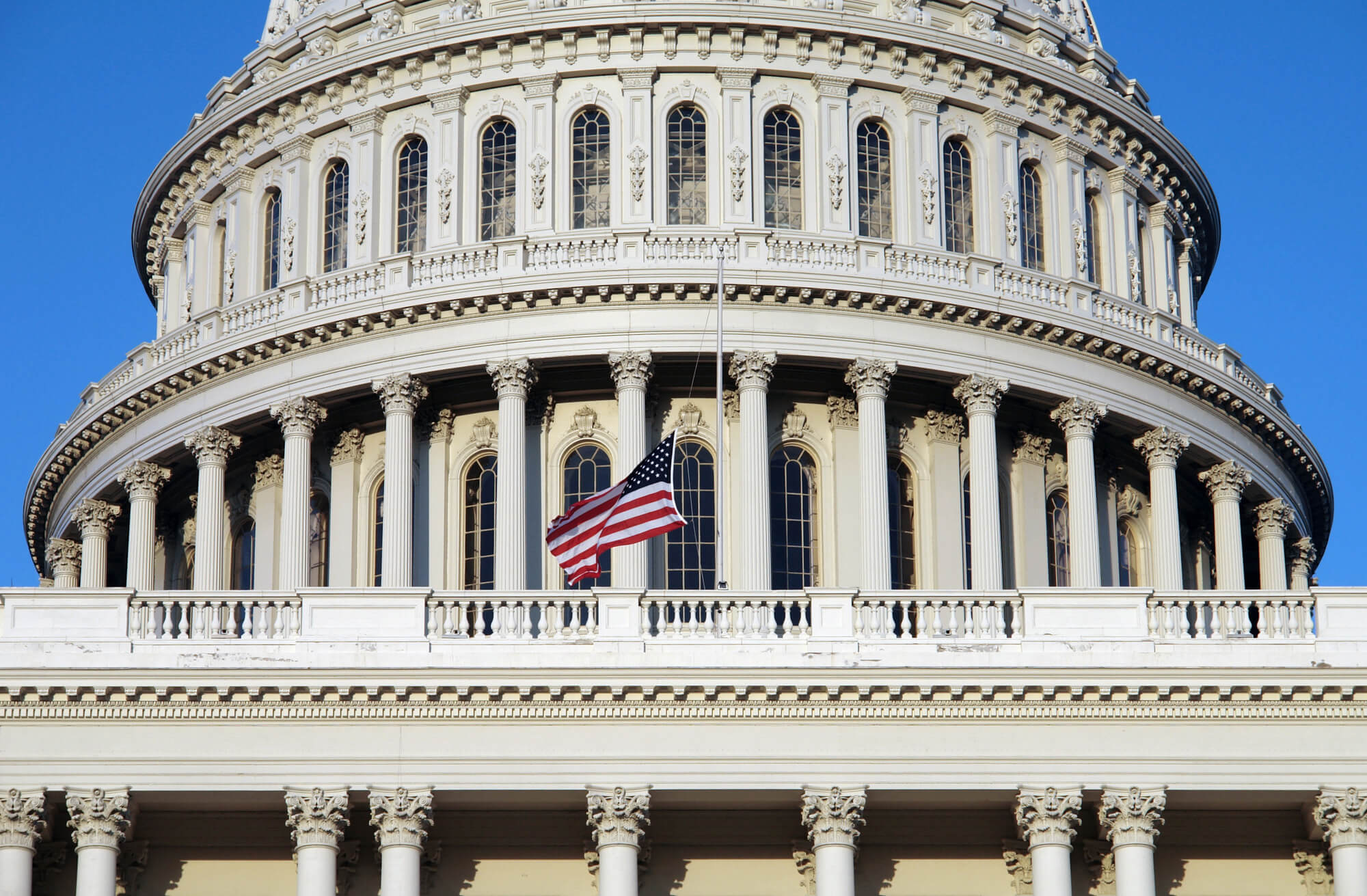
The United States Senate has postponed its vote on the Clarity Act to September 15, after Majority Leader John Thune filed the decisive procedural motion just hours before the chamber departed for its five-week summer recess.
The Clarity Act represents the central piece of US market structure legislation for digital assets. It divides regulatory oversight between the Securities and Exchange Commission (SEC) and the Commodity Futures Trading Commission (CFTC). Crucially, it establishes for the first time in federal law the criteria under which a token is classified as a commodity rather than a security. This classification determines which agency holds supervisory authority over trading platforms, token issuers, and custodians. To date, both agencies have asserted overlapping jurisdiction over digital assets primarily through enforcement actions rather than comprehensive rulemaking, leaving companies to navigate regulatory uncertainty case by case and prompting some firms to relocate operations to jurisdictions with established frameworks such as the European Union, where the Markets in Crypto-Assets regulation (MiCA) took full effect in 2024.
The House of Representatives previously passed the predecessor bill, H.R. 3633 — the Digital Asset Market Clarity Act — in July 2025, with 294 representatives voting in favor and 134 against. The coalition of supporters included every Republican member as well as 78 Democrats. The legislation has since remained under consideration in the Senate.
In early August, Thune filed a cloture motion setting the procedural vote for September 15. Cloture — the Senate's mechanism to end debate and advance a bill to a substantive vote — requires 60 votes. Republicans currently hold only 53 seats. Galaxy Research subsequently lowered its estimated probability of passage this year from 50% to 30%, citing the increasingly constrained Senate calendar.
The 60-Vote Threshold
Thune filed the motion early on a Saturday morning, hours before the Senate left Washington. No vote on the bill itself was held prior to the recess, leaving the legislation dormant for five weeks.
Cloture limits speaking time and prevents a minority from indefinitely prolonging deliberation. Without 60 votes, a bill stalls in procedure regardless of the size of the majority supporting it on the merits. The motion fixes the date and time of the vote but alters nothing in the legal text. The Senate is therefore deciding first not on the Clarity Act itself, but on the right to debate it.
Industry lobbyists expect that a failed cloture attempt would effectively end the bill's prospects. The arithmetic is challenging: with 53 Republican seats, Thune needs at least seven Democratic votes, and that calculation assumes all 53 Republicans vote in favor — a scenario no one has publicly confirmed. Both parties are reportedly negotiating text changes that could persuade individual Democrats to support ending debate. Securing seven defections from the opposing caucus is no formality in the Senate, particularly as the election season intensifies.
The calendar compounds the difficulty. The Senate returns on September 14 and will hold the procedural vote the following day at 14:15 local time. After that, only 14 session days remain before the October election recess, followed by an additional 22 days before the end of the year — a total of 36 working days on the floor. Within this window, the Senate would need to clear the bill through cloture and then pass it on the merits. There is little room for renegotiation before the October recess, meaning the entire timetable effectively hinges on a single procedural day.
Two Central Disputes Block Compromise
The delay is not solely procedural. The ethics provisions in the legislation have drawn the sharpest controversy. The draft would prohibit government officials from operating their own cryptocurrency businesses, a ban that extends to the president. Donald Trump reported more than USD 1.4 billion in income from his family's crypto ventures last year, making the ethics clause directly relevant to a billion-dollar enterprise surrounding the president.
Democrats are accordingly demanding a second layer of enforcement. The Justice Department, which would normally enforce such a ban, reports to the administration whose officials the clause is designed to regulate. Democrats therefore propose granting state attorneys general independent authority to enforce the prohibition, including the ability to sue the Justice Department if it fails to act sufficiently.
Brian Gardner, Chief Washington Policy Strategist at Stifel, sees little prospect of passage. In his assessment, lawmakers remain far apart on the ethics provisions in particular, and as long as that issue remains unresolved, Democrats have little incentive to support limiting debate.
The second major dispute concerns whether crypto exchanges should be permitted to pay interest on stablecoin balances held by customers. Stablecoins are tokens pegged to a fiat currency that function as a means of payment in crypto trading. The unresolved question is whether platforms may offer yield on customer holdings. The banking industry opposes this, fearing outflows from traditional deposits, as interest-bearing balances on trading platforms compete directly with savings and demand deposit accounts. In effect, the Senate is mediating a distributional conflict between the credit industry and the crypto sector — a dispute largely unrelated to the SEC–CFTC jurisdictional question at the bill's core. The outcome of this provision could set a precedent for how Congress treats the boundary between traditional financial services and digital asset platforms more broadly.
Additionally, provisions addressing illicit financial flows remain unresolved, as does the integration of text from the Agriculture Committee, which holds jurisdiction over the CFTC. For neither of the two main conflicts does a compromise formula currently exist.
The Election Calendar and Industry Stakes
In November 2026, the entire House of Representatives and roughly one-third of the Senate face re-election. Analysts expect the campaign to dominate lawmakers' attention from the autumn onward, while available floor time continues to shrink. More than 13 months have already elapsed since the House vote.
Current polls give Democrats an edge in their effort to reclaim the House majority. That chamber would need to approve the Senate version of the bill before it could reach the president's desk. A Democratic majority in 2027 would likely prioritize oversight investigations into the Trump administration, placing crypto legislation well down the agenda. If the process extends into next year, the election outcome becomes an additional obstacle. A failure in September would push the legislation into a considerably more difficult political environment.
The crypto industry has invested hundreds of millions of dollars in lobbying campaigns to advance the law, and is pressing for a swift vote. The Clarity Act is intended to provide companies in the sector with legal certainty and would establish the first comprehensive federal framework for digital assets in the United States. Within the industry, the bill is regarded as a generational rulebook — one that would, if enacted, close the regulatory gap with jurisdictions such as the EU and the UK that have already codified comprehensive crypto regimes. Each additional delay therefore carries significant weight.
Senator Cynthia Lummis of Wyoming, who participated in negotiating the text, expressed her concern on social media:
"Death by a thousand cuts is just as deadly as a bullet."
— Cynthia Lummis, US Senator (R-Wyoming)
Her warning underscores a broader pattern: procedural delays can steadily erode a bill's prospects without any chamber ever formally rejecting it.

