CLARITY Act Draft Would Block U.S. Federal Officials From Issuing Crypto Tokens Until 2029
Key Takeaways
- •The CLARITY Act draft would prohibit federal officials and their spouses from issuing or sponsoring digital assets until January 20, 2029.
- •Cryptocurrency platforms would be barred from listing digital assets issued or sponsored by covered federal officials.
- •The draft assigns major enforcement responsibility for the ethics provisions to the U.S. Attorney General and the Department of Justice.
- •The bill requires at least 60 votes to advance in the Senate, making some Democratic support likely necessary.
- •Beyond ethics rules, the legislation includes provisions on disclosure, illicit finance, spot-market regulation, and broader digital-asset market structure.
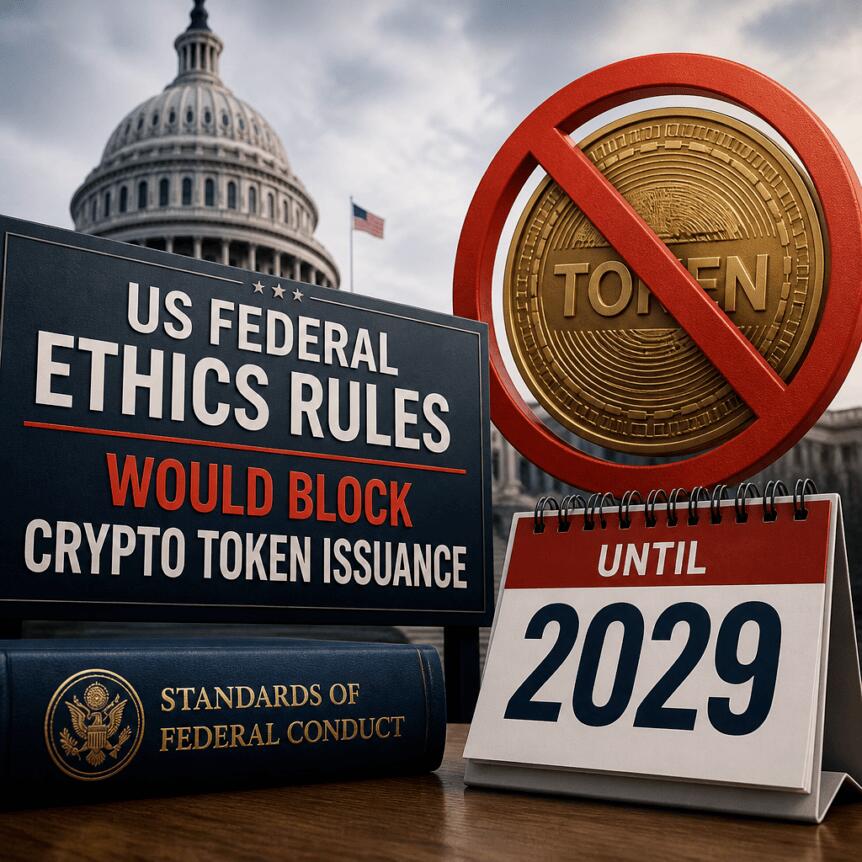
Senate Republicans have released the full text of the proposed Digital Asset Market Clarity (CLARITY) Act, a 616-page bill that combines market-structure provisions with a far-reaching ethics package designed to address conflicts of interest involving public officials and the digital-asset sector.
The draft, published Wednesday, contains ethics language that would prohibit U.S. federal officials and their spouses from issuing or sponsoring digital assets. It would also bar cryptocurrency platforms from listing any assets issued or sponsored by those officials. The restriction is designed as temporary, with an expiration date of January 20, 2029—coinciding with Inauguration Day for the next presidential term, which would mark the end of Trump's second term if he serves a full four years.
Scope of the Ethics Provisions
The White House has described the ethics section of the CLARITY Act draft as "the most comprehensive and wide-ranging ethics provision in history." According to the bill text released by Senate Republicans, the ban would apply to all public officials and employees, along with their spouses. Covered individuals would be prohibited from "issuing or sponsoring" digital assets.
The draft extends beyond individual conduct to regulate downstream market activity: cryptocurrency platforms would be blocked from listing assets that are "issued or sponsored" by federal officials falling within the scope of the restriction.
Senator Cynthia Lummis, a leading proponent of the measure, stated that the provisions are intended to apply to President Donald Trump. In explaining the rationale behind the language, Lummis pointed to enforcement mechanisms and penalties, and referenced the president's financial situation as lawmakers continue to scrutinize his involvement in cryptocurrency, which has included publicly reported ventures such as World Liberty Financial and the $TRUMP meme token launched ahead of his inauguration.
Lummis also tied the ethics package to a specific timeline: the ban on public officials would be temporary, ending on January 20, 2029.
Enforcement Through the Department of Justice
Rather than relying primarily on state authorities, the draft assigns substantial enforcement responsibility to the U.S. Attorney General and the Department of Justice.
As of the day the text was published, Todd Blanche—Trump's former personal attorney and acting Attorney General—was reportedly awaiting Senate confirmation to lead the Justice Department on a permanent basis. This is significant because, under the CLARITY draft, the DOJ would play a central role in operationalizing the ethics restrictions.
The enforcement design is also a factor in the political debate over whether Democrats will support the bill. Senator Angela Alsobrooks, in remarks reported by Politico, indicated she would seek agreement on the bill's enforcement architecture. She told Politico that she "wouldn't support the bill" if DOJ enforcement language remained as proposed, but acknowledged that negotiations could still produce a version that "holds us all accountable."
Democratic Support and the 60-Vote Threshold
Even if Senate Republicans act quickly, passage is not assured. The CLARITY Act requires at least 60 votes in the Senate to advance, meaning it would likely need backing from some Democrats to reach the threshold. The bill would then return to the House of Representatives and, if approved there, would go to President Trump for signature.
Democrats have signaled conditional support. Multiple Democratic senators have stated they will not vote for any version of a crypto bill unless it includes robust ethics language addressing the conflict-of-interest concerns raised around the president.
Another potential flashpoint lies in how the draft defines the scope of the restrictions. The ethics ban, as described in coverage of the bill text, did not appear to include children of public officials within its temporary prohibition. That omission takes on added significance given public reporting that members of Trump's family are involved in crypto-related businesses, including World Liberty Financial and a Bitcoin mining company.
Lummis defended the approach as applying "one ethics standard to everyone," saying the bill "backs it up with real enforcement, real penalties, and a Department of Justice mandate to act."
Broader Bill Components: Disclosure, Illicit Finance, and Market Structure
The CLARITY Act is not exclusively an ethics measure. One analyst reaction quoted in coverage emphasized that the Senate draft incorporates multiple components beyond conflict-of-interest rules, including a disclosure regime, an illicit finance section, and improved regulation for spot markets. The bill represents the latest in a series of congressional efforts to establish a comprehensive federal framework for digital assets, an area where regulatory jurisdiction has long been split between the SEC and CFTC, leaving market participants without clear rules of the road.
Kirstin Smith, president of the Solana Policy Institute, said the Senate has a "real chance" to pass durable, bipartisan market-structure legislation, framing CLARITY as a broader attempt at statutory clarity rather than a single-issue bill.
That distinction may carry weight for investors and industry participants monitoring the policy process: market-structure rules can affect how digital assets are categorized, how exchanges and intermediaries comply with U.S. requirements, and how enforcement priorities are expected to shift under a new framework.
Next Steps
With Senate Majority Leader John Thune reportedly planning to bring CLARITY to the floor next week, the central question for lawmakers—and for the industry—is whether the ethics provisions can attract sufficient Democratic support to reach the 60-vote threshold. The bill's prospects may ultimately depend on whether negotiations around DOJ enforcement and the scope of ethics restrictions leave enough lawmakers satisfied to back the measure before the Senate's window to vote narrows.
