Scaling U.S. Solar Manufacturing: Lessons From SEG Solar's Rise
Key Takeaways
- •SEG Solar now holds roughly 6 GW of U.S. module assembly capacity across its Houston and Tomball, Texas sites, up from a small base in just two years.
- •During 2025, SEG Solar was one of only six U.S. companies producing more than 1 GW of silicon-based solar PV modules domestically.
- •Direct factory capital expenditure across the Houston and Tomball sites is estimated to reach $100-150 million by the end of 2026, a comparatively efficient deployment.
- •By the end of 2026, SEG Solar is expected to be one of only five U.S. companies with more than 5 GW of effective silicon-based module capacity.
- •The company is weighing options including domestic cell manufacturing, HJT-specific module capacity, and a broader integrated U.S. platform, decisions influenced by the recent Section 232 ruling.
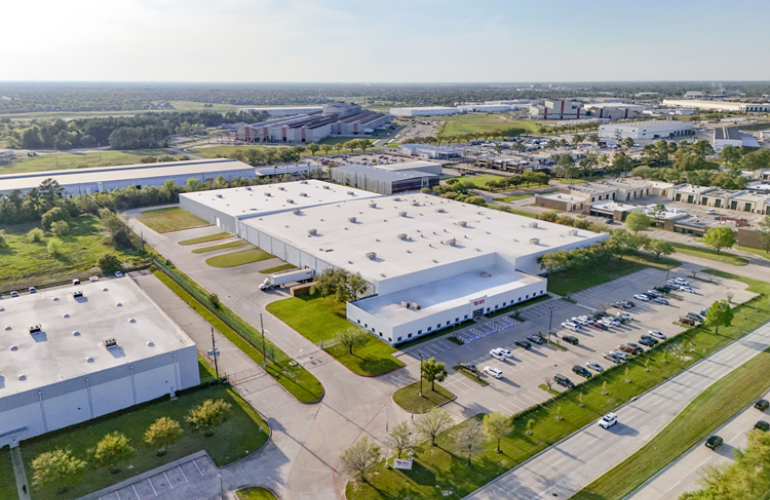
Having recently attended the opening ceremony of SEG Solar's second module factory in Tomball, Texas, I decided to take a closer look at a company that has become one of the most visible players in the U.S. solar industry. SEG Solar moved quickly through the initial manufacturing investment cycle stimulated by the Inflation Reduction Act (IRA) in 2022, a law whose domestic manufacturing incentives — most notably the Section 45X advanced manufacturing production credit — triggered a wave of announced U.S. solar factory plans.
SEG Solar now holds roughly 6 GW of U.S. module assembly capacity across its Houston and Tomball sites in Texas — a rise from a relatively small domestic manufacturing base to one of the largest silicon-based module producers in the country, achieved in just two years.
While the capacity announcements themselves have drawn considerable attention, SEG Solar's efficient deployment of capital — combined with its high visibility within the industry — is perhaps the more instructive aspect of the story, at a time when much of the sector is still digesting shifting trade policy and incentive rules.
From announcement to execution
The post-IRA period produced a long list of U.S. module factory announcements. A few years on, however, only a small group of companies has converted those plans into actual multi-gigawatt manufacturing operations — a gap that has become a defining feature of the post-IRA buildout.
SEG Solar's 2-GW module factory outside Houston opened in 2024 as the company's first investment in U.S. manufacturing facilities. Notably, SEG Solar had already established its current U.S.-headquartered operations before the IRA expansion cycle gathered pace. By that point, the company also had considerable experience operating within a global solar manufacturing landscape that had routinely been reshaped by changing trade rules.
In August 2024, SEG Solar opened its 250,000-ft2 Houston site, with 2 GW of annual module capacity that reached production ramp within roughly 12 months. During 2025, SEG Solar was one of only six companies in the United States that produced more than 1 GW of silicon-based solar PV modules domestically.
The contrast with the wider post-IRA investment pool is even more striking. Several early multi-gigawatt entrants to the U.S. sector — including some of the largest Asian-headquartered PV manufacturers — subsequently sold their factories or restructured their U.S. operations in response to new ownership-related criteria. SEG Solar, by contrast, expanded further with a second module assembly factory in Tomball. At the end of 2025, the company's cumulative global module shipments had reached approximately 7.5 GW, with the U.S. module business serving as the dominant driver of that growth.
An efficient route to manufacturing scale
SEG Solar's path from 2 GW to 6 GW reveals a highly efficient approach to factory deployment. The Houston site occupies around 250,000 ft2, while the new Tomball factory spans roughly 500,000 ft2 and adds a further 4 GW of nameplate capacity. Both sites reflect a pragmatic use of conventional industrial space, concentrating investment on the infrastructure and production equipment needed for module manufacturing.
In 2026, SEG Solar expanded again with a second module factory in Tomball, this time with 4 GW of capacity, located just a 30-minute drive from the first facility.
Module assembly does not require the process infrastructure of a solar cell factory. Industrial buildings for module assembly can be adapted relatively quickly once power, logistics, testing, warehousing and line-specific requirements are in place. SEG Solar has used this approach to minimize the time between site commitment and manufacturing ramp while avoiding some of the larger construction costs associated with more customized locations. Keeping both sites close together in the Houston area also simplifies logistics, workforce and supplier coordination.
A bottom-up analysis of the physical sites and manufacturing requirements suggests direct factory capital expenditure across Houston and Tomball will reach $100-150 million by the end of 2026 — a highly efficient deployment of capital compared with larger greenfield projects. Consequently, by the end of 2026, SEG Solar should be one of only five companies in the United States with more than 5 GW of effective silicon-based module capacity.
Visibility as a competitive advantage
SEG Solar's public-facing approach is another notable part of the story, standing in contrast to the somewhat "self-imposed" stealthiness other companies are choosing in today's U.S. market.
The company has generally kept its U.S. factories, senior management and expansion plans visible to the outside world. Factory openings are high-profile events, customers feature prominently in the manufacturing story, local officials participate, and the company regularly ties new capacity to employment and investment.
This contrasts with a U.S. solar manufacturing sector that has routinely been embroiled in trade investigations, customs actions, legal disputes and recurring questions around supply-chain provenance and corporate structures. These issues have created reputational pressure across the sector and may have encouraged some companies to keep their U.S. operations relatively low profile. Indeed, some solar manufacturers today are known mainly for their involvement in trade filings and petitions.
SEG Solar's more open approach in recent years may translate into commercial benefits, although it does not remove the normal trade, policy or execution risks facing any U.S. solar manufacturer. It does, however, make the company easier for outside stakeholders to understand and engage with.
Options beyond 6 GW of module assembly capacity
The next investment decision is the more interesting question. SEG Solar has already announced an additional Tomball module assembly factory and has discussed both HJT-specific module capacity and future U.S. cell manufacturing, again highlighting heterojunction (HJT) technology as a preference.
Several options are now available to the company, some of which may become more attractive following the recent Sec. 232 ruling, which is set to raise the cost of imported solar panels and has sharpened the policy case for domestic upstream production.
The next phase of SEG Solar's capacity expansion involves greenfield site construction slated for additional module capacity. It would not be a surprise if this site were modified to include a greater share of upstream cell and wafer capacity.
One option is to remain heavily focused on modules and purchase cells from the growing number of U.S. producers expected to come online over the next few years. This would preserve flexibility in domestic cell supply options, limit upstream capital requirements, and allow SEG Solar to concentrate on the part of the manufacturing chain where it has already built scale.
A second route is a much larger move into cells. SEG Solar could apply the same emphasis on speed and efficient deployment to a multi-gigawatt domestic cell project, supplying part of its own module requirement while retaining the ability to buy lower volumes from third parties. The company has said it is considering this path.
The third route is a broader integrated U.S. platform built over the remainder of the decade. A larger module base could be matched with substantial cell production and, over time, selected upstream investment in ingot or wafer manufacturing if policy and economics support it. This route offers greater supply-chain control but also demands much greater capital.
SEG Solar has now joined a relatively small group of companies that converted the post-IRA investment opportunity into a meaningful position within U.S. solar manufacturing. Its next investment decisions will determine how far that position extends beyond module assembly during the remainder of the decade.
Source: Solar Power World

