Securitize Capital Registers With SEC as Investment Adviser
Key Takeaways
- •Securitize Capital is now registered with the SEC as an investment adviser after previously operating under an exempt reporting-adviser framework.
- •The registration brings added disclosure, compliance, recordkeeping and examination requirements under the Investment Advisers Act.
- •Securitize says the move expands regulated advisory capabilities for institutions using tokenized investment products and onchain capital markets.
- •The company cited about $4.8 billion in tokenized assets across funds linked to asset managers including BlackRock, Apollo, KKR, VanEck and Hamilton Lane.
- •Securitize’s parent company began trading on the NYSE under ticker SECZ on July 2, and its shares have fallen about 46% from their first-day closing price.
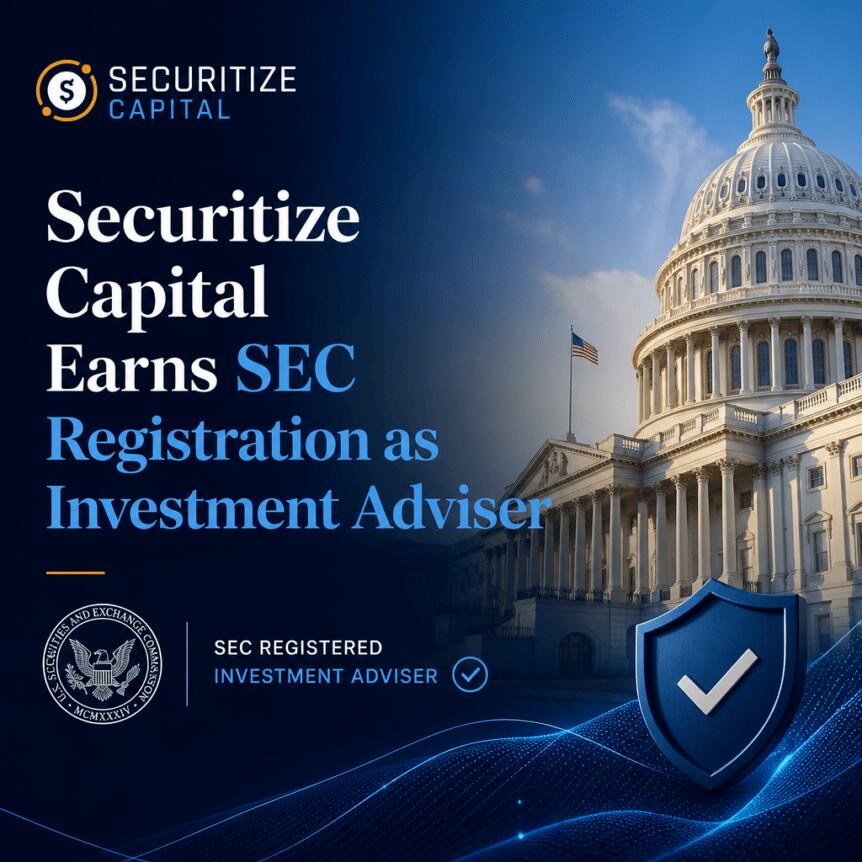
Securitize Capital, the investment-advisory arm of tokenized-asset platform Securitize, has registered with the U.S. Securities and Exchange Commission as an investment adviser, the company said Monday.
The registration is intended to expand Securitize’s regulated advisory offering for institutional clients and add investment-advisory capabilities to the company’s existing market infrastructure services. Securitize Capital had previously operated as an exempt reporting adviser.
With SEC registration, Securitize Capital is subject to additional requirements under the Investment Advisers Act. Those requirements include broader disclosure and compliance obligations, as well as stricter recordkeeping and examination standards than those generally applied under an exempt reporting-adviser framework.
Registration expands regulated advisory role
SEC investment adviser registration changes the regulatory obligations that apply to Securitize Capital across compliance, reporting and oversight. The company’s registration brings the firm under the Investment Advisers Act, which typically increases the scope and rigor of formal compliance programs, required documentation and regulatory examinations compared with an exempt reporting adviser status.
Registered investment advisers also generally must provide public disclosures through Form ADV and operate under fiduciary obligations when providing investment advice. For institutions assessing tokenized-asset strategies, that regulatory framework can be relevant to diligence, governance and oversight processes, even though registration does not constitute SEC endorsement of a firm or its products.
Securitize said the update strengthens its ability to support institutions developing and managing investment strategies that incorporate onchain capital markets. The registration adds a regulated advisory pathway inside the Securitize ecosystem for clients seeking advisory services connected to tokenized investment products, alongside the company’s other regulated functions.
The registration does not by itself indicate new products, fee arrangements or changes in the availability of tokenized funds. It establishes a broader regulated role for Securitize Capital within the company’s existing business model.
Existing SEC-regulated businesses
Securitize said the investment-adviser registration adds advisory capabilities to its existing regulated footprint. According to the company, its current SEC-regulated business lines include an SEC-registered broker-dealer, an alternative trading system, a transfer agent and fund administration services.
Tokenization platforms often use multiple layers of regulated infrastructure to support issuance, transfer, administration and execution. By adding investment advisory capabilities to its existing regulated businesses, Securitize is seeking to provide a more integrated set of services for institutional participants that prefer to work with providers operating under SEC frameworks.
The move also broadens Securitize’s role in real-world assets, or RWA, tokenization beyond issuance and custody-adjacent functions. Under the adviser framework, the platform can include portfolio strategy support among its regulated services.
Tokenized assets and asset manager relationships
Securitize described itself as the largest tokenization platform by onchain asset value, citing approximately $4.8 billion in tokenized assets across funds associated with major asset managers. The company named BlackRock, Apollo, KKR, VanEck, Hamilton Lane and other firms.
For investors and allocators, the cited figure relates to where tokenized-asset activity, liquidity and operational capacity may be concentrated. Tokenization projects differ widely in activity levels and infrastructure maturity, and adviser registration indicates that Securitize is expanding its regulated institutional services beyond settlement and issuance into ongoing strategy and management.
Securitize Capital previously operated under an exempt reporting-adviser framework, which generally involves lighter oversight than full SEC registration. The new status places the firm in a registered adviser framework with additional compliance expectations.
NYSE listing and share performance
Securitize’s parent company began trading on the New York Stock Exchange under the ticker SECZ on July 2 after completing a merger with Cantor Equity Partners II. The announcement referenced the completion of that business combination.
Since the listing, shares have declined about 46% from their first-day closing price, according to Yahoo Finance data available at the time of the article. Stock performance does not directly measure regulatory progress, but it provides market context for a company operating in an RWA sector that continues to address questions of scale, standardization and distribution.
The adviser-registration step expands Securitize Capital’s regulatory alignment and advisory capabilities for institutions seeking investment strategy support connected to onchain capital markets. The next development to watch is whether the SEC adviser status leads to new or expanded institutional advisory workflows, including additional offerings tied to onchain investment strategies, and how regulators assess the firm’s compliance posture as it moves from exempt reporting adviser requirements to a registered adviser framework.

