SEC's 'Full Securities Lifecycle' Approach Signals Sustained Oversight for Token Projects
Key Takeaways
- •A full securities lifecycle approach would extend SEC oversight of token projects beyond fundraising to disclosure, trading, custody, and ongoing reporting obligations before, during, and after issuance.
- •The direction aligns with the SEC's proposed regulation for crypto assets and its clarification of how federal securities laws apply to digital assets, but no final rule has been adopted.
- •A lifecycle framework set in rule text would establish standing expectations for issuers, replacing obligations previously defined case by case through enforcement litigation.
- •Any lifecycle rule would be subject to a public comment period before final adoption, with further SEC guidance, speeches, and proposal text as near-term signals.
- •Comparable regulatory restructuring abroad, including Japan's tighter crypto insider trading rules and the CFTC's removal of its no-deny settlement rule, indicates the shift extends beyond the United States.
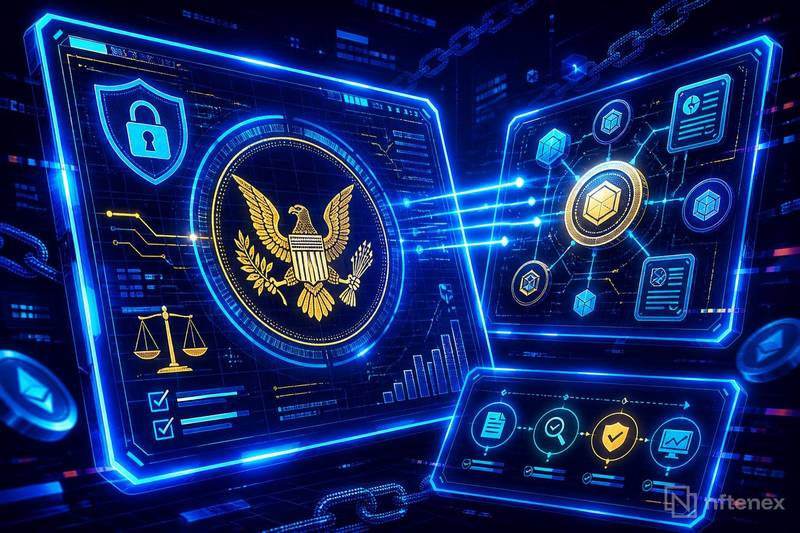
What a 'full securities lifecycle' approach means
A lifecycle framing reaches further than a token sale exemption. Rather than clearing a project only at the fundraising stage, it signals oversight obligations before, during, and after issuance — spanning disclosure, trading, custody, and ongoing reporting expectations. For related coverage, see Report: Russia's Sberbank to Launch Crypto Wallet by December.
The framing mirrors how US securities law already divides its own oversight along lifecycle lines: the Securities Act of 1933 governs disclosure and registration at issuance, while the Securities Exchange Act of 1934 covers secondary trading venues, intermediaries, and continuing reporting. Applying that structure to tokens treats a digital asset less like a one-time fundraising event and more like an instrument the agency tracks across its life.
The direction lines up with the SEC's proposed new regulation for crypto assets, part of a wider push the agency has described in its clarification of how federal securities laws apply to crypto assets. This analysis concerns that signaled direction, not a finalized rule.
Why this is a bigger shift than a simple exemption
A fundraising exemption addresses capital formation. It does not settle the post-launch questions — secondary trading, issuer responsibilities, investor protections — that determine how a token behaves once it is live in the market.
A lifecycle model instead treats a token project as something the SEC engages with over time. That matters for teams that hoped exemption relief alone would end their regulatory uncertainty, since recurring obligations would not disappear after the mint. The approach also sits alongside the agency's broader move to advance three crypto rule proposals, and echoes long-running disputes such as the American CryptoFed and Locke token registration fight over how tokens fit securities frameworks — a question long anchored by the Supreme Court's 1946 SEC v. W. J. Howey Co. decision, which defined an "investment contract" as an investment of money in a common enterprise with profits expected from the efforts of others.
Implicit in the framing is a procedural shift as well. Much of the SEC's past engagement with token projects came through enforcement actions alleging unregistered offerings, with obligations defined case by case through litigation; a lifecycle framework set out in rule text would establish standing expectations for issuers instead.
What token projects and investors should watch next
If the SEC advances a lifecycle framework, the open questions become implementation and compliance milestones, how broadly the concept applies across issuance and trading, and what it demands of exchanges that list these assets. Near-term signals to track are further SEC guidance, speeches, and proposal text. Like other SEC rule proposals, any lifecycle rule would also go through a public comment period before final adoption.
For NFT and token teams specifically, the operational implications touch token design, disclosure practices, marketplace access, and royalty and custody arrangements that would need to survive scrutiny well beyond the initial drop.
The regulatory current is not confined to Washington. Comparable structural shifts — from Japan's crypto reform bill tightening insider trading rules to the CFTC scrapping its no-deny settlement rule — show regulators reworking the full arc of how digital assets are issued and traded, not just how they are sold. Even before any formal SEC rule change, the lifecycle concept is a meaningful signal for anyone building tokenized ownership.
Disclaimer: This article is for informational purposes only and does not constitute financial or investment advice. Cryptocurrency and digital asset markets carry significant risk. Always do your own research before making decisions.

