SEC Weighs Whether Novel ETFs Across Crypto, Leverage and Private Assets Fit Current Rules
Key Takeaways
- •The SEC is reviewing whether exotic ETFs spanning crypto, leveraged stocks, private assets and event contracts fit existing disclosure, listing and investor-protection rules.
- •The agency has opened a formal request for comment, released in mid-2026, inviting public input on how novel ETF structures align with current rules.
- •SEC Chairman Paul Atkins signaled particular caution on prediction-market ETFs amid the broader review.
- •Each product category raises distinct concerns, such as custody and valuation for crypto, suitability for leveraged products, and pricing for illiquid private assets.
- •The review's outcome could set standards across many next-generation fund proposals, with the close of the comment period as the next key milestone.
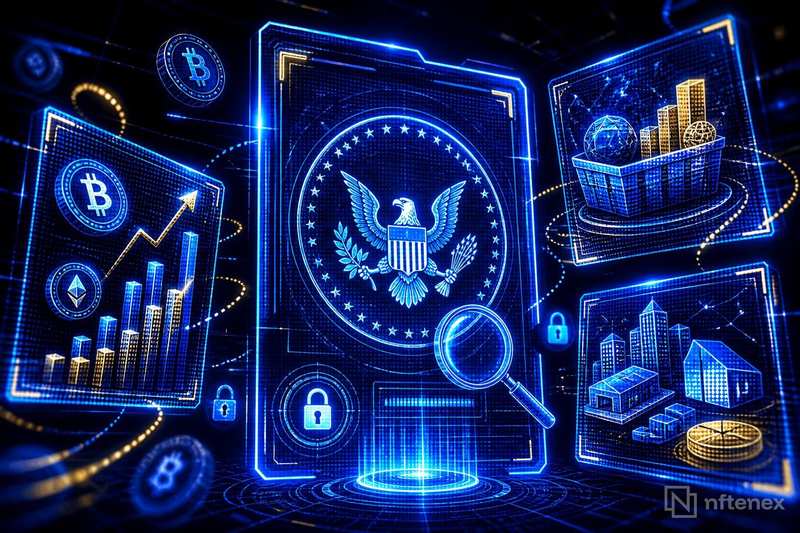
The U.S. Securities and Exchange Commission is examining whether a new generation of exotic exchange-traded funds — spanning crypto, leveraged stocks, private assets and event contracts — fits within the country's existing disclosure, listing and investor-protection framework. The review puts fresh regulatory focus on a market that has expanded faster than the language built to govern it.
The SEC is not issuing a blanket approval or rejection. Instead, the agency is assessing whether these novel fund structures can operate under current disclosure and listing rules. The products under review fall into four categories: crypto, leveraged stocks, private assets and event contracts. The agency has also opened a formal request for comment inviting public input on the funds.
What the SEC Is Reviewing
In this context, an "exotic" ETF is a fund that wraps hard-to-value or highly complex exposure inside a vehicle that trades on an exchange much like an ordinary index fund. That wrapper is powerful precisely because it borrows the familiar plumbing of mainstream ETFs — intraday trading, the creation-and-redemption mechanism, daily NAV — and applies it to assets that were historically held through other channels. SEC Chairman Paul Atkins laid out the agency's thinking in a statement on novel exchange-traded funds.
The review is a question of fit rather than a verdict. The SEC also opened a request for comment on novel ETFs, inviting the public to weigh in on how these structures square with existing rules. That request was formally released in mid-2026, according to the Mutual Fund Directors Forum.
The central concern is whether current disclosure and listing standards give investors enough information to understand what they are buying.
Why the Four Product Categories Raise Different Risks
Although the four product buckets share the ETF wrapper, each triggers a distinct policy problem.
Crypto exposure raises custody, valuation and volatility questions — the same tensions that shadow tokenized and NFT-adjacent asset structures.
Leveraged stock ETFs present a separate concern: they amplify both gains and losses, raising suitability questions for retail investors who may treat them like plain index funds.
Private assets are harder still, because they lack the continuous market pricing that a daily-traded, daily-redeemable fund depends on. This is the same structural tension behind the broader industry push toward tokenized funds, where issuers attempt to give illiquid holdings more frequent pricing and transferability.
Event contracts add a genuinely novel dimension. Atkins signaled caution specifically on prediction-market ETFs amid a broader rethink of these structures, as reported by InvestmentNews.
What the Review Could Mean for Issuers and Investors
A formal review can shape how issuers structure, market and time exotic ETF launches, since a pending rethink adds uncertainty to filings and approval timelines. That matters for a crypto-fund pipeline that has been running hot, with Ethereum products among the most active: ETH funds recently pulled in $226 million in a single day and $713 million across a week.
For investors, clearer risk disclosures matter most where complex exposure meets easy exchange trading. The tension is the same one regulators abroad are wrestling with, from the ESMA review of crypto custodians under MiCA to tighter tax and reporting regimes such as South Korea's incoming crypto tax.
Because the review spans several asset types at once, its outcome could set standards for a broad slice of next-generation fund proposals rather than a single niche. The next visible milestone will be the close of the comment period and any SEC follow-up, which issuers and fund boards will be watching for signals on disclosure expectations. The through-line is oversight and disclosure standards, not a prediction of which products survive.
Disclaimer: This article is for informational purposes only and does not constitute financial or investment advice. Cryptocurrency and digital asset markets carry significant risk. Always do your own research before making decisions.
