SEC Proposes 'Regulation Crypto' With $5 Million and $75 Million Registration Exemption Tiers
Key Takeaways
- •The SEC has proposed a "Regulation Crypto" framework with two securities-registration exemption tiers set at $5 million and $75 million for crypto token offerings.
- •The proposal is still at the rulemaking stage and remains subject to the public notice-and-comment process before any final rule can take effect.
- •The proposed thresholds track existing SEC exempt-offering rules, matching Regulation Crowdfunding's $5 million campaign cap and Regulation A Tier 2's $75 million raise limit.
- •If adopted, the tier an issuer selects would likely determine the scale of its offering and the level of required disclosure, though specifics depend on the final rule text.
- •The framework arrives after the securities status of digital assets was largely addressed through SEC enforcement actions against token issuers and trading platforms rather than a tailored exemption path.
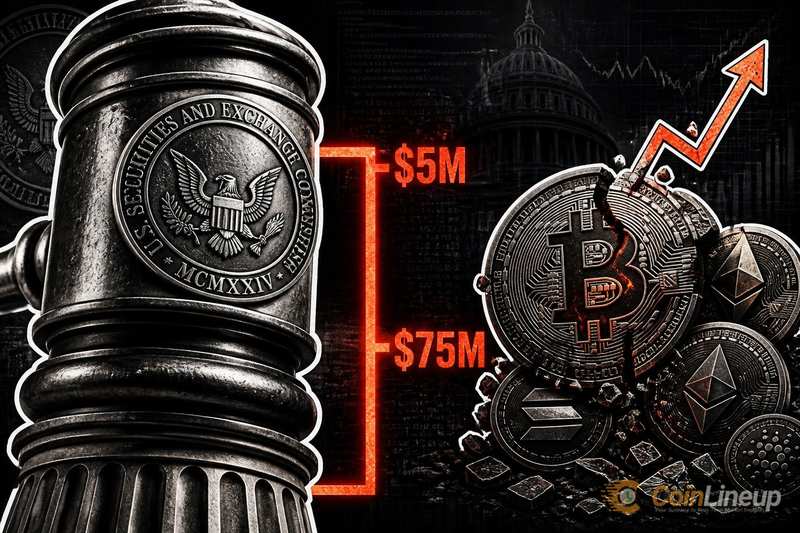
The U.S. Securities and Exchange Commission (SEC) has proposed a new "Regulation Crypto" framework built around two securities-registration exemption tiers set at $5 million and $75 million, a move that would give token issuers defined thresholds for raising capital without full registration. The proposal is at the rulemaking stage and has not been adopted as final policy.
According to a report on the SEC's proposed Regulation Crypto, the plan centers on a tiered exemption structure tailored to crypto offerings rather than a single blanket carve-out. Because the rules are proposed rather than adopted, they remain subject to the standard notice-and-comment process before anything takes effect. Under that process, members of the public — including issuers, exchanges, investors, and legal observers — can submit feedback before the agency decides whether to advance a final rule.
What the proposed exemption tiers would do
The framework is designed as an exemption path, meaning qualifying crypto offerings could be raised without the full registration burden that applies to traditional securities. The centerpiece of the design is the pair of dollar limits that define how much an issuer can raise under each tier.
The lower tier is set at $5 million and the upper tier at $75 million, thresholds that would separate small-scale token raises from larger fundraising rounds. Both figures have precedents in the SEC's existing exempt-offering regime: Regulation Crowdfunding caps individual campaigns at $5 million, and Regulation A's Tier 2 permits raises of up to $75 million, so the proposed crypto tiers track dollar limits the agency already applies outside digital assets. The proposal is a regulatory framework for crypto fundraising, not a rule that issuers can rely on today.
How the tiers could shape crypto fundraising
A $5 million ceiling implies a lighter path aimed at smaller projects and early-stage token issuers, while the $75 million tier is broad enough to matter for more substantial capital raises. Tiered exemptions of this kind generally carry different compliance and disclosure expectations, though the specific obligations would depend on the final rule text. In the traditional regime, for example, Regulation A's Tier 2 carries ongoing reporting obligations that Tier 1 does not, illustrating how dollar thresholds have historically been paired with graduated compliance duties.
If adopted, the structure could influence how issuers decide to size and structure their offerings, since the choice of tier would likely determine the level of disclosure required. That interpretation follows from the proposal's two-threshold design and remains conditional on how the SEC finalizes the details. The framework also arrives after a period in which the question of whether digital assets are securities was largely handled through SEC enforcement actions against token issuers and trading platforms rather than through a tailored exemption for token sales.
Regulators have leaned on tiered, comment-driven frameworks in other recent digital-asset efforts, including the Treasury's move to propose GENIUS Act stablecoin rules with a public comment period. The push for clearer crypto rules has also drawn attention from lawmakers pressing for stronger oversight, as seen in Senator Gillibrand's crypto ethics reform effort.
What to watch next
A formal SEC proposal typically triggers scrutiny from issuers, exchanges, investors, and legal observers, and the defined exemption tiers give the market a concrete reference point for debating compliant token issuance. Any market impact is prospective, because the proposal has not been finalized.
The next phase would center on public feedback, potential revisions, and the SEC's decision on whether to advance a final rule. Readers watching the process should track the comment period and any changes to the two thresholds before drawing conclusions about how the framework would work in practice. Additional source references are available in source documentation.
This article is for informational purposes only and does not constitute financial or investment advice. Cryptocurrency and digital asset markets carry significant risk, and readers should conduct their own research before making decisions.

