SEC Proposal Could Let Public Blockchains Hold Official Shareholder Records
Key Takeaways
- •The SEC proposal would allow public blockchains to hold official shareholder records for registered transfer agents.
- •The measure is part of a broader effort to modernize rules governing transfer agents and securities recordkeeping.
- •Shareholder records determine legal ownership, voting rights, and dividend eligibility for public company stocks.
- •The proposal remains subject to public comment, review, and possible revision before any rule takes effect.
- •Wall Street transfer agents have raised concerns that third-party tokens could create risks to market integrity.
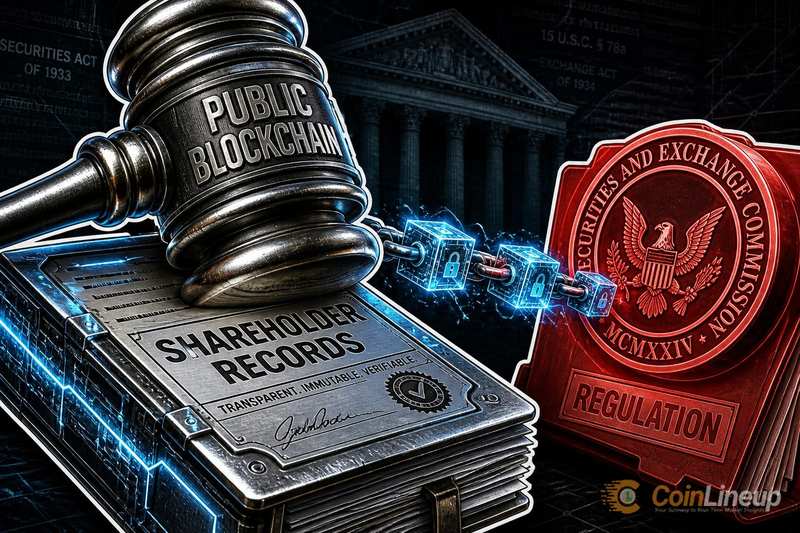
The U.S. Securities and Exchange Commission has proposed new rules that could allow public blockchains to hold official shareholder records, a change that would link securities compliance directly to blockchain-based recordkeeping.
What the SEC proposal appears to change
This is a proposal, not a finalized rule. The SEC published it as part of a plan to modernize the rules for registered transfer agents. For related coverage, see SEC $75 Million Proposal and Senate Crypto Framework Take Different Paths.
Transfer agents are the companies that keep track of who owns shares of a public company. “Official shareholder records” simply means the legal list of who owns what. For related coverage, see Cornell Report Ranks El Salvador and Venezuela Highest for Bitcoin Adoption.
The key policy point is that a public blockchain, an open network anyone can access, could hold those records. The proposing release lays out the details for public comment. This is a formal recordkeeping use case, not a blanket endorsement of crypto trading.
Why blockchain-based shareholder records would matter
Shareholder records sit at the center of ownership tracking and corporate administration. They determine who legally owns a stock and who gets to vote or receive dividends.
Putting those records on a public blockchain would move the technology deeper into regulated financial infrastructure. It would be a step beyond trading tokens and into the core plumbing of public companies.
The idea connects traditional securities systems with blockchain’s transparency claims. Supporters point to auditability and efficiency, although those benefits remain unproven at this scale. The same shift matters to companies weighing public listings, a theme also visible as Kraken reportedly delays its IPO.
Limits, open questions, and what comes next
Not everyone is comfortable with the direction. Wall Street transfer agents have lobbied the SEC, warning that third-party tokens could pose risks to market integrity.
A proposal still has to go through review, public comment, and possible revision before it takes effect. Nothing changes today for listed companies or their investors, and any adoption would still have to work within existing legal and technical requirements.
Real-world use would depend on the final rules and on how the SEC resolves open questions about recordkeeping, oversight, and the role of transfer agents. Reporting has framed the effort as a rewrite of decades-old Wall Street rules governing who legally owns a stock.
This proposal follows other SEC crypto rulemaking, including a custody proposal now in White House review and a separate fundraising exemptions proposal open for comment. See the custody proposal now in White House review and the fundraising exemptions proposal open for comment.
The practical takeaway is simple: if you hold a little crypto or own stocks, nothing changes right now. But if this proposal becomes a rule, the way share ownership is recorded could eventually run on the same kind of technology that powers crypto. Watch the SEC’s comment process for what comes next.
Disclaimer: This article is for informational purposes only and does not constitute financial or investment advice. Cryptocurrency and digital asset markets carry significant risk. Always do your own research before making decisions.

