Tokenised Stocks Are Coming to the US, but the SEC May Already Be Putting on the Brakes
Key Takeaways
- •The SEC's Innovation Exemption allows selected platforms a five-year window to trial blockchain-based trading of US stocks while gathering public input on future rules.
- •Initial limits permit platforms to offer up to 75 of the largest US stocks, with tokenized trading capped at 0.25% of each stock's average daily volume.
- •Robinhood crypto chief Johann Kerbrat said the company's existing stock token business outside the US is already active enough that it could bump against some of the SEC's proposed thresholds.
- •Robinhood's current stock tokens are offered outside the US and structured differently from the SEC's framework, making the comparison imperfect.
- •SEC Chair Paul Atkins described the exemption as a bridge toward more permanent rules rather than a final destination, with the comment process giving market participants a formal channel to shape future regulation.
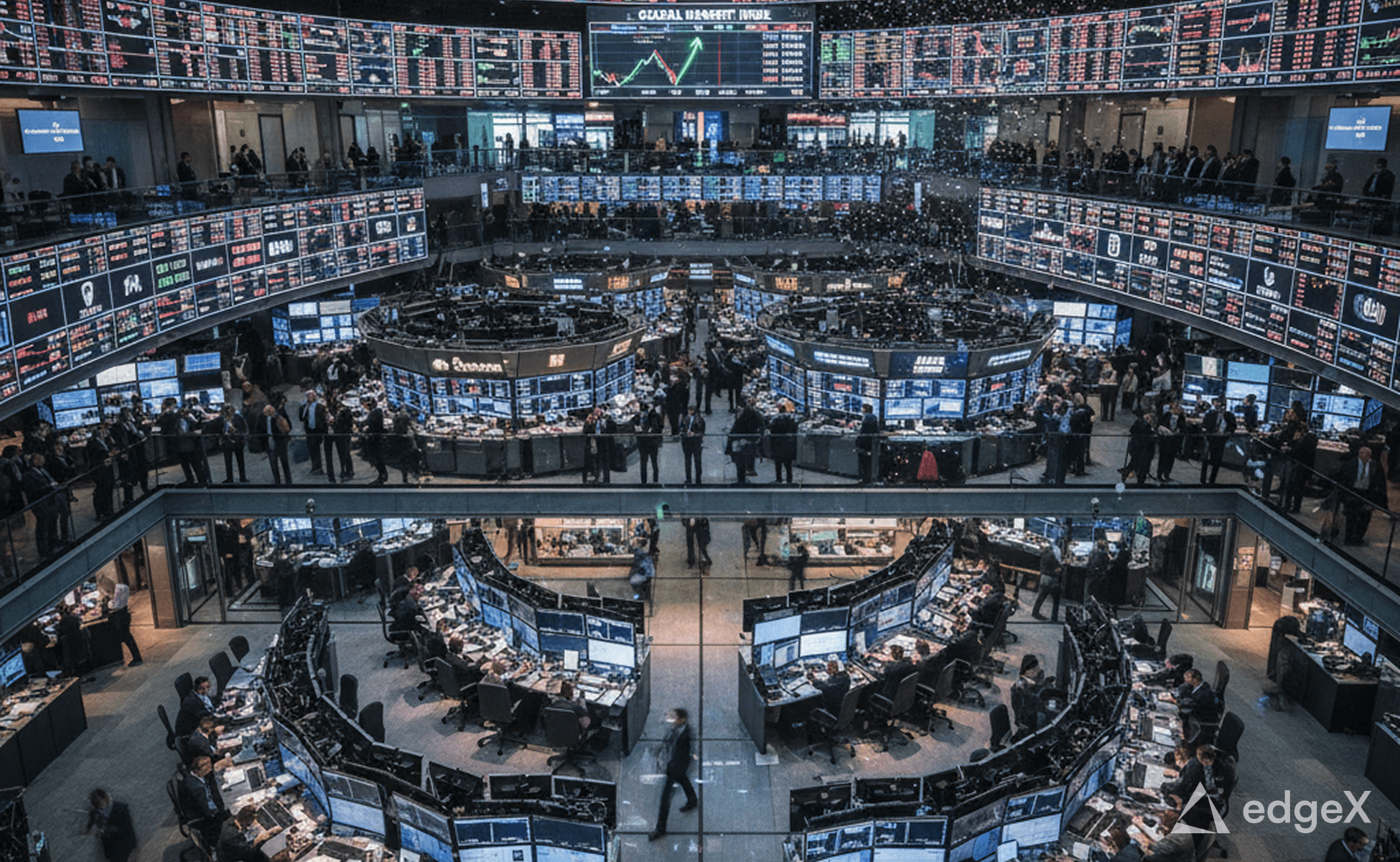
Tokenised stocks have long been heralded as one of the more obvious bridges between traditional finance and crypto, and the United States is finally starting to open that door.
The US Securities and Exchange Commission (SEC) recently introduced an Innovation Exemption, a framework that gives certain platforms a five-year window to experiment with trading US stocks using blockchain technology. Alongside the exemption itself, the SEC has asked the public to weigh in, making this as much an information-gathering exercise as a market-opening one. But what exactly does that mean?
In simple terms, instead of buying a share of Apple through traditional stock market infrastructure, investors could eventually hold a digital token representing that very same share on a blockchain. The idea is primarily to bring crypto's technology into traditional markets, potentially allowing for faster settlement and more flexible trading.
That may sound straightforward, but the SEC is also placing fairly strict guardrails around the experiment. The new framework comes with limits on how many stocks platforms can offer and how much trading activity can take place. For example, platforms can initially offer up to 75 of the largest US stocks, with trading capped at just 0.25% of each stock's average daily volume. Smaller stocks may get slightly more room, but restrictions apply regardless. In practice, those caps are designed to keep tokenised trading a small fraction of each stock's overall activity while the SEC observes how the technology performs under supervision.
For Robinhood, those limits could become a problem rather quickly. The firm's crypto chief, Johann Kerbrat, spoke to The Block and said that the company's existing stock token business outside the US is already seeing enough activity that it could bump against some of the SEC's thresholds. That is an important caveat to take note of.
Context matters here: Robinhood's current stock tokens are offered outside the US and are structured differently from what the SEC is proposing, so it is not exactly an apples-to-apples comparison. Even so, the bigger point still stands. The SEC is clearly willing to let tokenised stocks develop in the US, but it wants to do so on its own terms — which for now means slowly and under controlled conditions.
That does not mean things might not change moving forward. SEC Chair Paul Atkins has described the exemption as a bridge towards more permanent rules rather than the final destination. The comment process attached to the framework gives market participants a formal channel to shape what those durable rules could eventually look like. So while the regulator may be putting on the brakes for now, it does not mean it will not take its foot off the pedal at some point in the future.
As things stand, the conversation is no longer centering on whether stocks can move onto blockchain technology. It is starting to shift toward whether regulators can keep up if investors actually start using them — and how much activity materialises under the current caps will be one of the clearest signals to watch.

