SEC Grant Hiatus Pauses Reviews of New Crypto ETF Proposals
Key Takeaways
- •The SEC has temporarily stopped issuing approval grants on pending cryptocurrency ETF applications, placing new proposals in a procedural freeze.
- •The hiatus is a suspension of process rather than a denial, and no specific crypto ETF proposal has been rejected.
- •No newly SEC-approved crypto ETFs are expected to come to market during the pause, while already-listed funds continue to operate normally.
- •No timetable has been set for ending the hiatus, with updated filing notices, new public action on proposals, and response letters to applicants serving as signals that reviews have resumed.
- •Crypto regulation is advancing on other fronts, as three firms recently received conditional federal trust-bank approvals and U.K. crypto firms face a Financial Conduct Authority deadline in early 2027.
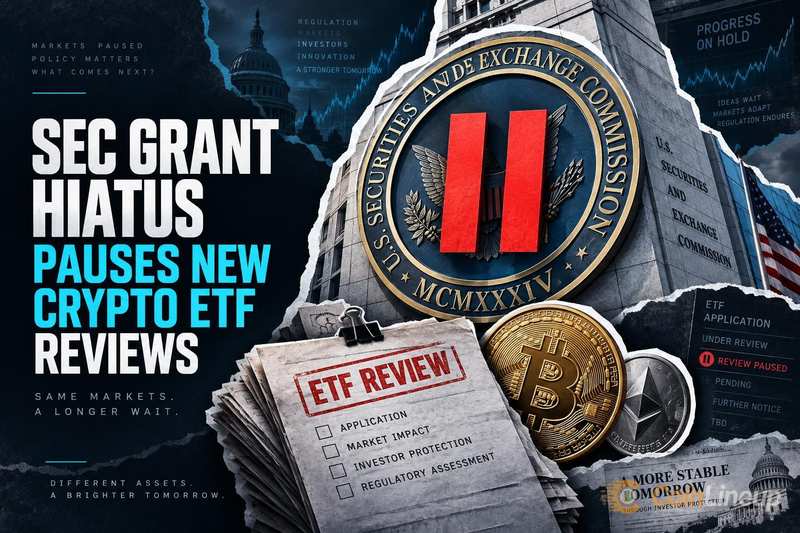
The U.S. Securities and Exchange Commission (SEC) has entered a grant hiatus, temporarily suspending its review of new cryptocurrency exchange-traded fund (ETF) proposals. For issuers and investors waiting on a new crypto fund to reach the market, the wait has just gotten longer — but the pause is a procedural freeze, not a rejection.
Why the SEC grant hiatus has paused crypto ETF reviews
A grant hiatus means the SEC has temporarily stopped issuing approval grants on pending applications. New crypto ETF proposals currently sitting with the agency are caught in that freeze, and the status change is procedural rather than a decision on any specific product.
It is equally important to understand what a pause is not. A review pause does not mean any specific crypto ETF proposal has been denied; it simply means the regulator has stopped moving those files forward for now.
Crypto ETFs are investment funds that trade on stock exchanges and hold digital assets such as Bitcoin or Ether. They allow everyday investors to gain exposure to cryptocurrency prices without needing to hold the assets directly. Before launching such a fund, an issuer must apply to the SEC for approval, and that process involves multiple review stages. Some crypto ETF applicants have already sought tax exclusions for in-kind redemptions as part of their broader regulatory strategies — a sign of just how layered the approval process has become.
What the delay means for issuers and investors
Any issuer with a new crypto ETF proposal under review now faces a longer wait for regulatory action. The SEC's review clock does not stop entirely, but active of new approvals is on hold for the duration of the hiatus.
For investors, the practical effect is that no newly SEC-approved crypto ETFs are expected to come to market while the pause remains in place. The distinction matters: products that are already listed and trading are not affected, and existing funds continue to operate normally. The freeze applies only to new proposals working through the approval pipeline.
The broader wave of crypto regulatory activity continues on other fronts. Three crypto firms recently received conditional federal trust-bank approvals, showing that other regulatory pathways remain open even as new ETF reviews are paused. Regulatory scrutiny is also tightening across jurisdictions: crypto firms in the United Kingdom are facing their own regulatory deadline from the Financial Conduct Authority (FCA) in early 2027, a reminder that global crypto regulation is advancing on multiple fronts at once.
What to watch as SEC crypto ETF review activity resumes
The available information does not establish a timetable for when the hiatus will end. Investors and issuers should monitor the SEC's official administrative proceedings for any update on review operations. In the absence of an official end date, procedural signals are the most reliable guide to when normal review activity has resumed.
The clearest signal that reviews have restarted will be updated filing notices or new public action on individual proposals. Formal deadline extensions or response letters to applicants would also indicate that the agency is actively engaging with pending files again.
Anyone tracking a specific application should watch the SEC's public docket directly, since formal regulatory updates are published by the agency before appearing in secondary reports.
Disclaimer: This article is for informational purposes only and does not constitute financial or investment advice. Cryptocurrency and digital asset markets carry significant risk. Always conduct your own research before making decisions.

