SEC Chairman Atkins Signals Standalone Crypto Rules Ready Regardless of CLARITY Act Outcome
Key Takeaways
- •SEC Chairman Paul Atkins publicly committed on July 28, 2026 to issuing cryptocurrency regulations independently if the Senate does not pass the CLARITY Act before the August 7 recess.
- •The SEC has already established foundational frameworks, including the March 2026 Token Taxonomy and the July 2026 Regulatory Agenda, covering crypto capital raising, tokenized securities, and onchain asset custody.
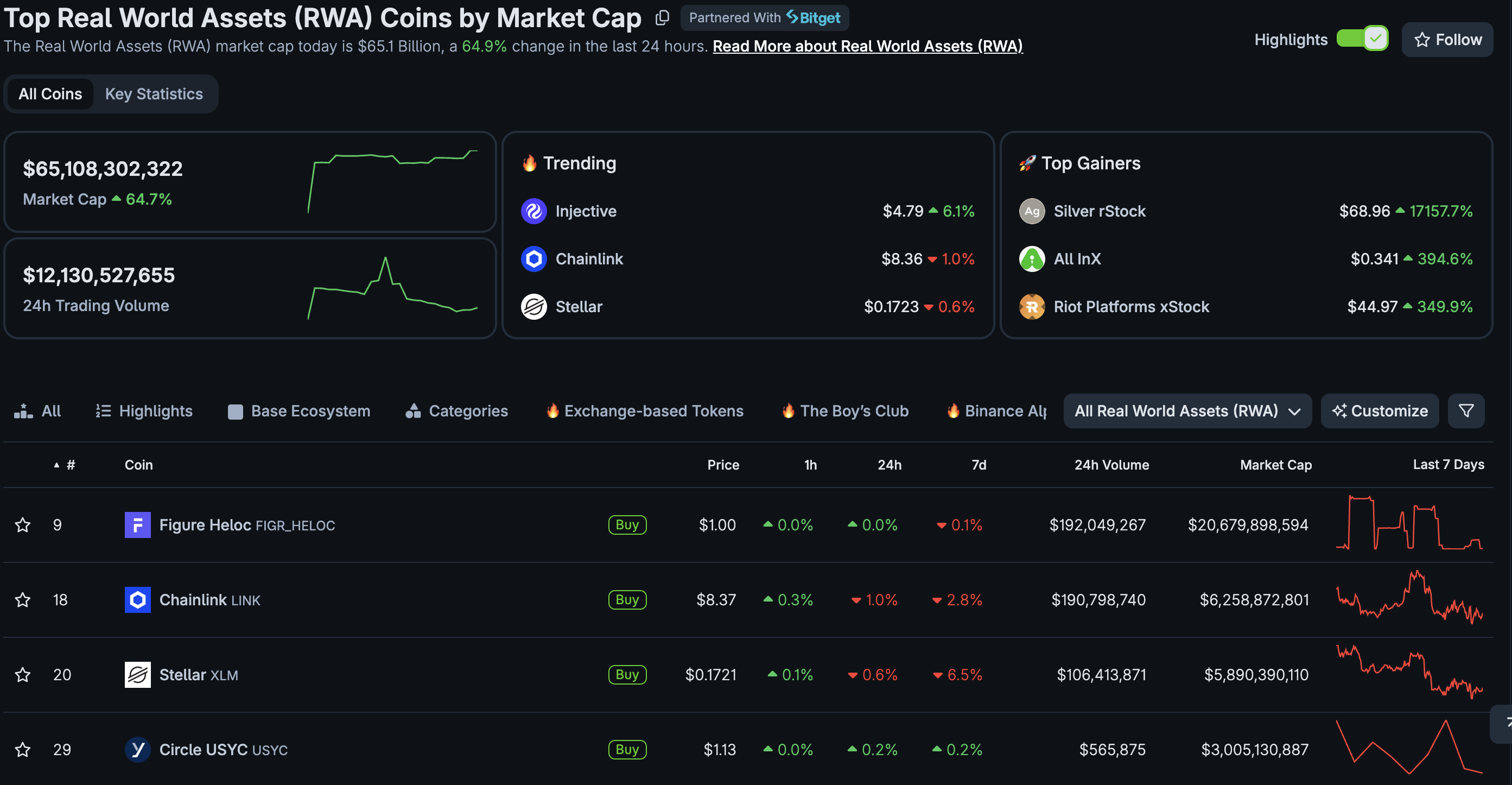
- •The tokenized real-world asset market has surpassed $65 billion excluding stablecoins, with tokenized stocks alone reaching approximately $2 billion, intensifying the need for formal regulatory guidance.
- •Senators Tillis, Lummis, and Gallego are negotiating a bipartisan compromise on ethics provisions related to presidential crypto holdings, which remains a central obstacle to securing the 60 votes needed for Senate passage.
- •Major financial institutions including BlackRock, Fidelity, and Goldman Sachs have publicly endorsed the CLARITY Act, reflecting broad industry support for statutory regulatory certainty over standalone agency rules.
SEC Chairman Paul Atkins stated in a July 28, 2026 CNBC interview that the agency is "ready, willing, and able to come out with rules that address the same issues as CLARITY," signaling that cryptocurrency regulatory clarity will arrive independently of whether the Senate passes the CLARITY Act before its August 7 recess deadline.
Atkins's statement builds on an existing regulatory foundation: the SEC's Token Taxonomy released in March 2026, which classifies which digital assets qualify as securities, and the agency's July 2026 Regulatory Agenda, which prioritizes rules for crypto capital raising, tokenized securities, and onchain asset custody—all core subject areas covered by the CLARITY Act legislation.
The central question now facing market participants is whether Senate Majority Leader Thune will bring the CLARITY Act to a floor vote before August 7, or whether Chairman Atkins will initiate unilateral SEC rulemaking that could reshape onchain capital markets without congressional authorization. The distinction matters practically: standalone SEC rules would move through the Administrative Procedure Act's notice-and-comment process, which typically requires months between proposed and final rules, whereas enacted legislation would take effect on dates set by Congress. Agency rules also remain more vulnerable to modification or rescission by future leadership than federal statute—a reason some market participants still prefer legislative certainty.
Regulatory Architecture Already in Place
Atkins's public commitment carries significant institutional weight because it reflects frameworks the SEC has already developed. The March 2026 Token Taxonomy delineates which crypto assets are classified as digital securities and which fall outside that classification.
On July 7, 2026, Atkins emphasized on the SEC's Regulatory Agenda that clear rules for crypto capital raising, tokenized securities, and onchain asset custody are agency priorities advancing without congressional involvement. Analyst Ben Lilly observed that the SEC generally prefers the permanence of codified legislation over standalone rules that could mirror the CLARITY Act.
Atkins's remarks effectively convert a policy preference into a public commitment, marking a sharp departure from the enforcement-centric approach of the prior Gensler era. Under the Project Crypto initiative, both the SEC and CFTC have been actively issuing guidance and proposed rules. The CLARITY Act, by contrast, would formally define the boundary between SEC and CFTC jurisdiction over digital assets; if the Senate does not act, that jurisdictional line remains governed by existing securities and commodities law rather than crypto-specific statute.
The chairman's message also serves as a signal to the Senate: a regulatory framework for the digital asset industry is forthcoming regardless of legislative action, a factor that may influence how Democratic senators approach their votes ahead of the August 7 recess.
RWA Tokens and Onchain Capital Markets
The stakes are reflected in real-world asset (RWA) market data. According to CoinGecko, the total value of tokenized real-world assets has surpassed $65 billion—excluding stablecoins—with tokenized stocks alone reaching approximately $2 billion. (Source: CoinGecko)
This expansion highlights the urgency for formal regulatory guidance, particularly as firms such as Robinhood and major exchanges compete to build new onchain capital markets infrastructure. The competitive backdrop extends beyond U.S. borders: the European Union's Markets in Crypto-Assets (MiCA) regulation has been fully applicable since December 2024, giving European firms a defined compliance framework, while U.S. firms continue operating under a patchwork of SEC guidance, CFTC oversight, and enforcement precedent.
Key open questions include which token structures qualify as digital securities under the SEC's Token Taxonomy and how custody and capital-raising exemptions apply to these offerings.
The SEC's stated readiness to act independently reduces some uncertainty for compliance-oriented issuers, indicating that regulations will arrive on a defined timeline—either through the CLARITY Act or through the SEC's own rulemaking process.
The August 7 Deadline and Senate Dynamics
Senators Set To Send Tougher CLARITY Act Ethics Rules On Trump Crypto Ties Senator Thom Tillis and Senator Ruben Gallego have finished new ethics language for the CLARITY Act. Sources say the rules are ready to be sent to the White House soon. The provision would limit senior… pic.twitter.com/8LT84fk1dx
— BSCN (@BSCNews) July 30, 2026
Bringing the CLARITY Act to a Senate vote before the August 7 recess requires Majority Leader Thune to prioritize the bill—a decision that remained unresolved as of late July 2026. Even if a vote is scheduled, the legislation faces a 60-vote threshold, with ethics provisions regarding presidential crypto holdings emerging as a central point of contention.
Senators Tillis, Lummis, and Gallego are working on a compromise that would allow state Attorneys General to sue the Department of Justice over enforcement of ethics violations, bridging Democratic and Republican positions. Senate Minority Leader Schumer has also nominated candidates for vacant SEC and CFTC seats, a move interpreted by some observers as signaling potential vote trading.
Major financial institutions including BlackRock, Fidelity, and Goldman Sachs have publicly endorsed the CLARITY Act.
Three scenarios frame the regulatory outlook for digital assets:
- Optimistic outcome: The CLARITY Act passes before August 7, establishing clear statutory crypto regulations and reducing uncertainty for tokenized securities issuers.
- Base outcome: Delays push CLARITY consideration to the fall, while the SEC begins its own rulemaking, providing interim regulatory guidance without full legislative certainty.
- Delay outcome: Continued delays push CLARITY into 2027, creating a regulatory vacuum that could hamper compliance-oriented projects.
The decisive factor is whether Thune schedules a formal vote before August 7. If a vote occurs, a compromise passage appears plausible; if not, the SEC is positioned to begin rulemaking actions before 2027.

