SEC to Vote August 14 on Sweeping Crypto Regulation Proposal
Key Takeaways
- •The SEC will hold an open meeting on August 14 to vote on whether to advance a crypto asset regulation proposal.
- •Chairman Paul Atkins has prioritized formal rulemaking over the enforcement-focused approach that previously triggered legal challenges from crypto firms.
- •The proposed rulemaking document is reported to span roughly 400 pages, indicating a broad scope affecting multiple categories of market participants.
- •If the commission approves the proposal, the next step would be a public comment period before a separate vote on any final version.
- •The outcome could help delineate regulatory authority between the SEC and the CFTC, both of which have asserted oversight over parts of the digital-asset market.
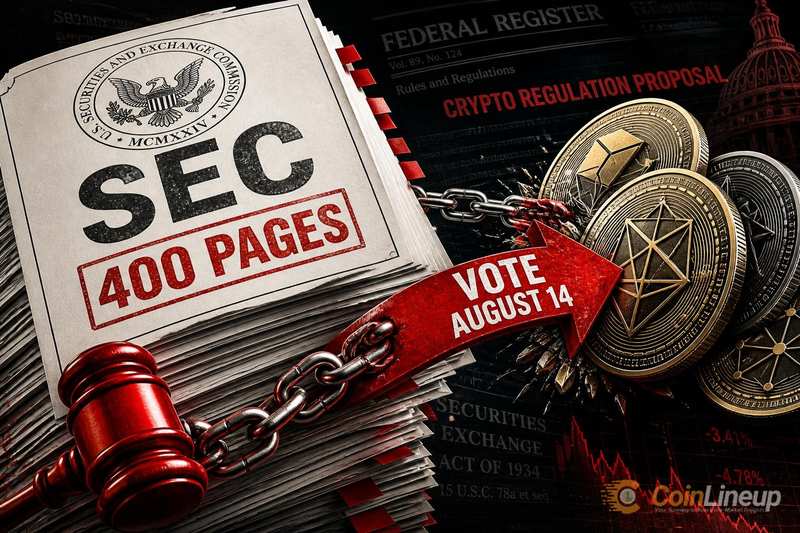
The U.S. Securities and Exchange Commission will hold an open meeting on August 14 to consider a crypto regulation proposal, in what ranks among the agency's most consequential digital-asset votes this year.
The session is listed on the SEC's official open-meeting notice, which sets the agenda for the commission's public proceedings. A vote at this stage determines whether the agency advances the measure — not whether it becomes a final, binding rule.
What the SEC Is Voting On
The item before the commission concerns the regulation of crypto assets, an area that SEC Chairman Paul Atkins has publicly identified as a priority in his remarks on crypto-asset regulation. Atkins has signaled a preference for establishing clear rules through formal rulemaking rather than relying primarily on enforcement actions to define regulatory boundaries — an approach that distinguished the commission's posture in prior years and drew legal challenges from multiple crypto firms.
An SEC vote at an open meeting typically decides whether to propose or adopt a rule. When a proposal clears this stage, it ordinarily opens a public comment period before the commission returns for a separate, later vote on a final version. The length of the rulemaking document — reported to span roughly 400 pages — signals broad scope, as a longer text tends to affect more categories of market participants and more areas of existing securities law. This is why firms and their legal counsel scrutinize these releases closely.
Why This Vote Matters
SEC crypto rulemaking generally reaches exchanges, token issuers, and broker-dealers first, since those are the entities the agency directly registers and oversees. The direction established on August 14 could shape how each group approaches registration and disclosure obligations. The outcome also bears on a long-standing jurisdictional question: both the SEC and the Commodity Futures Trading Commission have asserted oversight claims over segments of the digital-asset market, and any rulemaking that clarifies the SEC's scope could help delineate where each agency's authority begins and ends.
Depending on the text, market participants may face new compliance, listing, or reporting requirements. Investors monitor these votes because the commission's language can signal whether the agency is leaning toward formal rulemaking or continued enforcement-led actions.
The stakes are amplified by the broader U.S. policy backdrop, where legislative efforts have struggled to produce a clear framework. CoinLineup has reported on what comes next for SEC crypto regulation following the Clarity Act's failure in Congress, and the parallel push around the CLARITY Act's September 15 vote underscores how much depends on the regulatory track.
What Comes Next
The August 14 session represents a milestone rather than a final endpoint. If the commission approves a proposal, the likely next step is a public comment window; any revision or delay would extend the timeline further.
Chairman Atkins is working under time pressure as he reworks rules across Wall Street, a dynamic detailed in reporting on the chairman's regulatory agenda. That compressed timeline is one reason observers are closely tracking both the outcome and the precise wording of any release.
In the days following the vote, crypto firms and traders will be watching for the published text, commissioners' statements, and any dissents that may indicate how contested the rule is. Debate over the pace of U.S. crypto policy has already drawn scrutiny, as seen in coverage of criticism over the CLARITY Act delay.
Given the limited public detail available ahead of the session, the most concrete fact remains the scheduled date itself. The specifics of scope and impact will only be verifiable once the commission publishes the document associated with the vote.
