SEC Crypto Custody Proposal Enters White House Review
Key Takeaways
- •The SEC's proposed crypto custody rule has entered White House review and now appears on the federal regulatory agenda, indicating it has advanced beyond an early draft.
- •The proposal is under examination by the Office of Information and Regulatory Affairs, the executive-branch office that checks major rules and typically reviews them near the end of drafting.
- •White House review does not constitute final approval, as the draft text remains unpublished and could still be revised, sent back for changes, or delayed.
- •Exchanges, custodians, and investment advisers that safeguard client digital assets would be the businesses most directly affected by any new custody requirements.
- •Key details of the rewrite remain undisclosed, and the SEC previously withdrew a planned vote on a crypto custody rule, showing the initiative's direction can change.
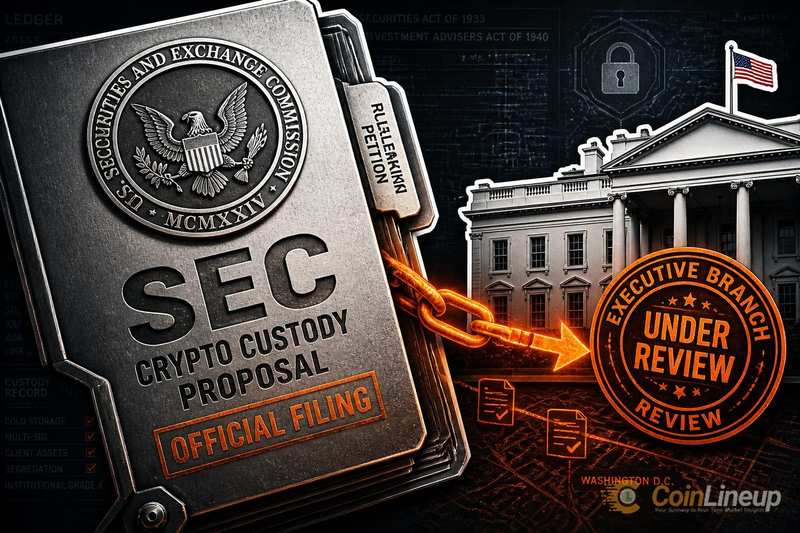
A proposed U.S. Securities and Exchange Commission (SEC) rule on crypto custody has entered White House review, a procedural step that moves the measure one stage closer to becoming a formal rule.
The proposal now appears on the federal government's regulatory agenda, listed under the SEC's rulemaking entry for the custody rule. Its inclusion on the agenda signals the measure has advanced beyond an early draft.
What the White House Review Means
White House review places the rule before the Office of Information and Regulatory Affairs (OIRA), the executive-branch office that checks major rules before agencies release them. The step matters because it usually comes near the end of the drafting process, not the start. Reporting from crypto.news described the proposal as moving forward through this review.
Review, however, is not the same as final approval. The rule is being checked, not published, and its text can still change before it reaches the public.
Why the Proposal Matters for Digital Asset Firms
Custody rules set out how companies must safeguard assets they hold for clients. For crypto firms, that means the standards for storing customers' digital tokens safely. Exchanges, custodians, and investment advisers that handle client crypto would feel any change most directly, as these are the businesses responsible for keeping other people's coins secure. Any new requirements would apply to the platforms and professionals entrusted with safeguarding client assets.
Custody standards are also a core concern for large institutions weighing crypto. Clear safeguarding rules can influence whether banks and funds feel comfortable holding digital assets, and the SEC has previously worked on a broader crypto custody overhaul for investment firms. That makes the current review notable even before any final text is public, because firms often need time to assess operational, legal, and reporting changes once a rule is released. Key details of the current rewrite remain undisclosed, according to CryptoSlate, so firms cannot yet judge the full compliance or reporting burden the rule may bring.
What Comes Next in the Rulemaking Process
After White House review, an agency typically publishes the proposal or sends it back for changes, and the exact release timing is not fixed. The rule's final language could still shift: reviewers may request edits, and the SEC may revise the text before any public release. Until publication, the public has not seen the draft text. The agency earlier withdrew a planned vote on a crypto custody rule, showing that these plans can change direction.
Readers who want to track the process should follow official updates rather than rumor. The SEC posts its steps on its rulemaking activity page, and the executive-branch review status appears on the federal regulatory site.
The practical takeaway: if you hold a little crypto on an exchange, nothing changes today. This is an early procedural step, not a new law. For the industry, though, the review is a reminder that custody standards remain a live regulatory issue, and that the shape of any final rule will matter more than the review itself.
Disclaimer: This article is for informational purposes only and does not constitute financial or investment advice. Cryptocurrency and digital asset markets carry significant risk. Always do your own research before making decisions.
