SEC Proposal Would Permit Blockchain-Based Official Securities Ownership Records
Key Takeaways
- •The proposal would allow a blockchain to serve as a securities ownership master file or as part of one.
- •The measure is permissive rather than mandatory and has not been finalized or made effective.
- •Transfer agents using distributed-ledger technology would have to maintain exclusive control of the master file and meet proposed recordkeeping requirements.
- •Proposed reporting changes would require disclosure of securities issues using distributed ledgers and year-end totals by tokenization model.
- •The SEC’s proposal does not change current rules for buying or selling crypto tokens and does not address issuance, custody, or settlement.
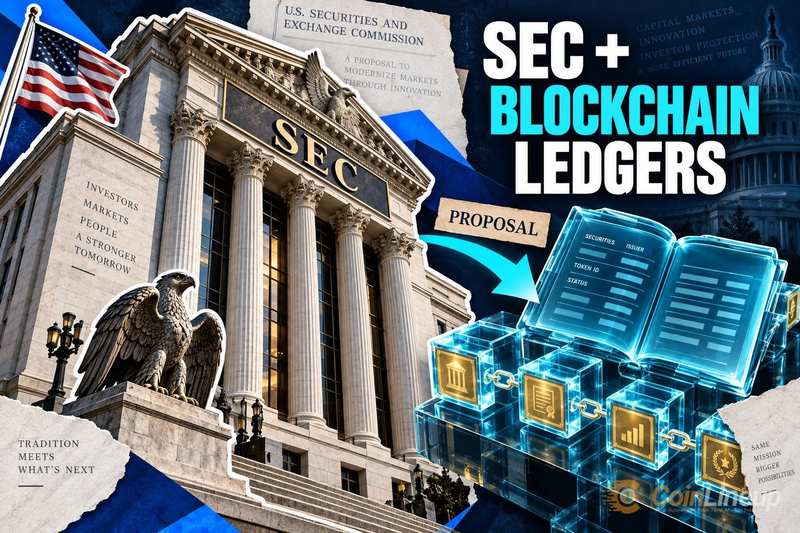
The U.S. Securities and Exchange Commission (SEC) has proposed allowing transfer agents to use a blockchain as the official record of who owns a security. The measure is part of a broader update to transfer-agent rules and remains a proposal rather than a final law or effective rule.
The SEC published the proposed Transfer Agent Rules in the Federal Register on September 4, 2026, under Release No. 34-106246 and File No. S7-2026-30. The official notice is available here.
A transfer agent is a company responsible for maintaining records of ownership of securities such as stocks and bonds. Under current practice, those records are generally maintained in traditional databases. The proposal would permit a transfer agent to maintain them on a blockchain or another distributed ledger.
What the proposal would change
The central record in the proposal is the “master securityholder file.” Section III.B.2 would update its definition to permit a transfer agent to use a blockchain or other distributed ledger as the master file, or as a component of it.
The proposal would not require transfer agents to adopt blockchain technology. Its wording describes what the rules “would allow,” rather than imposing a mandate. The measure has not been adopted, voted into final form, or made effective.
The proposed changes form part of a wider modernization of the rules governing registered transfer agents. The release would amend Forms TA-1 and TA-2, add new Rules 17ad-30 and 17ad-31, and rescind existing Rule 17ad-4.
An official securities ledger would be the recognized record of ownership. If a blockchain were used in that role, it would serve as the authoritative record of who owns particular securities instead of a separate database or spreadsheet.
The proposal addresses recordkeeping only. It does not resolve separate questions involving how tokens are issued, how they trade, who provides custody, or how transactions settle. It also does not endorse a particular blockchain or token and is intended to remain technology-neutral.
The proposal includes conditions for any transfer agent that uses distributed-ledger technology. The transfer agent would have to maintain exclusive control over the master securityholder file at all times and comply with the electronic-recordkeeping standards in proposed Rule 17ad-7(f).
Industry reactions and limits of the proposal
Industry representatives have offered early reactions in media coverage. According to crypto.news, Eli Cohen, chief legal officer at Centrifuge, said allowing the blockchain itself to serve as the master securityholder file could reduce the need to reconcile separate ownership records.
Joris Delanoue, CEO of Fairmint, expressed caution. According to crypto.news, Delanoue said blockchain-based securities would still require compliance controls, including identity and investor-eligibility checks and restrictions on transfers.
Some reports have made broader claims than the SEC’s official text. Unconfirmed reports have said the proposal would eliminate duplicate off-chain shareholder records for all tokenized securities. The official document, however, only permits a blockchain to serve as the master file or as a component of one, subject to conditions. The broader claim should therefore be treated cautiously.
Comment deadline and proposed disclosures
The official notice sets November 3, 2026, as the deadline for public comments. The proposal will go through that comment period before the SEC decides whether to adopt it, amend it, or withdraw it.
Public-comment deadline: November 3, 2026
The proposal would also create additional disclosure requirements. Proposed Form TA-2, Question 4(e), would require transfer agents to report the number of securities issues for which distributed-ledger technology was used to maintain the master file during the reporting period.
Proposed Form TA-2, Question 6(b), would introduce a separate year-end reporting requirement. Transfer agents would have to report the number of issues serviced, broken down by tokenization model, as of December 31 of each year.
In request for comment 50, the SEC asks whether specific requirements or conditions should apply when a blockchain or other distributed ledger is used as a master file or as a component of one.
For crypto holders, the proposal does not change current ownership or trading rules. It concerns ownership records for regulated securities and does not change the ability to buy or sell crypto tokens today. The measure remains subject to public comment and has not yet taken effect.
Source: CoinLineup
This article is for informational purposes only and does not constitute financial or investment advice. Cryptocurrency and digital asset markets carry significant risk. Always do your own research before making decisions.
