Scorpio Tankers Expands Fleet Renewal with VLCC Joint Venture Stake and Additional LR2 Orders
Key Takeaways
- •Scorpio Tankers signed a letter of intent for two scrubber-fitted LR2 product tankers at Jiangsu Hantong Ship Heavy Industry, priced at $72.8 million each with deliveries in the second and third quarters of 2029.
- •The company agreed to acquire a stake of less than 15% in a joint venture involving eight VLCC newbuildings, gaining crude tanker exposure without the full capital commitment of direct ownership.
- •Scorpio's directly controlled newbuilding programme comprises 14 ships across MR, LR2, and VLCC segments, with an estimated $978.2 million remaining to be paid as of July 28.
- •Second-quarter net income surged to $387.5 million from $73.5 million a year earlier, while average daily TCE earnings more than doubled to $52,661 per vessel.
- •The company divested 15 older vessels for a combined total of approximately $785.8 million during the second quarter and July, leaving a fleet of 74 product tankers.
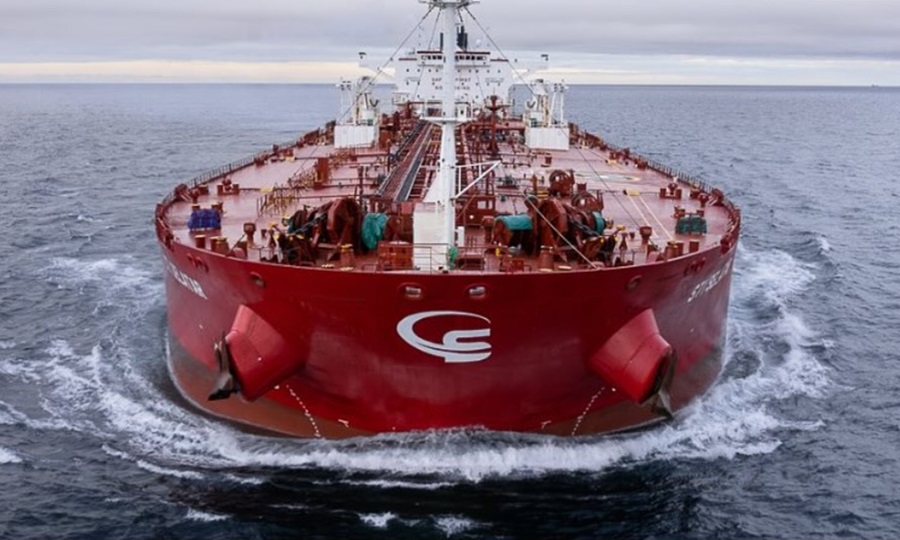
Scorpio Tankers has broadened its fleet renewal programme across three tanker segments, acquiring a minority stake in an eight-vessel VLCC newbuilding joint venture and arranging orders for two additional LR2 product tankers in China.
The New York-listed company, led by Emanuele Lauro, signed a letter of intent in July for two scrubber-fitted LR2s at Jiangsu Hantong Ship Heavy Industry. The vessels are priced at $72.8 million each, with deliveries scheduled for the second and third quarters of 2029. The 2029 delivery timeline reflects how fully booked shipyard capacity across major Asian builders has pushed available newbuilding slots well into the next decade.
Separately, Scorpio agreed to acquire a stake of less than 15% in a joint venture comprising eight scrubber-fitted VLCCs currently under construction. These vessels are slated for delivery between the third quarter of 2029 and the second quarter of 2030. The company did not disclose its joint venture partner, the shipyard, or the contract value. Scorpio will fund its equity share as instalments come due under the shipbuilding agreements. The minority-stake structure provides crude tanker exposure without the full capital commitment of direct vessel ownership.
In June, the company finalised agreements for two scrubber-fitted MR newbuildings at Jiangsu Yangzi-Mitsui Shipbuilding, priced at $46.33 million each with delivery expected in the first quarter of 2030. Beyond a 10% deposit, no further payments are due before 2028.
These latest moves bring Scorpio's directly controlled newbuilding programme to 14 ships: six MRs, six LR2s, and two VLCCs. The company also holds exposure to eight additional VLCCs through the new joint venture. As of July 28, Scorpio had paid $97.2 million toward the programme, with an estimated $978.2 million remaining, including its share of the VLCC venture.
Scorpio's existing order pipeline includes four LR2s at Dalian Shipbuilding. The first pair, at $70.8 million each, is due in the third quarter of 2027, while two option vessels costing $68.5 million apiece will follow in the second half of 2029. Four MR newbuilding resales at $45 million each from Jingjiang Nanyang Shipbuilding are set to join the fleet between 2026 and 2027.
The company re-entered the crude tanker newbuilding market last year with two VLCCs ordered at Hanwha Ocean for $128 million each, scheduled for delivery in the third and fourth quarters of 2028. That order marked Scorpio's first VLCC commitment since it divested seven newbuilding contracts in 2014. The return to VLCC ordering comes as the global crude tanker order book remains near historic lows as a percentage of the active fleet, a supply-side backdrop that has drawn renewed ordering interest from several owners.
The expansion was announced alongside second-quarter financial results, with net income reaching $387.5 million, up from $73.5 million a year earlier. Adjusted profit was reported at $243.7 million, and average daily TCE earnings more than doubled to $52,661 per vessel.
Scorpio has continued divesting older tonnage alongside its newbuilding push. The company sold 10 vessels for $465 million during the second quarter and an additional five for $320.8 million in July, leaving a fleet of 74 product tankers consisting of 25 LR2s, 35 MRs, and 14 handymaxes. The parallel sell-and-buy pattern is consistent with a fleet rejuvenation strategy aimed at lowering average vessel age while preserving operational scale in the product tanker segment.
Source: Splash247

