A Quiet SCO Summit in Bishkek Sharpens the Contrast Between Xi and Trump
Key Takeaways
- •The Bishkek SCO summit produced no major announcements, and analysts suggest the low-key optics were intended to contrast China's stability with perceived US foreign-policy unpredictability.
- •Xi Jinping and Vladimir Putin met before the summit, with Xi describing the prospects for bilateral relations as even brighter, while Modi urged Putin to end the war in Ukraine.
- •China has stepped in to supply fuel oil to Central Asian states as Ukrainian drone attacks jeopardize Russian petroleum deliveries, with Kyrgyzstan receiving its first Chinese fuel oil imports in July.
- •The summit yielded few concrete results, as the touted SCO development bank remains non-operational and the new Bishkek anti-organized crime center's main role is data collection.
- •Belarusian President Lukashenko openly criticized the SCO for lacking concrete initiatives on multipolarity, saying member states expect more from China, India, and Russia.
For Chinese leader Xi Jinping, the latest Shanghai Cooperation Organization summit was a relatively subdued affair. He departed the host city of Bishkek having generated few attention-grabbing headlines.
The SCO, founded in 2001 by China, Russia, and four Central Asian states, has since expanded to include India, Pakistan, Iran, and Belarus, making it one of the largest regional groupings in the world by geography and population. But at this year's gathering, there were no major announcements or viral moments, in contrast to the 2025 SCO summit held on Xi's home turf in the Chinese city of Tianjin. In Bishkek, there were no photos of Xi, Russian leader Vladimir Putin, and Indian Prime Minister Narendra Modi mingling without interpreters, no Putin and Xi caught on hot microphones discussing how to live for 150 years, and no visit from North Korean leader Kim Jong Un the following day.
"Nothing special happened this time [in Bishkek]," said Jildiz Nicharapova, a professor of international relations at the American University of Central Asia in Bishkek.
Hundreds of journalists, starved of anything to report and housed in a tent several walls and fences away from the action, resorted to interviewing some of the women serving traditional beverages in national costume. Perhaps the most notable moment on the jumbo screens broadcasting the summit's proceedings to the press came when a delegation staff member spun around in one of the leaders' extra-plush swivel chairs during the lunch break.
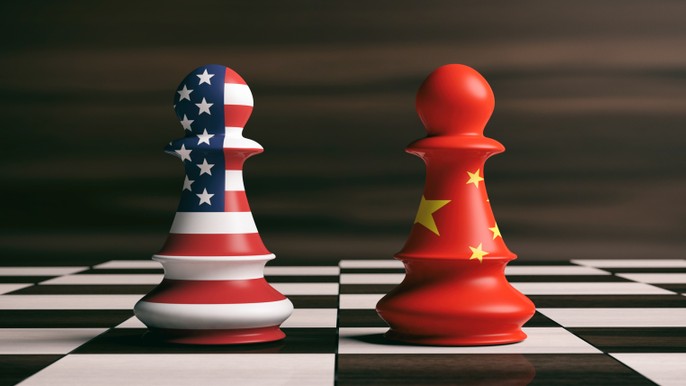
Yet the boredom may have been the point. The optics, and the contrast they drew, may have been the summit's most significant outcome. Xi appeared intent on crafting an image of China as a steady guardian of global stability, positioning Beijing as a reliable alternative to perceived US foreign-policy fickleness.
The West's cohesion seems to be fraying: the United States is engaged in a trade war with Canada, has cut short military drills with South Korea, and has stoked tensions with European allies over a variety of issues, including the Iran war and US efforts to acquire Greenland.
"Everything that Trump does these days, it essentially, ultimately benefits China," said Eva Seiwert, a senior analyst at the Mercator Institute for China Studies in Berlin who has written a book about the SCO. "His whole erratic behavior, his unpredictability in world politics, that's something that's really easy for China to present itself as the more responsible and credible global player."
At the SCO gathering, some of the world's leading autocrats and illiberal leaders, along with a smattering of more democratically minded ones, hailed — at least rhetorically — international norms while lamenting the decline of the organization charged with guaranteeing those norms, the United Nations. Their stance was intended to offer a sharp contrast to what they portray as the erratic conduct of the Trump administration, especially its on-again, off-again war against Iran.
All sides in Bishkek also seemed eager to show they were smoothing out their rough edges.
Putin and Xi met the day before the summit, where Xi said the future prospects for bilateral relations are "even brighter." Armenian Prime Minister Nikol Pashinyan sat next to Azerbaijani President Ilham Aliyev at the Shanghai Cooperation Organization-Plus meeting, underscoring their ongoing efforts to forge a lasting peace in the South Caucasus. And Modi urged Putin to stop the war in Ukraine during a bilateral meeting.
China's power both to shape global narratives and to quietly prop up its friends and allies of convenience was on display at the summit.
Given China's economic dominance, smaller states seized on any opportunity to be "in the picture" with Xi, even if they did not secure a bilateral meeting, Seiwert told Eurasianet.
China's purchases of Russian oil and gas have played a major role in keeping the Russian economy afloat. And with Ukrainian drone attacks on Russian refineries jeopardizing Russian petroleum supplies to Central Asian states, China has stepped in to help plug the supply gap. Kyrgyzstan's first imports of Chinese fuel oil arrived in July, and Tajikistan has said it is in talks with Xi's government.
As the summit's host, Kyrgyz President Sadyr Japarov gave Xi and his Central Asian counterparts their turn to deliver statements, and they all struck similar notes, showing how closely the region is aligned with Beijing. In a bilateral meeting with Xi, Uzbek President Shavkat Mirzoyoyev hailed "Chinese-style modernization."
The summit drew more attention to Kyrgyzstan and Central Asia, which are already basking in the spotlight thanks to rising global interest in the region's reserves of critical minerals, as well as Kyrgyzstan's selection to a two-year term on the U.N. Security Council. But the gathering produced few tangible gains.
Japarov touted a new anti-organized crime center to be based in Bishkek — mirroring the anti-terror center in Tashkent and the anti-drug trafficking center in Dushanbe — and lauded progress on the creation of an SCO development bank.
However, the bank has not actually become operational, and the organized crime center's main responsibility is data collection, Nicharapova pointed out. "The Bishkek summit was useful for countries' leaders to speak to each other informally in such an uncertain time," she told Eurasianet.
Despite the smiles and warm words, deep divides were evident. Pashinyan and Putin, for example, held a tense bilateral meeting, their first since Armenia's June elections. And none of the powers offered much in the way of substantive relief for Iran, which is subject to growing economic pressure from the West.
"Many of those countries that are part of the SCO still have very close relations to the United States or are dependent on the United States, so I think many of them try to be as low key or low profile as possible," Seiwert said.
For some, mere presence at the summit was enough to send a message. "Russia and Iran, for example, they can of course use it primarily to show they are much less isolated than, for example, European leaders often say or think," Seiwert said.
But the relative silence on conflicts at the center of global affairs, including Iran and Gaza, gave rise to at least a hint of discontent over the SCO's restrained posture among some summit participants. After a fiery denunciation of the United States, Iranian President Masoud Pezeshkian argued that increasing multipolarity via a more robust SCO posture in global affairs could lead to greater respect for state sovereignty.
"The countries of the Shanghai Cooperation Organization-Plus format possess significant political, economic, demographic and geographic potential and can play an important role in the formation of such a world," he said.
But it was Belarusian President Alexandr Lukashenko who highlighted what Pezeshkian had left unsaid. The SCO is not doing as much as it could to exert influence over global affairs, said Lukashenko, the only SCO leader other than Pezeshkian to say the word "Iran" out loud at the summit.
"[We] say we've got this spirit and all the like, but that's not enough. People expect some concrete actions from us regarding multipolarity," Lukashenko said, as UN Secretary General Antonio Guterres listened on.
"After all, we've got to acknowledge that we've got here three of the mightiest countries, the People's Republic of China, India, the Russian Federation," he said. "Above all, we're expecting initiatives from them. But so far there aren't any."
By Eurasianet

