Schumer Criticizes Trump's Iran Strategy as Regional Conflict Escalates and Economic Pressures Mount
Key Takeaways
- •Senate Minority Leader Chuck Schumer has criticized President Trump's Iran military strategy, citing casualties, rising consumer prices, and increased cyberattacks on American infrastructure.
- •The conflict involving U.S. and Israeli forces against Iranian targets has escalated regionally, raising concerns about disruptions to the Strait of Hormuz, a critical global oil transit route.
- •Domestic economic pressures from the war include higher fuel costs and supply-chain disruptions that are affecting American households.
- •Prediction markets have lowered the probability of a U.S.-Iran diplomatic deal to approximately 28% as political rhetoric intensifies and the conflict shows little sign of de-escalation.
- •U.S. Chief Negotiator Mike Vance and Iranian Foreign Minister Javad Zarif remain central to potential diplomacy, with Qatar and Pakistan conducting backchannel mediation efforts.
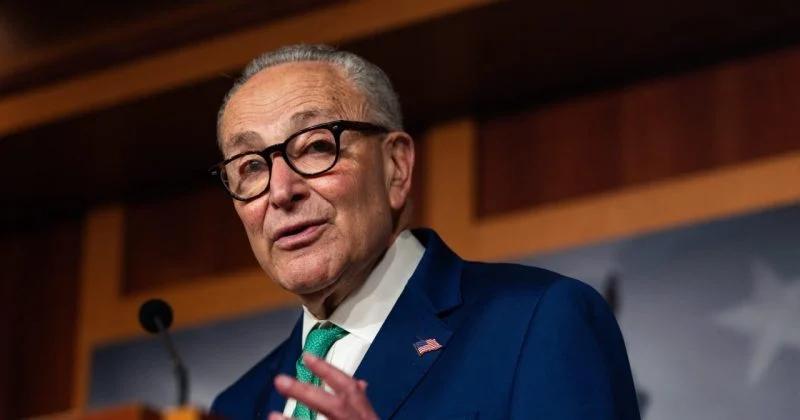
Senate Minority Leader Chuck Schumer has publicly criticized President Donald Trump's military actions in Iran, arguing that the administration's strategy has resulted in casualties, rising consumer prices, and an increase in cyberattacks targeting American infrastructure. As the highest-ranking Democrat in the Senate, Schumer's rebuke signals growing partisan friction over the administration's foreign policy and could foreshadow sharper congressional scrutiny of war powers and military spending.
The ongoing conflict, which involves both U.S. and Israeli forces operating against Iranian targets, has escalated into a broader regional confrontation. The hostilities have had significant consequences for military personnel and civilians across the region, with reports of mounting injuries and fatalities. Iran's strategic position along the Strait of Hormuz—through which roughly a fifth of global oil consumption transits—has amplified concerns that sustained hostilities could disrupt one of the world's most critical energy chokepoints.
On the domestic front, the war has contributed to economic strain as fuel costs climb and supply-chain disruptions ripple through key industries. These pressures have compounded public concern over the conflict's prolonged trajectory and its financial toll on American households.
Schumer's remarks come at a delicate moment for U.S.-Iran diplomacy. Hopes for a negotiated settlement that could include reconstruction funding for Iran appear to have dimmed, a trend reflected in current prediction-market pricing. Market participants have adjusted the probability of a U.S.-Iran deal to approximately 28% YES, with odds experiencing minor declines over the past week as political rhetoric intensifies and the conflict shows few signs of de-escalation.
Several key figures and developments are expected to shape the next phase of the crisis. U.S. Chief Negotiator Mike Vance and Iranian Foreign Minister Javad Zarif remain central to any potential diplomatic track. Mediators from Qatar and Pakistan have also been involved in backchannel efforts. Observers are closely watching for any shifts in Iran's uranium enrichment levels, as well as potential further military actions by Israel or additional statements from President Trump, all of which could rapidly alter market expectations and the prospects for a negotiated resolution.
The intersection of military escalation, economic fallout, and political criticism underscores the complexity of the situation. With Schumer's statement adding to the domestic debate over the administration's approach, the path forward remains uncertain as multiple stakeholders weigh in on one of the most volatile geopolitical flashpoints.

