Peter Schiff Warns Oil Rebound Could Lift July CPI as Brent Tops $100
Key Takeaways
- •Schiff said June’s lower CPI reading was mainly driven by a 30% drop in oil prices.
- •US Bureau of Labor Statistics data showed headline CPI fell 0.4% in June, while annual inflation declined to 3.5%.
- •Oil prices have surged amid Middle East tensions, including attacks on Saudi-linked tankers and disruptions around key shipping routes.
- •Reuters reported that Iranian oil exports fell from 2 million barrels per day to nearly zero during the conflict.
- •Analysts expect the Federal Reserve to keep its target rate range unchanged at 3.50% to 3.75% at its July meeting.
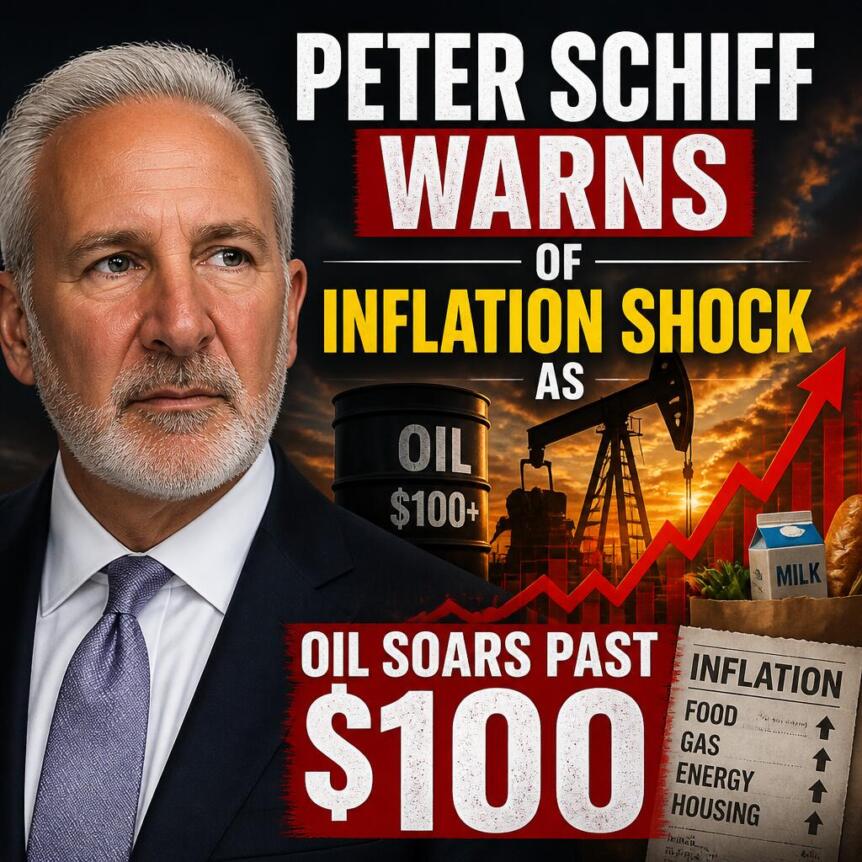
Economist Peter Schiff warned that the rebound in oil prices could push July consumer inflation data higher, after a decline in June CPI that he said was largely driven by a 30% drop in oil.
Oil prices have climbed sharply amid renewed US-Iran hostilities, Houthi attacks on Saudi-linked tankers and fresh concerns over crude supply. Brent crude crossed $100 a barrel hours after warnings about Houthi-led attacks on Saudi oil tankers.
Schiff Flags Inflation Risk Ahead of Fed Meeting
Schiff’s comments came as US-Iran tensions and supply-chain concerns intensified. The article cited Iran’s blockade of the Strait of Hormuz and the Bab el-Mandeb Strait as key factors behind the renewed pressure on energy markets.
Schiff said the lower June CPI reading reflected a significant fall in crude prices, but argued that the move higher in July could reverse that progress and lift inflation again. Energy is a volatile component of headline CPI, and changes in crude prices can show up most directly through gasoline and other household fuel costs.
In a post on X, Schiff wrote:
“Investors celebrated the June CPI, as a 30% fall in the price of oil led to a larger-than-expected decline. But so far in July, the price of oil is already up 30%, back above $90 per barrel.”
Schiff said that if oil prices moved back above $100, the increase would amount to a 43% rise from recent lows and could weigh heavily on July CPI figures.
“If the price hits $100 by month-end, that will be a 43% rise. July CPI could be a doozy.”
He reiterated that June’s softer CPI number was mainly the result of lower oil prices, and that higher prices in July could undo that effect.
“No, it’s just that the only reason June CPI fell so much was the 30% drop in oil. That will likely be completely reversed by an even bigger rise in the price of oil in July.”
Oil Prices May Add Pressure to July Inflation Data
Data from the US Bureau of Labor Statistics showed headline CPI declined 0.4% in June, compared with expectations for a 0.1% decline. Annual inflation fell from 4.2% to 3.5%, below the expected 3.8% reading. The drop was primarily attributed to weaker energy prices.
According to US Bureau of Labor Statistics data, the energy index fell 5.7% in June, its largest decline since April 2020, when gasoline prices dropped by nearly 10%. Core CPI was unchanged for the month but remained 2.6% higher than a year earlier.
Energy prices, however, were still 15.7% higher than the prior year, while gasoline prices were up 26.7% over the same period. If oil prices remain elevated through the rest of the month, household expenses could face additional pressure.
Middle East Tensions Renew Supply Concerns
Oil prices have surged following another escalation in the Middle East, including an attack on Saudi oil tankers. The article said Iran has also blockaded the Bab el-Mandeb Strait through the Houthis, affecting a route that Saudi exporters rely on heavily amid restrictions in the Strait of Hormuz.
Reuters reported a steep drop in Iranian oil exports, saying they fell from 2 million barrels per day to nearly zero during the ongoing conflict. Goldman Sachs analysts also told Reuters that Brent could rise above $120 if the current disruptions continue.
Diplomatic efforts have stalled as well. US Secretary of State Marco Rubio accused Iran of being unwilling to negotiate, while saying Washington remained committed to negotiations. Increased US and Iranian military activity also raises the risk of damage to important oil infrastructure.
Fed Decision in Focus
Attention is now turning to the Federal Open Market Committee meeting scheduled for July 28 and 29. Rising oil prices could factor into the Federal Reserve’s decision on interest rates, as policymakers have said one report is not enough to confirm a downward inflation trend.
Governor Chris Waller said after the June report that the Fed needed several months of softer data before it could determine that inflation was moving toward its 2% target. Analysts expect the Fed to keep its target range unchanged at 3.50% to 3.75%. The July inflation report will therefore be watched not only for the headline number, but also for whether energy costs are feeding into broader price categories.

