SBF Says FTX Ventures Funded Anthropic's $500 Million Round; $1.34 Billion Estate Sale Contrasts With $43.2 Billion IPO-Day Value
Key Takeaways
- •Sam Bankman-Fried stated in a November 20, 2026 prison interview that FTX Ventures funded almost the entire Anthropic funding round.
- •He attributed the investment's size to Anthropic needing roughly $500 million in compute and to standard venture dilution practices, not to a lack of conviction in AI.
- •FTX's bankruptcy estate sold the firm's Anthropic holdings in 2024 for approximately $1.34 billion to maximize creditor recoveries rather than hold the concentrated private position for a potential IPO.
- •At Anthropic's first-day IPO closing price, adjusted for a subsequent 10-for-1 stock split, the previously held stake would have been worth approximately $43.2 billion.
- •The original $500 million investment was traced to customer funds routed through Alameda Research and to Bankman-Fried's personal funds, and he never personally benefited from the shares' sale.
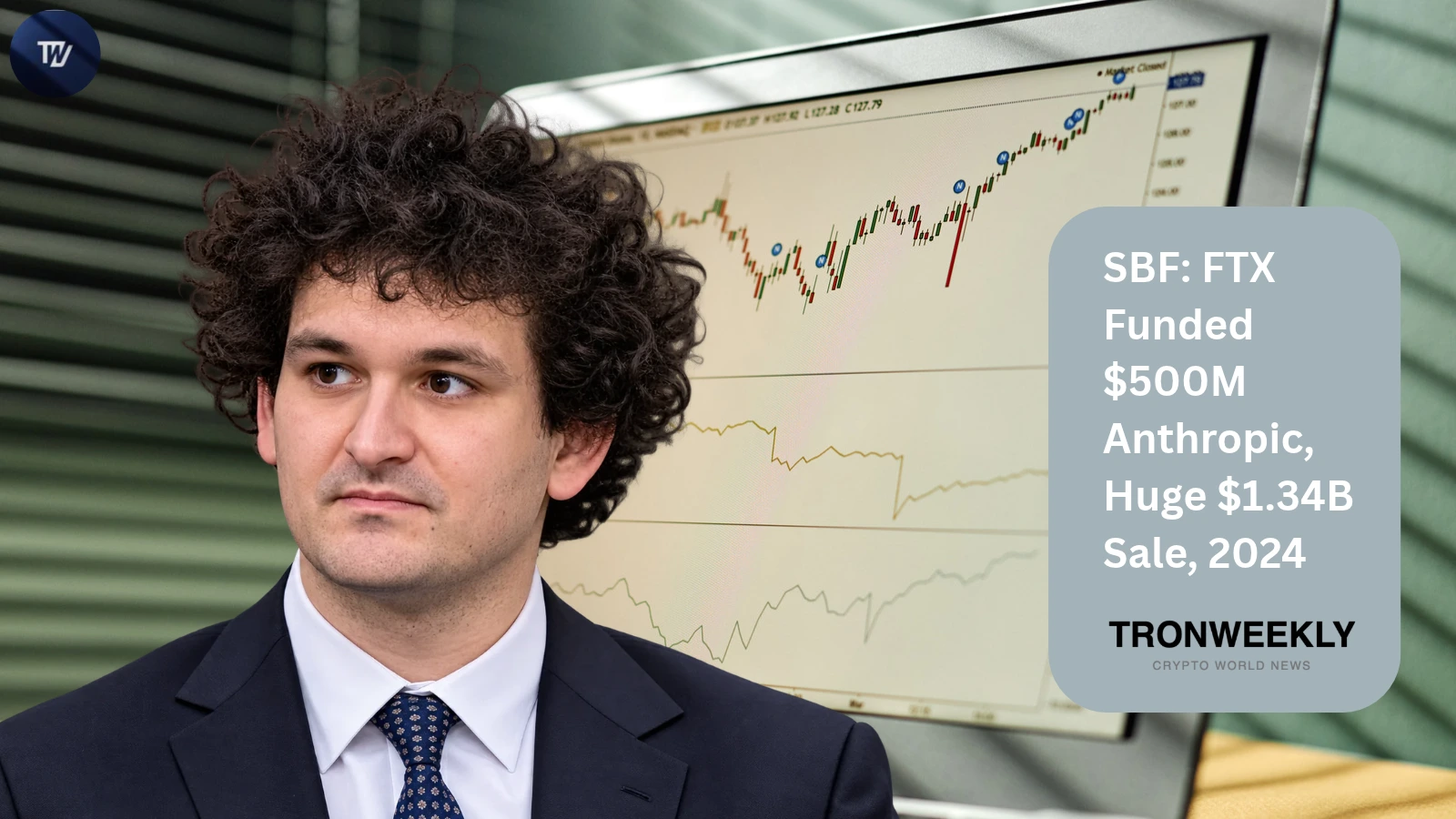
Sam Bankman-Fried (SBF) has revisited one of FTX's most consequential investments, speaking days after Anthropic became a publicly listed company. In a November 20, 2026 prison interview with Eli Goldfine (@realTomBayes), the former FTX chief executive said FTX Ventures funded almost the entire Anthropic round.
Asked why he did not invest more despite believing in AI's exponential growth, Bankman-Fried said Anthropic only needed about $500 million in compute to get started, and that startups raise what they need while limiting dilution. Anthropic's IPO took place on November 19, one day before the interview was published, reviving a counterfactual about what the early bet might have been worth. The remarks arrive as creditor recoveries, regulatory scrutiny of exchange conduct, and Anthropic's post-IPO valuation continue to shape the aftermath of FTX's collapse.
What SBF Said About the Anthropic Round
Bankman-Fried framed the investment as capital-constrained rather than a lack of conviction. Anthropic's early requirement was compute, not an open-ended war chest. A startup raises enough to reach its next stage without giving away more ownership than necessary — which, in his account, explains why FTX did not write a larger check. The dilution logic he describes is standard venture practice: rounds are sized against near-term milestones rather than maximal raises, and in compute-intensive fields like AI, those milestones can be defined by the cost of the compute itself.
The claim underscores how FTX Ventures operated at the intersection of crypto wealth and Silicon Valley venture capital. Anthropic, founded by former OpenAI researchers, became the most prominent example of that overlap. The interview offers no additional documentation, and his account should be weighed alongside bankruptcy filings and disclosures from Anthropic. (Source: Reuters)
The $1.34 Billion Sale Versus the $43.2 Billion Counterfactual
The most striking figures emerged after FTX's collapse. The company's bankruptcy estate put FTX's Anthropic holdings up for sale in 2024 and fetched approximately $1.34 billion. At the first-day closing price of the IPO, and adjusting for the company's subsequent 10-for-1 stock split, that former ownership would have been worth approximately $43.2 billion. The split adjustment matters for readers doing the arithmetic: because the number of shares outstanding changed after listing, the private-round stake cannot be compared directly to the IPO-day price without accounting for it. The difference comes down to timing, duress, and legal obligation. (Source: sec.gov, Anthropic SEC filing)
A bankruptcy estate seeks to maximize creditor recoveries by establishing a workable timeline and process, even if that means a premature sale. It cannot hold a highly concentrated private position in the hope of a future IPO. The $1.34 billion was real, realizable value at the moment creditors needed certainty.
The counterfactual also needs elaboration. The original $500 million investment was traced to customer funds routed through Alameda Research, as well as the personal funds of Bankman-Fried. The shares were sold by the bankruptcy estate to enrich creditors, not held aside for him. The $43.2 billion figure is a snapshot of a position FTX previously owned and from which he never personally benefited.
Why This Story Still Matters for Crypto and AI
For crypto, the saga demonstrates the extensive damage caused by interconnected sources of funds, inadequate governance, and vast unchecked growth. FTX redefined regulation, exchange practices, custody rules, and investor due diligence. The Anthropic sale was one of the few bright spots for creditors, boosting recoveries while illustrating the degree to which enormous value was created from the misappropriation of other people's money. (Source: PCMag Australia)
For AI and institutional investors, the episode highlights the intersection of crypto and AI investment. Venture funds, exchanges, and family offices increasingly find AI adjacent to crypto infrastructure, data centers, compute markets, and autonomous agents. Anthropic's IPO has blurred those lines further, with its valuation, competition from the likes of OpenAI, Google, and Microsoft, and its economics now up for debate. What comes next is less a matter of Bankman-Fried's introspection than of precedent. (Source: The Head and Tale)
FTX's estate has a continuing role in guiding creditor recoveries, regulators and courts are still establishing the limits of exchange conduct and customer protection, and Anthropic's public offering has drawn attention to its valuation, competition, and economics. The interview is not a conclusion but a coda: in one of AI's first big chips, a crypto giant blew up, and the recovered value flowed to creditors through a court-controlled sale.
Source: Tron Weekly

