Saudi Arabia, Turkey, and Pakistan Sign Landmark Defense Agreement
Key Takeaways
- •The defense agreement establishes a mutual defense clause under which any armed attack on one of the three signatory nations is considered an attack on all three.
- •The pact is expected to facilitate joint military exercises, defense technology transfers, and intelligence sharing among Saudi Arabia, Turkey, and Pakistan.
- •The arrangement is notable for bringing together a NATO member state with two non-alliance partners, which could have implications for Turkey's standing within the Western alliance.
- •Saudi Arabia's participation reflects its ongoing effort to diversify defense partnerships beyond its historical reliance on the United States as its primary security guarantor.
- •The leaders' discussions extended beyond the defense pact to include potential de-escalation of US-Iran tensions and expansion of trilateral trade and economic ties.
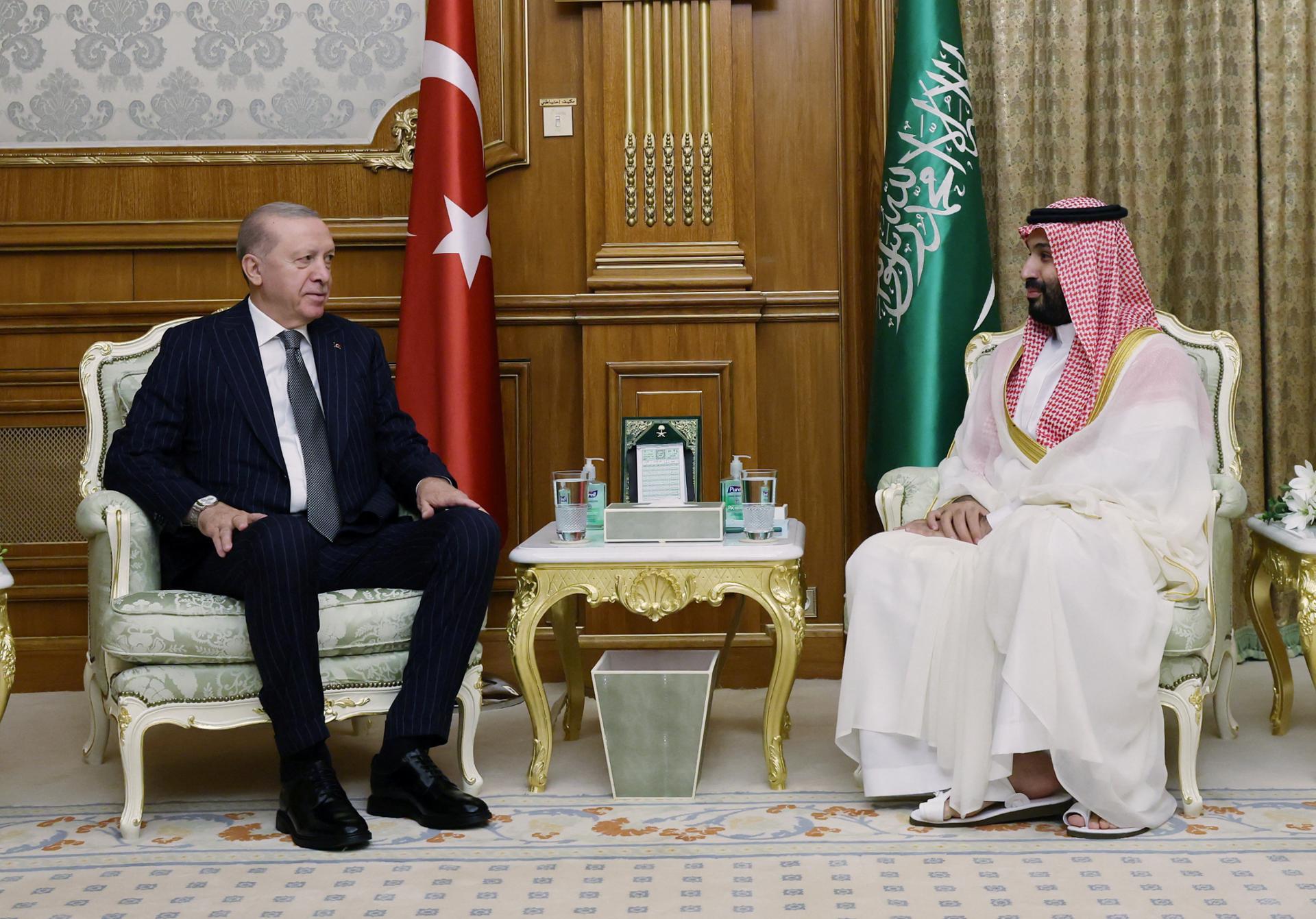
ANKARA, Turkey — Saudi Arabia, Turkey, and Pakistan signed a defense agreement on Friday, August 7, deepening security cooperation among three major regional powers at a time of escalating security concerns across the Middle East.
The agreement was finalized during a trilateral meeting in Saudi Arabia between Saudi Crown Prince Mohammed bin Salman, Turkish President Recep Tayyip Erdogan, and Pakistani Prime Minister Shehbaz Sharif.
In a statement, Pakistan's Foreign Ministry described the pact's scope: "The Agreement is intended to strengthen collective deterrence against any act of aggression, and stipulates that any armed attack against any one of the three States shall be regarded as an attack against them all. It further provides for the enhancement of all aspects of defence cooperation among the three States."
No further specifics of the agreement were immediately disclosed. The trilateral framework unites oil-rich Saudi Arabia, nuclear-armed Pakistan, and Turkey — which possesses NATO's second-largest standing army alongside a fast-growing domestic defense industry. The pact is notable in part because it brings together a NATO member state with two non-alliance partners in a mutual-defense arrangement, a configuration that could have implications for Turkey's standing within the Western alliance.
Turkey's Haberturk television reported that the agreement is expected to facilitate joint military exercises and training, defense technology transfers, and intelligence sharing. Unconfirmed reports also indicated that the pact would codify a principle of mutual defense, treating any act of aggression against one signatory as an attack on all three. For Turkey, the defense technology transfer element aligns with Ankara's push to export its domestically produced military platforms, including armed drones that have been purchased by multiple countries in the region and beyond.
The deal builds on prior bilateral arrangements. In September, Pakistan and Saudi Arabia signed a mutual defense pact defining any attack on either nation as an attack on both. Saudi Arabia has been actively diversifying its defense partnerships after its critical infrastructure and oil facilities came under attack amid the ongoing war in Iran. The diversification effort marks a shift for Riyadh, which has historically relied on the United States as its primary security guarantor and largest arms supplier under decades of bilateral military cooperation agreements.
The agreement also comes against a backdrop of heightened regional tensions, including rising friction between Turkey and Israel over the conflict in Gaza, as well as ongoing hostilities in Iran and Lebanon. The three signatory states collectively border or sit near several active conflict zones, and each has direct stakes in the trajectory of the broader Middle East security landscape.
Prime Minister Sharif arrived in Jeddah on Thursday for a three-day visit, accompanied by a high-level delegation that includes Army Chief Field Marshal Asim Munir. Beyond the defense agreement, the three leaders are expected to discuss efforts to defuse tensions between the United States and Iran, and to explore avenues for expanding trade, economic ties, and broader security cooperation.
Pakistan's Foreign Ministry noted that while Sharif's visit is taking place amid heightened Gulf tensions, its objectives extend beyond the immediate crisis. The ministry said the trip is aimed at strengthening bilateral relations and enhancing coordination on regional and international issues. Pakistan maintains longstanding defense ties with both Saudi Arabia and China, and the trilateral format with Turkey adds a new dimension to Islamabad's network of regional security partnerships.
