Satsuma Technology Bitcoin Treasury Collapse Leaves Shareholders with Pennies on the Pound
Key Takeaways
- •Satsuma Technology will return approximately £26.8 million to £30 million to shareholders, representing roughly 18 pence per pound against the £163.6 million raised in August 2025.
- •More than 90% of votes cast backed resolutions to sell the remaining 668 BTC and cancel the company's London Stock Exchange listing after the stock lost over 99% of its June 2025 peak value.
- •The company sold 579 BTC for £40 million in December 2025 to meet cash obligations to noteholders who elected not to convert their debt into equity by the year-end deadline.
- •Total capital recovered amounts to approximately £66 million to £70 million, less than half the original raise, because convertible note holders rank above ordinary equity holders in the payout waterfall.
- •U.K. High Court hearings are scheduled for August and September 2026, with LSE delisting targeted for mid-September and shareholder distributions expected by late September.
Satsuma Technology, the U.K.-listed Bitcoin treasury company formerly known as TAO Alpha, is set to return between £26.8 million and £30 million to shareholders after wind-down costs — roughly 18 pence on the pound against the £163.6 million it raised in August 2025. The collapse illustrates the structural risks of funding volatile digital asset holdings with fixed-obligation debt, as creditors claim priority in the payout waterfall while ordinary equity holders are left with a fraction of their original investment.
The wind-down comes as BTC trades at approximately $65,800, down 0.4% over the past 24 hours after briefly reclaiming $66,000, with daily trading volume at $33.4 billion.
https://x.com/TedPillows/status/2079850959162032528
https://x.com/BTCtreasuries/status/2079605689866211640
Background: From AI Firm to Bitcoin Treasury
Satsuma Technology was originally a U.K.-listed artificial intelligence company operating under the name TAO Alpha. It rebranded and appointed Mark Moss, a well-known Bitcoin commentator, as Chief Bitcoin Strategist. In August 2025, the company raised £163.6 million ($218 million) through convertible notes, with ParaFi Capital leading the round. Investors contributed 1,097 BTC, transforming Satsuma into a digital asset treasury company focused on Bitcoin rather than traditional operating revenue.
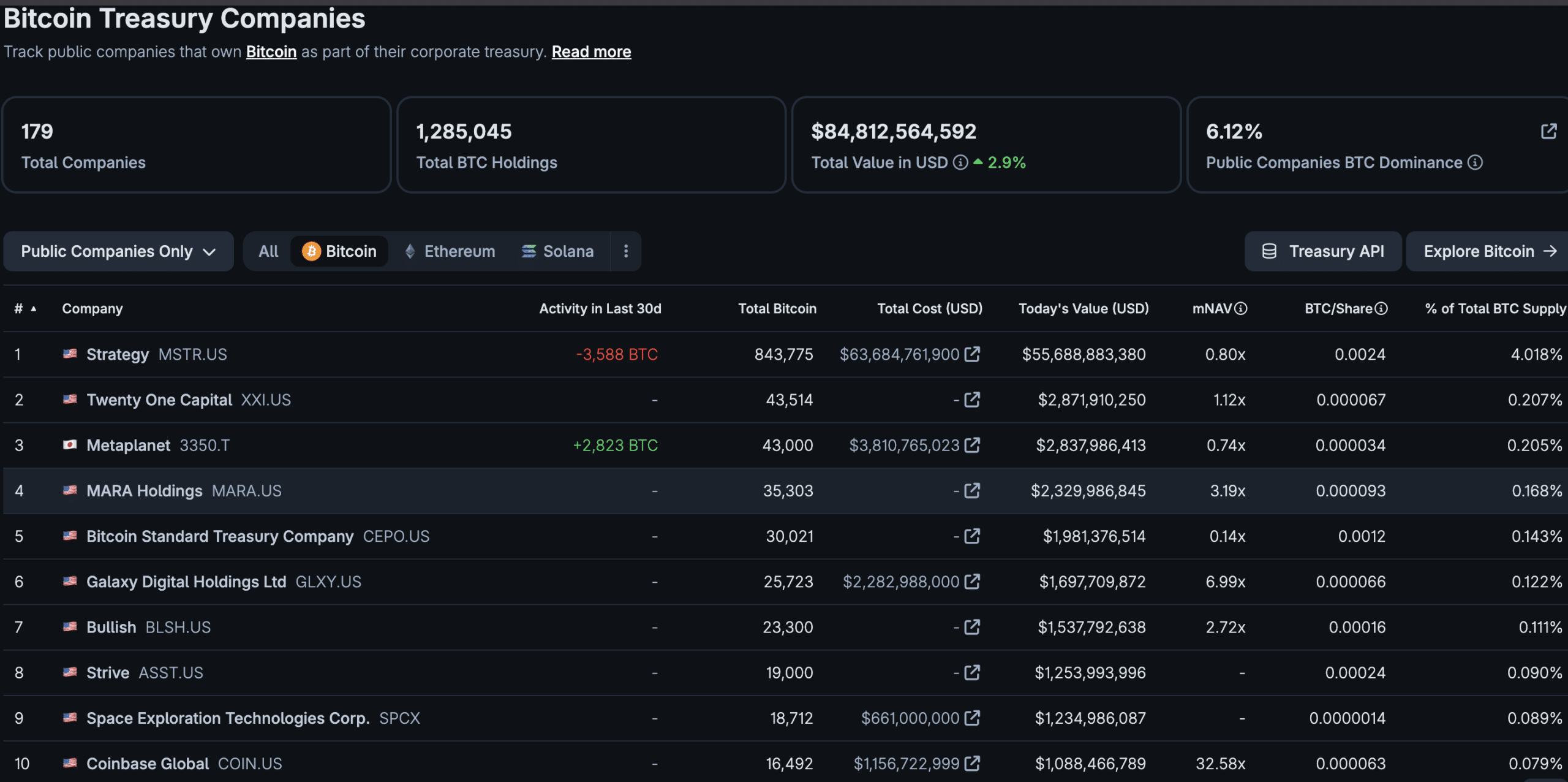
The Digital Asset Trust (DAT) model gained traction among small-cap firms in 2025, following strategies popularized by Michael Saylor through Strategy (formerly MicroStrategy), which used convertible debt and equity issuance to accumulate over 500,000 BTC. The approach depends on Bitcoin's price appreciating faster than the cost of carrying debt — a wager that works in bull markets but exposes companies to forced asset sales when prices fall and note holders demand redemption. At Satsuma's much smaller scale, the margin for error was thinner. Satsuma's stock reached nearly £14 per share at its June 2025 peak. The share price declined after Bitcoin's all-time high of $126,000 in October, which preceded a prolonged downturn in crypto-related equities.
Asset Sales, Executive Departures, and Activist Pressure
By December 2025, Satsuma had begun selling assets to maintain solvency. The company offloaded 579 BTC for £40 million to meet cash obligations to noteholders who elected not to convert their debt into equity by the year-end deadline. This creditor-driven liquidation left Satsuma holding 668 BTC with materially reduced capacity.
The CFO departed in February 2026, followed by the CEO in March. By April, shares had lost more than 99% of their June 2025 peak value, trading at fractions of a penny.
Pantera Capital, holding approximately 6.7% of Satsuma's issued shares, publicly called for full liquidation. The rationale was clear: Satsuma's total market capitalization had fallen well below the market value of the Bitcoin on its balance sheet — a deep net asset value (NAV) discount that made the stock a less efficient way to gain Bitcoin exposure than simply purchasing the asset directly. NAV discounts are a well-documented phenomenon in closed-end funds and investment trusts, and activist investors routinely push for liquidation or buybacks when the gap becomes persistent.
A shareholder group representing more than 20% of issued capital formally tabled a resolution to wind down the company. The board split — four of six directors opposed liquidation, arguing Satsuma remained a viable listed Bitcoin vehicle, while two sided with shareholders. Shareholders overruled the board majority by a wide margin: more than 90% of votes cast backed two resolutions to sell the remaining 668 BTC, then worth approximately $43.5 million, and cancel the LSE listing.
Wind-Down Mechanics and Payout Structure
The wind-down is being executed through a B Share Scheme, a U.K. legal mechanism for distributing cash assets back to shareholders without triggering certain tax complications. Estimated termination costs total £2.7 million, covering legal fees, severance, delisting charges, and run-off insurance, according to company filings.
After those costs, Satsuma expects to return £26.8 million to £30 million. Combined with the £40 million recovered in December's BTC sale, total capital recovered amounts to approximately £66 million to £70 million against the £163.6 million originally raised — less than half the initial raise.
Because holders of the convertible notes rank above ordinary equity in the payout waterfall, common shareholders could receive considerably less than even those headline figures. Creditors are paid first; equity holders receive what remains. This structural risk has weighed on other corporate Bitcoin treasury vehicles that used debt to fund BTC accumulation: when the asset price declines and debt redemption deadlines arrive, the company is forced to sell at unfavorable prices.
Broader U.K. Bitcoin Treasury Landscape
Satsuma is the second-largest U.K.-listed Bitcoin treasury company, holding significantly less than The Smarter Web Company, which retains 2,878 BTC and plans to continue operations.
U.K. High Court hearings for Satsuma's capital return are scheduled for August and September 2026. Delisting from the LSE is targeted for mid-September, with shareholder payments expected by late September.
The situation has drawn scrutiny from other Digital Asset Trusts, as Satsuma's troubles stem from a failure to manage convertible debt against volatile BTC collateral, resulting in a loss of over 57% of capital within a single year. Other small-cap firms that adopted the DAT model without the scale or balance-sheet depth of Strategy face similar scrutiny, particularly those that leveraged debt rather than equity issuance. While institutional interest in Bitcoin has rebounded since 2025, Satsuma shareholders face the prospect of minimal returns when distributions commence in September.
Source: 99Bitcoins
