Samsung Wallet Signals Native Stablecoin Support Amid Broader Consumer Finance Push
Key Takeaways
- •Samsung Wallet has indicated plans to integrate native stablecoin functionality, enabling users to hold and transact with stable cryptocurrencies directly within the wallet rather than through external applications.
- •The stablecoin roadmap signal emerged alongside Samsung's broader consumer finance push that includes the newly introduced Galaxy Card.
- •Specific details about supported stablecoins, custody arrangements, launch timing, and regional availability have not yet been disclosed.
- •Samsung's extensive global distribution could give it a differentiation advantage over Apple and Google, which have taken more cautious approaches to native cryptocurrency wallet integration.
- •Regulatory uncertainty, including the EU's MiCA framework and unresolved US federal stablecoin legislation, may significantly influence how and where any feature becomes available.
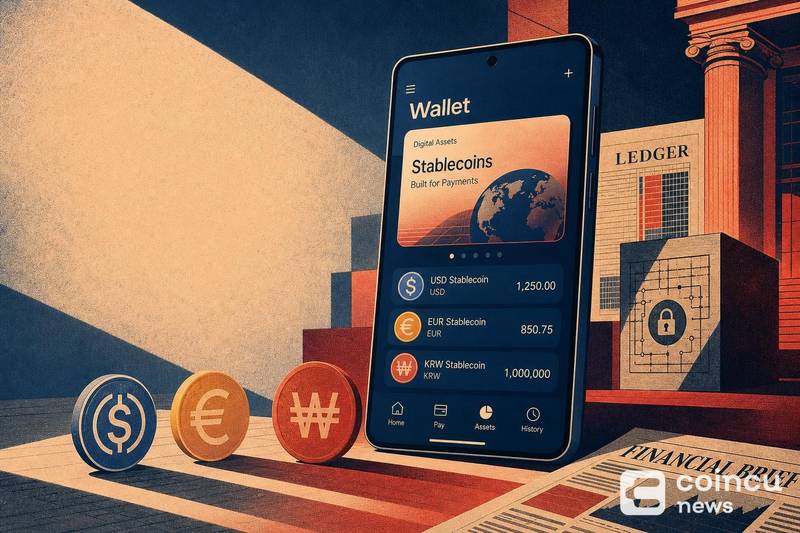
Samsung Wallet is signaling native stablecoin support, a development that would enable users to hold and transact with price-stable cryptocurrency assets directly within the company's mainstream mobile wallet, rather than relying on a separate third-party application.
The signal emerged alongside Samsung's broader consumer finance expansion, which includes the newly introduced Galaxy Card. Reporting from Coin Edition tied the stablecoin roadmap signal to that same wallet and card initiative. Samsung's interest in digital assets is not new; the company previously maintained a dedicated Samsung Blockchain Wallet before consolidating cryptocurrency features into Samsung Wallet, and its blockchain SDK was wound down in late 2023 as the strategy shifted toward integrated wallet experiences.
Details remain limited. The available evidence confirms the strategic direction but does not specify which assets would be supported, when the feature would launch, how assets would be custodied, or which regions would receive access.
What Native Stablecoin Support Means
Native support means stablecoin functionality would be built directly into Samsung Wallet at the wallet level. This differs from indirect access, where users must route through an external application or linked service to interact with stablecoins.
The distinction has practical implications for usability. Wallet-level integration typically means fewer steps, no need to install a separate app, and a single interface for holding and moving funds.
None of the specific rollout mechanics are confirmed in the current evidence, so the exact shape of that integration remains undetermined.
Implications for Mobile Crypto Payments
Stablecoins are commonly positioned as payment-oriented crypto assets because they are designed to maintain a steady value, unlike volatile tokens whose prices can fluctuate between checkout and settlement. The stablecoin market is dominated by a handful of major issuers—Circle's USDC and Tether's USDT together account for the bulk of circulating supply—so any large-scale wallet integration would likely involve one or more of these established assets.
Samsung Wallet operates as a consumer-facing mobile environment, making payments the most relevant use case. Placing stablecoin rails within that environment points toward everyday applications such as checkout, transfers, and peer-to-peer payments.
The convenience factor is the primary appeal: mainstream users who already tap their phones to pay could, in principle, do the same with a stablecoin balance without needing to learn a new tool.
How Samsung's Reach Could Shape Adoption
Samsung is a globally recognized hardware and software brand with extensive consumer distribution. When a platform of that scale adds a cryptocurrency feature, it can help normalize that functionality for audiences who would never seek out a dedicated crypto application. Rivals Apple and Google have so far taken a more cautious approach to native cryptocurrency integration within their respective wallet products, leaving a potential opening for Samsung to differentiate.
That distribution and brand-trust advantage represents the core significance of this development. Downstream, it could matter for stablecoin issuers, wallet developers, and competing device manufacturers weighing similar moves.
However, platform support alone does not guarantee mass adoption. Distribution creates the opportunity, but actual usage depends on execution, incentives, and regulatory factors.
Key Rollout and Compliance Questions
The most important unknowns are practical. The evidence does not specify which stablecoins would be supported, which jurisdictions would receive the feature, how assets would be custodied, or when any rollout would occur.
Stablecoin features are particularly sensitive to compliance, licensing, and regional restrictions, meaning availability could vary significantly by market. The regulatory landscape itself is in flux: the EU's Markets in Crypto-Assets (MiCA) regulation took full effect in late 2024 with specific stablecoin issuer requirements, while US federal stablecoin legislation has been the subject of ongoing congressional debate without a final enacted framework. Notably, an Open USD Consortium dispute over listing Samsung as a stablecoin partner underscores how contested the details around Samsung's involvement already are.
A final open question concerns functional scope: whether native support would cover storage only, or extend to transfers, payments, and broader wallet actions. That answer will ultimately determine how significant the move becomes.

