Samsung Wallet Set to Add Native Stablecoin Support
Key Takeaways
- •Samsung Wallet plans to integrate native stablecoin support directly into its existing interface, allowing users to store, send, and spend dollar-pegged tokens alongside payment cards and other wallet features.
- •The planned integration covers stablecoins rather than full cryptocurrency support, focusing on assets designed to maintain steady value tied to the U.S. dollar for everyday payment use.
- •Samsung's scale as a leading global smartphone manufacturer gives the stablecoin feature significant potential distribution reach among consumers who may not use standalone crypto applications.
- •Specific rollout details remain undisclosed, including which stablecoins will be supported, which geographic markets will be included, and what launch timeline Samsung intends to follow.
- •Regulatory frameworks such as the U.S. GENIUS Act are expected to influence the scope and pace of Samsung's stablecoin integration across different jurisdictions.
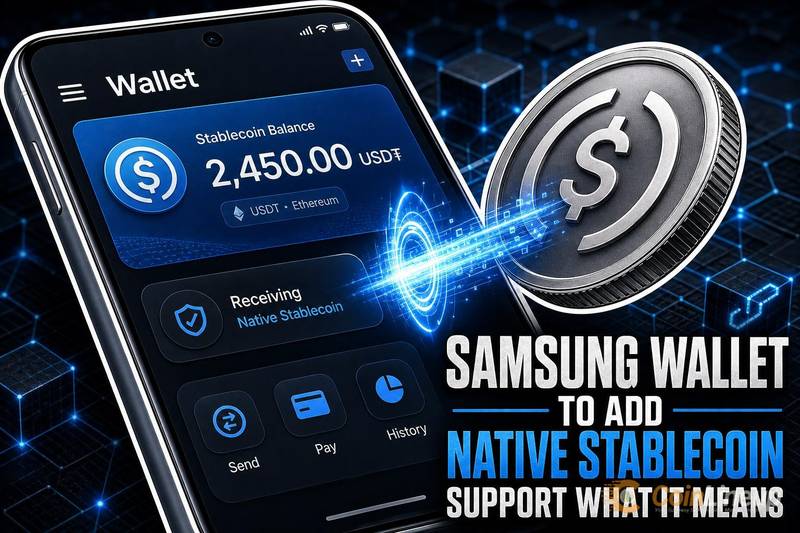
Samsung Wallet is set to add native stablecoin support, a move that would bring dollar-pegged tokens directly into one of the world's most widely distributed mobile wallet products and further extend Samsung's activity in consumer crypto payments. The development comes amid a broader push by payment and technology companies to integrate stablecoins into mainstream financial infrastructure, with PayPal having launched its own PYUSD stablecoin and payment networks such as Visa and Mastercard exploring stablecoin settlement rails.
Native stablecoin support inside Samsung Wallet
Native support means the capability would be built into the Samsung Wallet experience itself, rather than requiring users to install a separate app or rely on a third-party workaround. In practical terms, it points to stablecoins being stored, sent, or spent from the same interface that already holds payment cards, passes, and other wallet features.
The move would be more limited than full cryptocurrency support. Stablecoins are designed to maintain a steady value, typically through a peg to the U.S. dollar. That design distinguishes them from more volatile digital assets such as Bitcoin or Ether and is one reason they are often viewed as better suited to everyday payment flows in a consumer wallet.
Samsung has already shown interest in integrating crypto-related services into Samsung Wallet. The company previously gave Samsung Wallet users special access to Coinbase One, an early step toward embedding crypto services into the wallet experience rather than treating them only as separate products. Samsung has also maintained a presence in blockchain infrastructure through its investment arm Samsung Next and earlier blockchain wallet initiatives.
Relevance for mobile payments
Samsung Wallet is a consumer-facing product distributed across a large base of mobile devices, giving stablecoin support direct relevance for how ordinary users could transact. Device-level wallet integration can reach users who may not actively seek out a standalone crypto application. Samsung ranks among the world's largest smartphone manufacturers, meaning the potential distribution surface for stablecoin payments is considerable.
Stablecoins are commonly presented as a bridge between crypto infrastructure and routine transactions because their value is intended not to fluctuate in the same way as other tokens. That relative stability is what makes them a candidate for use in payments inside a mainstream mobile wallet.
The distribution element is central to the development. A large mobile ecosystem placing stablecoin utility close to existing wallet features could increase consumer exposure to stablecoin payments beyond the narrower audience served by dedicated crypto apps. The competitive landscape adds another dimension: while Apple has not announced native stablecoin support in Apple Wallet, other mobile platforms and messaging apps have explored crypto payments, making Samsung's move a notable data point in how hardware makers position themselves.
Open questions for rollout
The initial framing leaves several important details unanswered, including which stablecoins would be supported, which markets would be included, and what timeline Samsung may follow. Those details will determine how meaningful the feature is when it launches.
Regulatory and compliance considerations are also likely to influence any rollout. Stablecoin integrations generally depend on jurisdiction-specific rules, and enforcement pressure across regions may affect whether launch scope varies by country. In the United States, progress on stablecoin legislation such as the GENIUS Act has created a more defined pathway for regulated stablecoin issuance, which could reduce uncertainty for companies integrating these assets into consumer products.
Another key question is whether native stablecoin support becomes a foundation for broader onchain or payment partnerships, or remains a standalone feature within Samsung Wallet. Samsung's earlier wallet-based crypto tie-ins suggest the company views such integrations as building blocks, but the supported assets, regions, and launch timing remain the main details to watch.
Disclaimer: This article is for informational purposes only and does not constitute financial or investment advice. Cryptocurrency and digital asset markets carry significant risk. Always do your own research before making decisions.

