Samsung Has Already Secured 80% of Planned 2027 Memory Output: KB Securities
Key Takeaways
- •Long-term supply agreements already cover roughly 80 percent of Samsung's planned 2027 memory production, including the entirety of its projected high-bandwidth memory output.
- •KB Securities forecasts Samsung's operating profit to jump 51 percent to 555 trillion won in 2027, up from an estimated 367 trillion won this year.
- •Average selling prices for Samsung's HBM chips are projected to surge 100 to 150 percent next year, with HBM4 expected to double its share of HBM revenue to 80 percent.
- •Samsung's preliminary third-quarter results showed operating profit soaring nearly ninefold from a year earlier to 107.4 trillion won on revenue of 195 trillion won.
- •Micron has committed more than 75 percent of its planned 2027 output and SK hynix has signed long-term deals with around 10 major customers, signaling a broader industry shift toward multiyear supply agreements amid AI-driven demand.
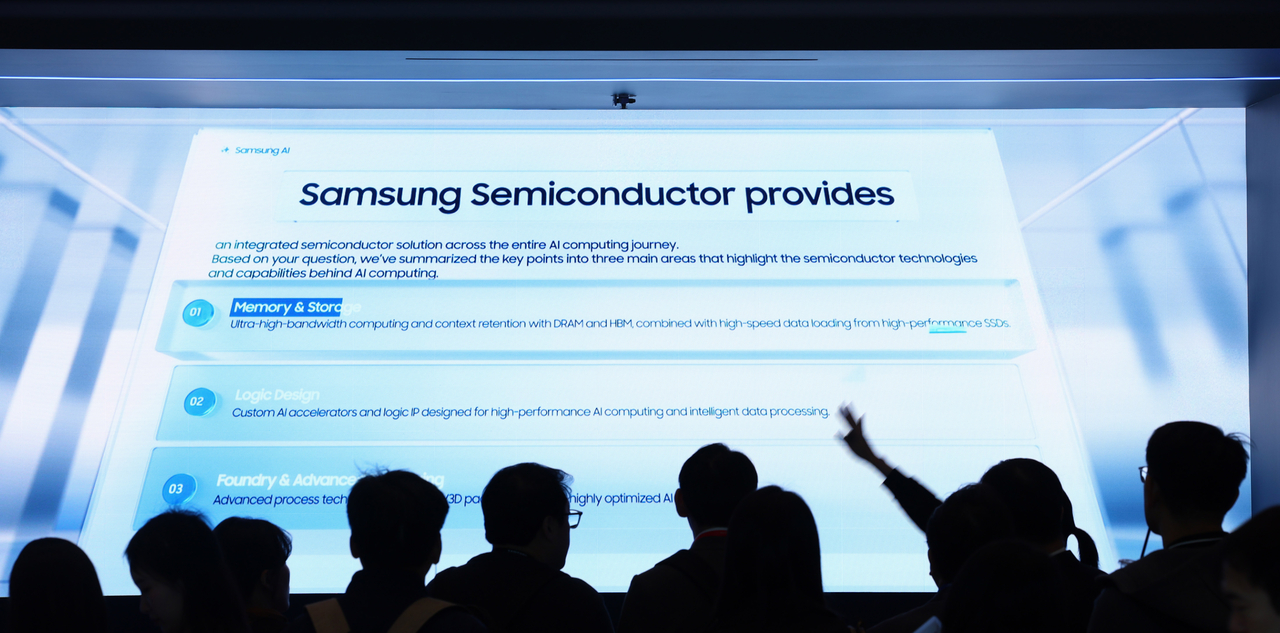
Samsung Electronics has secured long-term supply agreements covering roughly 80 percent of its planned memory chip production for 2027, a development that underpins the company's earnings outlook even as questions grow over how long the artificial intelligence investment boom can last, according to KB Securities.
"Samsung is estimated have already secured approximately 80 percent of its planned memory production for 2027 through long-term supply agreements," said Kim Dong-won, head of research at KB Securities, in a report released Tuesday.
The estimate comprises five-year contracts with global technology companies covering 70 percent of Samsung's planned conventional DRAM and NAND flash output, as well as supply commitments for the entirety of its projected high-bandwidth memory production — the advanced memory used alongside AI accelerators in data centers.
"Competition among hyperscalers to secure supplies continues even for the remaining 20 percent of uncontracted memory production," Kim said. Hyperscalers — the largest cloud platform operators — are the buyers whose AI infrastructure buildouts have tightened global memory supplies.
Building on that visibility, KB Securities forecast that Samsung's operating profit would jump 51 percent to 555 trillion won ($417.6 billion) in 2027, up from an estimated 367 trillion won this year. The brokerage expects average selling prices for Samsung's HBM chips to surge 100 to 150 percent next year, driven by premium HBM4 products — the next generation of the high-bandwidth format — with HBM4's share of the company's HBM revenue projected to double to 80 percent.
The outlook follows Samsung's preliminary third-quarter results, released Oct. 8, which showed operating profit soaring nearly ninefold from a year earlier to 107.4 trillion won on revenue of 195 trillion won.
Samsung's estimated contract coverage points to a broader shift across the memory industry, as chipmakers move toward multiyear supply agreements while AI infrastructure investment tightens global memory supplies. Micron CEO Sanjay Mehrotra said during the US chipmaker's Sept. 30 earnings call that more than 75 percent of its planned 2027 output had already been committed. Mehrotra also projected tight supply conditions through 2028, with customers already negotiating future allocations. SK hynix, for its part, said in July that it had finalized long-term agreements with around 10 major customers, citing simultaneous growth in demand for AI memory and conventional memory. For memory makers, agreements of this scale effectively pre-sell future capacity, extending revenue visibility while leaving late-arriving buyers to compete for what remains.
Despite recent weakness in Samsung shares, Kim maintained that the company's earnings outlook remains intact, attributing the stock's decline primarily to macroeconomic uncertainty rather than deteriorating fundamentals.
"Short-term stock volatility may increase due to macroeconomic factors, but likelihood of a reversal in next year's earnings growth remains limited," he said.
Samsung is scheduled to release its detailed third-quarter earnings on Oct. 29, updating the preliminary figures released earlier this month.

