Samsung Electronics' Next-Generation AI Memory Chips Surpass $1 Billion in Sales
Key Takeaways
- •Samsung's HBM4 chips surpassed $1 billion in sales by June 23, 2026, approximately four months after mass production commenced on February 12.
- •Samsung secured a memorandum of understanding with AMD to supply HBM4 chips for the Instinct MI455X GPU and EPYC processors, targeting bandwidths of up to 3.3 terabytes per second.
- •The company began shipping samples of a 12-layer HBM4E variant in May 2026, achieving speeds of up to 16 Gbps per pin and claiming it as an industry first.
- •Samsung and NVIDIA held discussions at GTC 2026 focused on HBM4E integration and future HBM5 development, though qualification for upcoming NVIDIA accelerator generations remains uncertain.
- •SK Hynix has been the dominant HBM supplier to NVIDIA in recent product cycles, while Micron is also advancing its own high-bandwidth memory offerings, intensifying competitive pressure on Samsung.
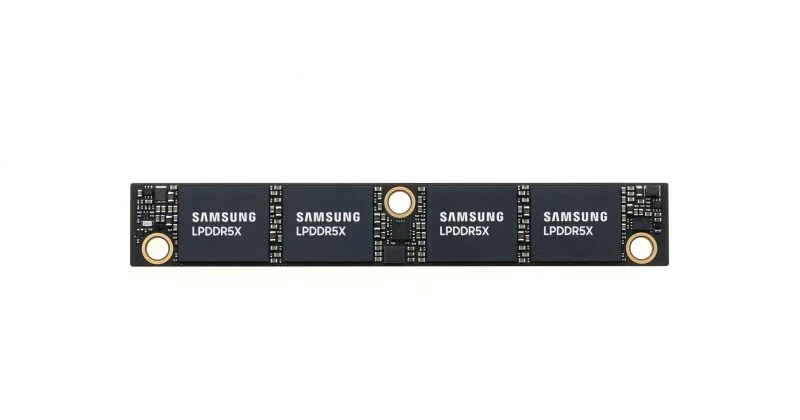
Samsung Electronics has surpassed the $1 billion sales mark for its next-generation AI memory chips, reaching the milestone approximately four months after the start of mass production. The company's high-bandwidth memory (HBM) 4 chips began shipping on February 12, 2026, and reportedly deliver performance improvements exceeding 40% over previous-generation standards.
HBM4 Rollout and the AMD Supply Agreement
Mass production of the HBM4 chips commenced in February 2026. By March 18, Samsung had secured a memorandum of understanding with AMD to supply HBM4 chips for AMD's Instinct MI455X GPU and EPYC processors. The partnership targets bandwidths of up to 3.3 terabytes per second (TB/s), enabled by Samsung's 10nm-class manufacturing process. The agreement with AMD represents a significant commercial validation of Samsung's HBM4 program, as accelerator designers increasingly source memory directly tied to their chip roadmaps.
High-bandwidth memory has become a critical component in the AI hardware ecosystem, as it provides the data throughput required by large-scale AI accelerators and data center GPUs. HBM chips are vertically stacked DRAM dies that sit close to the processor, reducing latency and increasing bandwidth compared to conventional memory architectures. As AI models have grown in parameter count and training cluster sizes have expanded, HBM bandwidth and capacity have become a primary bottleneck, making next-generation HBM supply a strategic priority for every major GPU and accelerator vendor.
Samsung and NVIDIA also held discussions at the GTC 2026 event, focusing on the integration of HBM4E and the development of future HBM5 architecture. Whether Samsung secures qualification for NVIDIA's upcoming accelerator generations remains one of the most closely watched competitive dynamics in the AI memory sector.
HBM4E: Samsung's 12-Layer Innovation
By May 2026, Samsung had begun shipping samples of its 12-layer HBM4E variant, which the company describes as an industry first. The chips achieve speeds of up to 16 gigabits per second (Gbps) per pin, a specification designed to maximize power efficiency for demanding AI workloads.
The transition to a 12-layer design represents a significant engineering achievement, as stacking more layers increases memory capacity per package while maintaining thermal and signal integrity. Higher layer counts directly address the need for larger memory capacity per accelerator, enabling AI systems to hold bigger models and larger batch sizes without increasing the physical footprint of the memory subsystem.
Competitive Landscape in the AI Memory Market
The $1 billion sales figure, reached by June 23, 2026, underscores the intense demand for high-performance memory across the AI supply chain. Samsung's aggressive timeline, from mass production launch in February to billion-dollar revenue by late June, reflects the broader urgency throughout the industry to scale AI infrastructure capacity. Hyperscale data center operators have been rapidly expanding GPU deployments, and memory suppliers are racing to match that demand with volume production of next-generation HBM.
Samsung faces strong competition in the HBM segment. SK Hynix has been the dominant HBM supplier to NVIDIA in recent product generations, while Micron has been advancing its own high-bandwidth memory solutions. Samsung's HBM4 launch, along with the HBM4E samples, signals a concerted effort to reclaim market share in what has emerged as the most strategically important segment of the semiconductor memory industry. The pace of HBM generation transitions is accelerating, with HBM4, HBM4E, and HBM5 development now overlapping, compressing the window in which suppliers must qualify next-generation chips with major customers.

