Samsung Foundry Raises Chip Manufacturing Prices by Up to 15% as AI Demand Outstrips Capacity
Key Takeaways
- •Samsung Foundry is increasing prices by up to 15% for new customers on advanced manufacturing nodes.
- •The division recently turned monthly profitable for the first time in three years after a long period of losses.
- •Samsung had previously offered discounts, including on its 2nm process, to compete for market share.
- •TSMC has reportedly raised prices by 5% to 10% on several advanced processes as well.
- •Companies including AMD, Google, Anthropic, Meta, and BYD are among those increasing demand for advanced chip capacity.
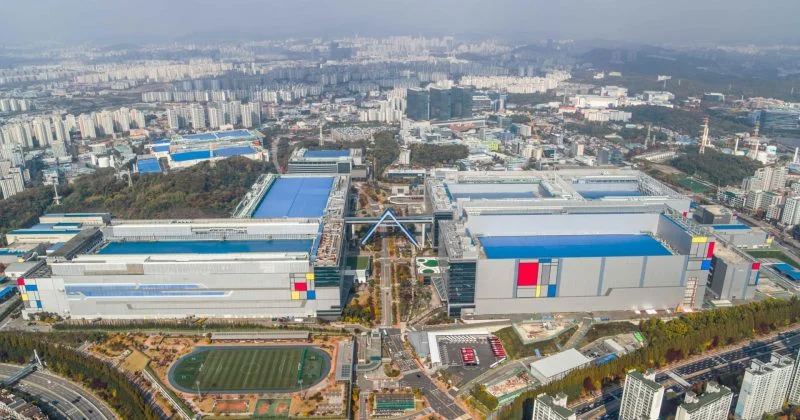
Samsung Foundry, the contract chipmaking arm of Samsung Electronics, is raising chip manufacturing prices by as much as 15% for new customers, the clearest sign yet of how thoroughly the AI boom has redrawn the economics of the semiconductor supply chain. The increases apply to the division's most advanced processes, including its 4nm and 5nm nodes, along with select 8nm applications serving the automotive sector.
The move marks a turning point for a business that has spent an extended period under financial strain. Samsung's foundry division recently achieved monthly profitability for the first time in three years, clawing back from a prolonged stretch of losses, as demand for advanced semiconductor manufacturing — driven primarily by AI workloads — outpaced its available production capacity.
From discounts to price hikes
The shift reverses a very different playbook. Until recently, Samsung had been offering competitive discounts, including cuts on its cutting-edge 2nm processes, in an effort to buy market share from the dominant player in contract chipmaking. That strategy now appears to be over — a measure of how quickly scarce advanced-node capacity has shifted bargaining power from chip buyers to chipmakers.
Samsung is not the only foundry repricing its services. TSMC (Taiwan Semiconductor Manufacturing Company), the world's largest contract chipmaker and Samsung's primary competitor in advanced nodes, has reportedly raised its own prices by 5-10% across its 3nm, 5nm, and 7nm manufacturing processes. With the industry's two dominant foundries repricing at once, the change touches more than two balance sheets: fabless designers — the companies that create chips but rely on outside manufacturing — depend on this small group of suppliers, so foundry pricing sets the cost base for semiconductors used across smartphones, data centers, and vehicles.
On the demand side, the customer list reads like a who's who of tech. Companies including AMD, Google, Anthropic, Meta, and BYD are reportedly among those driving increased interest in advanced semiconductor solutions. The mix itself sketches the shape of AI-era demand: AI labs and cloud platforms building out data-center infrastructure, chipmakers supplying AI accelerators, and automakers whose vehicles increasingly depend on advanced silicon.
Samsung's foundry turnaround in context
Earlier in 2026, Samsung pursued significant AI foundry contracts, including a reported deal with Tesla for 2nm chips. Wins of this kind matter for more than revenue alone: each major customer that signs on validates Samsung's manufacturing capabilities and makes it easier to attract the next one.
The open question is durability. Foundry demand has historically cycled between shortages and gluts, and Samsung's return to monthly profitability comes at a moment when AI customers are competing for its advanced capacity. Whether the division can sustain profitability across that cycle — and whether its new pricing holds as rivals and customers adjust — will be the signal to watch in the coming quarters.

