Saudi SABIC Reports Red Sea Shipments Unaffected Amid Middle East Conflict
Key Takeaways
- •SABIC reported no current disruption to its shipments through the Red Sea's Bab el-Mandeb Strait despite ongoing regional security threats from Houthi attacks.
- •The company posted a Q2 2026 net loss of $220 million, a significant improvement from the $1.08 billion loss recorded in the same quarter a year earlier.
- •SABIC more than doubled its quarter-on-quarter polymer volumes transported from Saudi Arabia's east coast to west coast ports to bypass the Strait of Hormuz closure.
- •Logistics costs rose approximately 40% in basic chemicals and 60% in agrinutrients during the quarter due to land transport, marine bunker adjustments, war risk premiums, and insurance.
- •SABIC identified industry overcapacity driven by large-scale Chinese capacity additions and geopolitical uncertainty as key ongoing challenges for its petrochemical business.
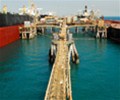
Saudi petrochemical giant SABIC, one of the world's largest chemicals manufacturers and a majority-owned subsidiary of Saudi Aramco, reported no current disruption to its shipments through the Red Sea, as the company leans on supply-chain flexibility and alternative export routes to manage trade disruptions stemming from the US-Iran conflict in the Middle East.
Key Q2 highlights:
- SABIC incurred a $102 million adjusted net loss linked to the Strait of Hormuz closure and related supply chain shocks
- Higher average selling prices partially offset lower sales volumes
- Industry overcapacity continues to pose a structural challenge
"We don't see [any disruption] currently and as up to now, any impact on the … Strait of Bab el-Mandeb on our shipments; we are watching the situation carefully and closely," SABIC CFO Salah Al-Hareky said during the company's Q2 earnings call on 30 July.
Al-Hareky's remarks come as shipping markets closely track security risks in the Bab el-Mandeb Strait, a critical chokepoint linking the Red Sea and the Suez Canal trade route that typically handles millions of barrels of oil and refined products daily. Traffic through the corridor has been disrupted by attacks from Yemen's Iran-backed Houthi group, which has recently targeted Saudi oil facilities and threatened shipping connected to Saudi exports. The Houthis' sustained campaign since late 2023 has already prompted many major container shipping lines to reroute vessels around Africa's Cape of Good Hope, adding transit time and costs to Asia-Europe trade lanes.
If disruptions worsen, SABIC intends to rely on domestic and Gulf Cooperation Council (GCC) sales channels as well as alternative shipping routes, including the Suez Canal, Al-Hareky said.
Middle East Disruption Hits Volumes
In Q2, geopolitical disruption across the Middle East — including the closure of the Strait of Hormuz, through which roughly one-fifth of global oil consumption normally flows — reduced sales volumes, with the Saudi chemicals producer posting a net loss of $220 million. The April-June 2026 net loss narrowed from $1.08 billion in the same period a year earlier, driven by sharp declines in operating expenses tied to non-recurring costs and restructuring initiatives.
Sales volumes declined in Q2 due to the Strait of Hormuz closure, but SABIC redirected volumes through alternative routes and captured higher market prices, Al-Hareky said.
SABIC CEO Faisal Al-Faqeer characterized Q2 as a period of "exceptional operational challenges," citing the prolonged closure of the Strait of Hormuz, disruptions at key energy facilities, and elevated global energy prices.
"Throughout this period, our priorities were clear. First and foremost, safeguarding our people and operations while ensuring business continuity and responding quickly to changing conditions," Al-Faqeer said.
Export Routes Shift to West Coast
To sustain exports, SABIC has increasingly transported polymer volumes from Saudi Arabia's east coast to the west coast, enabling exports to flow through multiple ports. On a quarter-on-quarter basis, the company's shuttled polymer volumes in Q2 more than doubled, moving material from east coast export hubs — which typically ship via the Strait of Hormuz — to west coast facilities on the Red Sea.
The rerouting allowed the company to export through multiple ports and maintain product flows despite regional logistics disruptions, underscoring the growing strategic importance of Saudi Arabia's Red Sea port infrastructure as Gulf producers seek alternatives to Strait of Hormuz shipping lanes.
"At Yanbu, for example, we leveraged the newly launched Red Sea Express Service to successfully export polymer products in partnership with the Saudi Ports Authority and Falk Maritime," Al-Faqeer said. The company also shipped approximately 6,600 standard polymer containers from Jeddah Islamic Port's Red Sea Gateway Terminal, he added.
The petrochemicals segment generated adjusted EBITDA of more than $630 million, broadly in line with the previous quarter despite lower volumes and logistics disruptions, according to Al-Hareky. Petrochemicals earnings were supported by stronger polyethylene (PE) performance and tight cost control, though higher liquid feedstock costs limited margin improvement.
SABIC also launched its first urea exports through Saudi Arabia's west coast during the quarter. "During the quarter, we successfully initiated urea export through the Kingdom's west coast for the first time, including the first urea shipment through Yanbu Commercial Port," Al-Hareky said.
Logistics Costs Surge
SABIC faced significantly higher logistics expenses during the quarter, with costs rising by approximately 40% in basic chemicals and about 60% in agrinutrients.
"This includes the land cost as well as the cost associated with the marine bunker adjustment and other global shipping costs there. In addition to a war risk premium and insurance," Al-Hareky said. "These additional costs are absorbed by higher product prices across our portfolio," he added.
Looking ahead, SABIC identified industry overcapacity — exacerbated by large-scale capacity additions from Chinese producers that have pressured global petrochemical margins in recent years — and geopolitical uncertainty as key ongoing challenges.
"Nevertheless, SABIC remain focused on strengthening the resilience and competitiveness of its petrochemical portfolio while continuing to serve customers reliably and create a long-term value," Al-Hareky added.
Source: ICIS by Nurluqman Suratman

