Rust Supply Chain Attack Hits Widely Used Crates, With Potential Solana Ecosystem Exposure
Key Takeaways
- •Security researchers reported malicious releases of arrayref@0.3.10, internment@0.8.7 and append-only-vec@0.1.9 in the Rust ecosystem.
- •The compromised packages used a lookalike dependency resembling proc-macro1, and its build script could download and execute a remote payload during compilation.
- •Because Cargo runs build scripts automatically, developers and CI environments could have been exposed simply by compiling affected versions.
- •Rust’s security team removed the malicious releases and locked the maintainer account associated with the packages.
- •The affected crates appear in some Solana-related dependency chains, but the report does not show that Solana or downstream projects were compromised.
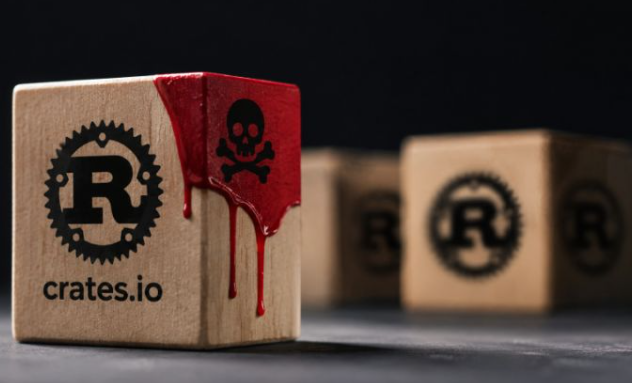
A coordinated supply chain attack has struck several widely used Rust packages, prompting concern among developers and projects whose dependency chains include components associated with the Solana ecosystem. Security researchers at SlowMist, Socket and StepSecurity reported that malicious releases affected arrayref@0.3.10, internment@0.8.7 and append-only-vec@0.1.9.
The compromised releases introduced a typosquatted dependency resembling the legitimate proc-macro1 package, whose build script downloaded and executed a remote payload during Cargo builds. As a result, developers and continuous integration (CI) systems could potentially be exposed simply by compiling a project that depended on one of the affected versions. According to information shared by @WuBlockchain on X, Rust's security team removed the malicious releases and locked the affected maintainer account.
Malicious Packages Delivered Through the Dependency Chain
The incident centers on Rust's package ecosystem, in which developers commonly rely on third-party crates to provide functionality within applications and software projects. In this case, researchers identified malicious versions of three crates: arrayref@0.3.10, internment@0.8.7 and append-only-vec@0.1.9.
The malicious releases contained a dependency designed to resemble the legitimate proc-macro1 package. This technique, known as typosquatting, attempts to make a malicious package appear similar to a legitimate dependency. It is a recurring tactic across open-source registries, including npm and Python's PyPI, where lookalike names have repeatedly been used to pass malicious code through routine dependency updates.
The attack became particularly significant because the malicious dependency included a build script capable of downloading and executing a remote payload when the affected package was compiled. The security risk was therefore not necessarily limited to users who manually installed or executed an obviously suspicious program: a developer workstation or CI environment could potentially be affected as part of the normal software compilation process.
Build Process Created Potential Security Risk
Cargo is Rust's package manager and build system, and developers routinely use it to retrieve dependencies and compile projects. The reported attack exploited that workflow. Because Cargo runs a crate's build script automatically as part of compilation, such a script executes with the permissions of the user or CI account performing the build.
When an affected dependency was compiled, the malicious build script could download and execute a remote payload. This created a potential pathway for an attacker to execute code on a developer's machine or a CI host.
CI systems are particularly important in modern software development because they automatically build, test and deploy code. A compromised build environment can therefore present risks beyond a single developer workstation, since build machines and developer workstations frequently hold credentials such as API tokens, deploy keys and signing material. For that reason, security teams commonly treat build-time code execution as grounds for rotating any secrets present on affected systems.
The incident highlights the broader security challenge associated with software supply chains, where malicious code can enter a project indirectly through dependencies that developers may not have written or reviewed themselves.
Solana-Related Dependency Chains Raise Attention
The arrayref crate is widely used across the Rust ecosystem and appears in dependency chains involving components associated with Solana. Solana's validator software and much of its surrounding tooling are written in Rust, which is why general-purpose crates such as arrayref can appear inside Solana-related dependency trees even though the crates themselves are not blockchain-specific. However, the presence of an affected crate within a dependency chain does not mean that downstream Solana-related projects were compromised.
This distinction is important because open-source software frequently relies on multiple layers of dependencies. A vulnerable or compromised package may appear somewhere within a project's dependency tree without necessarily resulting in a successful compromise of the final application or network.
Security researchers therefore distinguish between exposure to a malicious dependency and evidence that the malicious code was actually executed within a particular downstream project or environment. The reported incident establishes that the affected releases contained malicious code, but it does not establish that every project using related dependencies was compromised.
Rust Security Team Removes Malicious Releases
Rust's security team responded by removing the malicious releases and locking the maintainer account associated with the packages. According to the reported information, the maintainer's machine or publishing credentials were likely compromised.
A compromised publishing account can present a significant risk in open-source ecosystems because attackers may be able to distribute malicious software under the identity of a legitimate maintainer. Removing the affected versions limits further distribution through the package ecosystem, while locking the account prevents additional releases from being published through the compromised credentials. Security advisories for compromised Rust crates are tracked through the community-maintained RustSec advisory database, one of the channels developers can monitor alongside the crates.io registry.
The incident also demonstrates the importance of monitoring dependencies and reviewing unexpected package updates, particularly when projects rely on large and complex dependency trees.
Broader Implications for Rust Developers
Supply chain attacks have become a significant security concern across software development because they target the infrastructure and dependencies used to build applications rather than directly attacking the final application. In this case, the malicious code was embedded within package releases and activated during the build process. The pattern has well-documented precedents, including the XZ Utils backdoor disclosed in March 2024, in which an attacker leveraged a maintainer's position in a foundational open-source compression library, and the December 2024 compromise of the @solana/web3.js package on npm, which affected a JavaScript library widely used by Solana developers. Both episodes, like this one, show how trust in a maintainer account or package identity can become an attack surface.
Developers using Rust projects can reduce exposure to similar incidents by monitoring dependency versions, reviewing unexpected changes and using security tools capable of identifying suspicious packages or dependency behavior. For this incident specifically, that translates into searching lockfiles such as Cargo.lock for the three affected versions, checking CI and build logs for unexpected outbound network activity, and rotating credentials on any machine where the affected releases were compiled. Organizations that rely on automated CI environments also need to consider the security of their build infrastructure, because malicious dependencies can potentially execute code before an application is deployed.
The Rust ecosystem's response demonstrates the importance of coordinated security monitoring and rapid removal of compromised packages. While the affected crates have links to dependency chains involving Solana-related components, the available information does not establish that Solana itself or specific downstream projects were compromised. The incident instead serves as a reminder that widely used open-source dependencies can become a potential attack vector when publishing credentials or maintainer environments are compromised.
Source: Hokanews

