Russia Strikes 16 Ukrainian Provinces With 144 Missiles and Nearly 2,000 Drones in One Week
Key Takeaways
- •Russian forces struck 16 Ukrainian provinces with 144 missiles and approximately 2,000 drones in a single week, destroying roughly 1,600 facilities including civilian infrastructure.
- •Russia has significantly expanded its domestic production of Shahed-type loitering munitions, which were originally supplied by Iran but are increasingly manufactured under license within Russia.
- •Ukraine's air defense network combines Soviet-era systems with Western platforms such as Patriot, NASAMS, and IRIS-T batteries, but faces strain from the scale of bombardment and delays in Western aid packages.
- •Civilian infrastructure, particularly Ukraine's energy grid, has been a recurring Russian target since autumn 2022, repeatedly disrupting power and heating for millions ahead of winter.
- •Prediction market pricing for the likelihood of Ukraine recapturing Crimea by December 2026 has declined amid intensified Russian offensives.
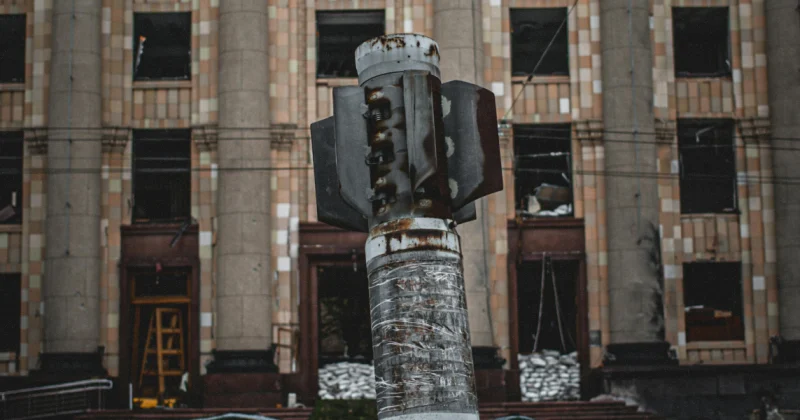
Ukrainian President Volodymyr Zelensky has reported a sharp escalation in Russian military activity, revealing that Russian forces have struck 16 Ukrainian provinces with 144 missiles and approximately 2,000 drones over the past week. The sustained bombardment has destroyed roughly 1,600 facilities across the country, including residential buildings and civilian infrastructure.
According to Zelensky's report, Russia's strike operations have intensified in both frequency and scale, employing a combination of ballistic missiles, cruise missiles, and mass drone salvos. The attacks span multiple regions of Ukraine and represent one of the most concentrated weekly barrages documented since the full-scale invasion began in February 2022. Russia's ability to sustain high-volume drone operations reflects a significant expansion of its domestic production of Shahed-type loitering munitions, originally supplied by Iran but increasingly manufactured under license within Russia.
Ukrainian forces have continued to rely heavily on air defense systems to intercept incoming threats, with Western military aid playing a critical role in sustaining these defensive operations. Ukraine's air defense network now combines Soviet-era systems with Western-supplied platforms such as Patriot, NASAMS, and IRIS-T missile batteries. The scale of the bombardment places substantial pressure on Ukraine's air defense capabilities and raises questions about the adequacy of current munition stockpiles, particularly as consecutive Western aid packages have faced political delays in both the United States Congress and among European partners.
The escalation comes amid an ongoing high-intensity aerial campaign between the two nations. Russia's war against Ukraine, launched in February 2022, followed its 2014 annexation of Crimea and the outbreak of conflict in Ukraine's eastern Donbas region. Territorial control over Crimea and Donetsk Oblast remains a central objective for both sides. Civilian infrastructure, particularly Ukraine's energy grid, has been a recurring Russian target since the autumn of 2022, a pattern that has repeatedly disrupted power and heating for millions of Ukrainian civilians ahead of winter.
Prediction market pricing related to the likelihood of Ukraine recapturing Crimea by the end of December 2026 has declined, reflecting growing skepticism that this objective can be achieved amid intensified Russian offensives.
Further developments in the conflict, particularly any shifts in territorial control within Crimea and Donetsk Oblast, are expected to remain closely monitored. Updates from the Institute for the Study of War (ISW), a U.S.-based research organization that publishes daily open-source battlefield assessments, on territorial changes, potential Ukrainian counteroffensives, and any adjustments in Russian military strategy will serve as key indicators of the conflict's trajectory.

