Russians Rush to Cold Wallets as Hardware Sales Jump 107% Ahead of New Crypto Regulations
Key Takeaways
- •Hardware wallet sales in Russia reportedly increased by 107% as demand for self-custody rose ahead of new crypto rules.
- •The State Duma approved cryptocurrency market legislation on July 21, 2026, and the Bank of Russia said it will take effect on September 1, 2026.
- •Under the new framework, non-qualified investors may buy certain liquid cryptocurrencies through intermediaries after a test and with a 300,000-ruble annual limit per intermediary.
- •Qualified investors will be allowed to trade cryptocurrencies under different rules without the same purchase limit.
- •The growth in cold-wallet demand could reduce the amount of long-term crypto holdings kept on centralized exchanges.
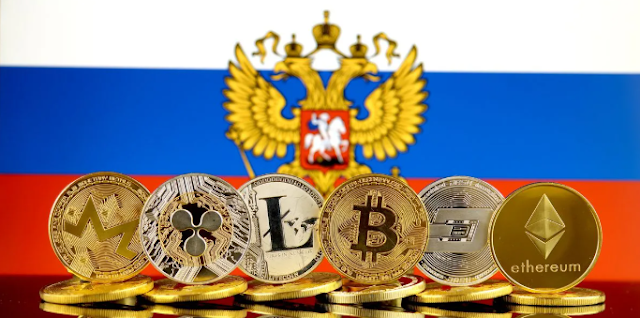
Russians Rush to Cold Wallets as Hardware Sales Jump 107% Ahead of New Crypto Regulations
Russian cryptocurrency users are increasingly turning to cold wallets, with demand for hardware-based crypto storage reportedly surging ahead of the country's new cryptocurrency regulatory framework. Hardware wallet sales have jumped 107%, signaling growing interest in self-custody as Russia prepares to introduce a more structured system for cryptocurrency trading and custody.
The surge comes as Russian authorities move closer to implementing a comprehensive legal framework for digital assets. The State Duma approved legislation regulating cryptocurrency markets on July 21, 2026, with the new rules scheduled to take effect on September 1, 2026, according to the Bank of Russia.
The trend has been highlighted in recent reporting by Cointelegraph, which drew attention to the sharp increase in hardware wallet demand and the growing interest in self-custody among Russian crypto users.
Source: Cointelegraph on X
Hardware Wallet Demand Surges Amid Regulatory Transition
The reported 107% increase in hardware wallet sales is notable because it coincides with a period of major change for cryptocurrency users in Russia. Hardware wallets are physical devices designed to keep private keys isolated from internet-connected systems. Instead of leaving cryptocurrency under the control of an exchange or another centralized custodian, users hold the keys themselves.
This model has become increasingly attractive to investors concerned about exchange restrictions, account freezes, regulatory uncertainty, and cybersecurity threats. The latest sales increase suggests that some Russian cryptocurrency holders may be preparing for a new environment in which access to crypto services becomes more closely tied to regulated intermediaries. Rather than waiting to see how the new system affects them, some users appear to be taking proactive steps to control their own custody arrangements.
Russia's New Cryptocurrency Legal Framework
Russia's cryptocurrency policy has shifted significantly over the past several years. After a prolonged debate over whether digital assets should be restricted, tolerated, or incorporated into the financial system, the country has now moved decisively toward regulation. The shift takes on added significance given Russia's expanding use of cryptocurrency for cross-border settlements, a pathway Russian authorities authorized in 2024 as part of efforts to facilitate international trade under sanctions-related financial constraints.
On July 21, the State Duma approved legislation establishing a framework for cryptocurrency circulation. The Bank of Russia confirmed the law will take effect on September 1, 2026.
Under the new framework, both qualified and non-qualified investors will be able to conduct cryptocurrency transactions through intermediaries, subject to different requirements:
- Non-qualified investors may purchase certain highly liquid cryptocurrencies through an intermediary, with an annual limit of 300,000 rubles per intermediary, after passing a test.
- Qualified investors will face different rules and will be able to buy and sell cryptocurrencies without the same limit.
The system is intended to create a regulated infrastructure for cryptocurrency exchanges, brokers, asset managers, and digital repositories—a major shift from the uncertain environment that previously surrounded crypto activity in Russia.
Why Russians Are Turning to Cold Storage
The appeal of cold wallets is closely connected to the concept of financial sovereignty. When cryptocurrency is stored on a centralized exchange, the exchange controls the infrastructure through which users access their funds. Users may own the economic value of the assets, but the platform controls the wallets and the withdrawal mechanism.
Cold wallets operate on a fundamentally different principle: the user controls the private keys directly. Access to the cryptocurrency does not depend on the continued operation of a centralized exchange.
However, self-custody also carries significant responsibility. If a user loses a recovery phrase or private key, no bank or customer-support department can restore access. This makes cold storage attractive to some investors but unsuitable for others.
The Regulatory-Custody Nexus
The timing of the hardware wallet surge is significant. Russia is preparing to introduce formal rules for cryptocurrency trading and custody at precisely the moment that demand for hardware storage is rising. The new framework lends greater legitimacy to cryptocurrency as an asset class, but it also subjects the market to stronger institutional oversight.
For investors, regulation brings clarity while simultaneously reducing the flexibility that characterized less regulated markets. A regulated exchange may offer transparency and formal oversight, but users may also face identity requirements, transaction limits, and restrictions on asset transfers.
Russia's Cold Wallet Rules Are Complex
The relationship between Russian regulation and cold wallets is not straightforward. Russian officials have indicated that cold-wallet storage may be possible outside Russian jurisdiction, while domestic custodial arrangements remain subject to the country's regulatory framework.
More recent reporting on the new legislation indicates that restrictions will apply to transfers involving self-custodied wallets. Individuals may need to use foreign custodial wallets before transferring assets into a cold wallet, while companies involved in foreign trade have specific exemptions—reflecting the government's decision to permit cryptocurrency for international settlements as a practical trade mechanism under existing sanctions.
This creates an unusual dynamic: Russian users may be buying hardware wallets to gain more control over their assets, while the regulatory system simultaneously establishes boundaries around how cryptocurrencies move between regulated and self-custodied environments.
Self-Custody as a Philosophical Flashpoint
The rising demand for hardware wallets reflects more than technological preference—it mirrors a broader philosophical debate within the cryptocurrency space. Bitcoin and other decentralized assets were built on the principle that individuals can manage their own wealth without relying entirely on banks or centralized institutions. Self-custody is one of the clearest expressions of that philosophy.
For regulators, however, self-custodied wallets create challenges involving taxation, fraud prevention, anti-money-laundering controls, and enforcement. This tension exists worldwide—the European Union's MiCA framework, for instance, also imposes obligations on custodial providers while leaving questions around self-custody less directly addressed—but Russia's rapidly evolving crypto framework makes the issue especially visible.
Cold Wallets Are Not Without Risk
The surge in hardware wallet demand should not be read as evidence that cold storage is completely secure. Hardware wallets can protect private keys from many forms of online attack, but they do not eliminate all risks. Users can lose recovery phrases, devices can be damaged, and seed phrases can be exposed through poor storage practices. Phishing attacks can deceive users into authorizing malicious transactions, and compromised computers can manipulate transaction details.
Security researchers have also demonstrated that even air-gapped or offline wallet systems can have potential attack vectors under certain conditions. For these reasons, purchasing a hardware wallet represents only one component of a broader security strategy. Device initialization, recovery phrase storage, and transaction verification are equally important.
The Coldcard Security Controversy
The Russian shift toward cold wallets follows a major security controversy involving Coldcard hardware wallets. The incident triggered a wider discussion about the security assumptions behind hardware-based Bitcoin custody and encouraged users globally to reassess how they generate and protect private keys.
This development may be contributing to a broader shift in user behavior. Rather than assuming that a hardware wallet automatically eliminates risk, experienced users are increasingly scrutinizing the entire process surrounding key generation and storage—a lesson particularly relevant for Russian investors already navigating regulatory uncertainty.
Scale of Russian Crypto Holdings
The heightened interest in crypto custody comes against a backdrop of substantial cryptocurrency ownership in Russia. The Bank of Russia reported that average monthly estimated balances of Russian residents on centralized cryptocurrency exchanges fell to approximately 720 billion rubles in the fourth quarter of 2025 through the first quarter of 2026, down from more than 930 billion rubles in the previous two quarters.
Bitcoin accounted for roughly 60% of those holdings, or about 350 billion rubles, according to the central bank's financial stability review.
These figures illustrate the scale of the Russian crypto market. Even if a fraction of users move assets off centralized exchanges, the amounts involved can be substantial. The growth of hardware wallet demand therefore has implications beyond individual investors—it could affect how cryptocurrency liquidity is distributed between centralized platforms and self-custodied wallets.
Potential Impact on Exchange Balances
If the hardware wallet trend continues, centralized exchanges could see a growing share of users withdraw long-term holdings. This does not necessarily mean Russians are abandoning cryptocurrency trading. An investor can keep part of a portfolio on an exchange for active trading while storing longer-term holdings in cold storage—a practice common among experienced cryptocurrency users.
The effect on exchanges could still be significant if large numbers of users begin treating centralized platforms primarily as trading venues rather than long-term storage providers, potentially altering liquidity patterns across the market.
What the New Law Means for Retail Investors
Russia's new framework introduces distinctly different treatment for qualified and non-qualified investors. For ordinary investors, the 300,000-ruble annual purchase limit per intermediary—roughly equivalent to a few thousand U.S. dollars depending on exchange rates—is a meaningful restriction that may push some users toward self-custody or unregulated channels. Investors must also pass a test before purchasing certain cryptocurrencies through regulated intermediaries.
The framework does not amount to blanket legalization of unrestricted cryptocurrency ownership. Instead, it creates a controlled market in which the government establishes a regulated structure while maintaining restrictions on domestic cryptocurrency payments. Russians may gain more formal access to cryptocurrency markets, but they will still face significant limits on how digital assets can be used.
Bitcoin's Central Role in the Custody Debate
Bitcoin is likely to remain one of the most important cryptocurrencies in Russia's regulated market due to its liquidity, market depth, and established infrastructure. The central bank's own data shows that Bitcoin already represents the largest share of estimated Russian crypto holdings on centralized exchanges.
This makes Bitcoin particularly relevant to the custody debate. If Russian investors increasingly move Bitcoin into cold wallets, the trend could reinforce the perception of Bitcoin as a long-term store of value rather than merely a speculative trading instrument. It could also strengthen the role of non-custodial infrastructure within the Russian crypto economy.
A Tension Between Control and Compliance
The rise in hardware wallet demand highlights a deeper tension emerging from Russia's crypto regulation. The government is building a controlled, regulated cryptocurrency market, while some users seek greater control over their own assets. These objectives are not always compatible.
Regulators want visibility, compliance, and safeguards. Crypto users often prioritize privacy, portability, and direct ownership. Cold wallets sit squarely at the center of this debate—they give individuals a way to control private keys without relying on an exchange, but they also make it harder for traditional financial systems to monitor and control transactions.
Security Best Practices for Cold Storage
For investors considering cold storage, security practices are paramount. Hardware wallets should be purchased through legitimate channels, device integrity should be verified, and recovery phrases must be carefully protected. Recovery information should never be shared with anyone or entered into an unfamiliar website. Losing access to a recovery phrase can permanently prevent users from accessing their funds.
Self-custody transfers responsibility from an institution to the individual—an arrangement that can be empowering but demands discipline and technical understanding.
Russia's Crypto Market at a Crossroads
The hardware wallet surge encapsulates the unusual trajectory of Russia's cryptocurrency market. On one side, the government is constructing a formal regulatory framework that brings exchanges, brokers, and custodians under greater oversight. On the other, users are demonstrating increased interest in tools that enable direct control over their assets.
This tension could shape the country's crypto market for years. The new law takes effect on September 1, with licensing requirements for market participants to be phased in subsequently. As those rules become operational, investors will learn how the regulated system functions in practice—and how enforcement around self-custodied transfers will work in reality.
The reported 107% increase in hardware wallet sales sends a clear signal about investor priorities. Russian crypto users are not simply waiting for policymakers to define the future of digital assets—many are actively making decisions about custody, access, and control. The surge does not prove that every new hardware wallet corresponds to a large Bitcoin holder, nor does it indicate an attempt to evade regulation. It does, however, demonstrate that self-custody is becoming an increasingly central topic.
As Russia enters a new era of cryptocurrency regulation, the defining question may no longer be whether Russians will use crypto. The bigger question is who will control it—and for exchanges, regulators, and investors alike, that answer could determine the trajectory of the country's digital asset market for years to come.

