Russia Expands Crypto Mining Ban to Moscow and Parts of Kursk Region Starting August 15
Key Takeaways
- •Russia's expanded mining ban covers Moscow, the Moscow Region, and eight Kursk Region districts plus the city of Lgov, effective August 15, 2026 through December 31, 2032.
- •The decree prohibits both independent and pooled digital currency mining operations within all affected territories.
- •Energy Ministry officials cited mounting electricity infrastructure pressure, with Moscow's power system currently facing approximately one gigawatt of mining demand.
- •Affected mining companies must cease local operations or relocate their equipment by the August 15, 2026 compliance deadline.
- •The measure is not a nationwide prohibition, and registered mining operators may continue working in regions without documented supply limitations.
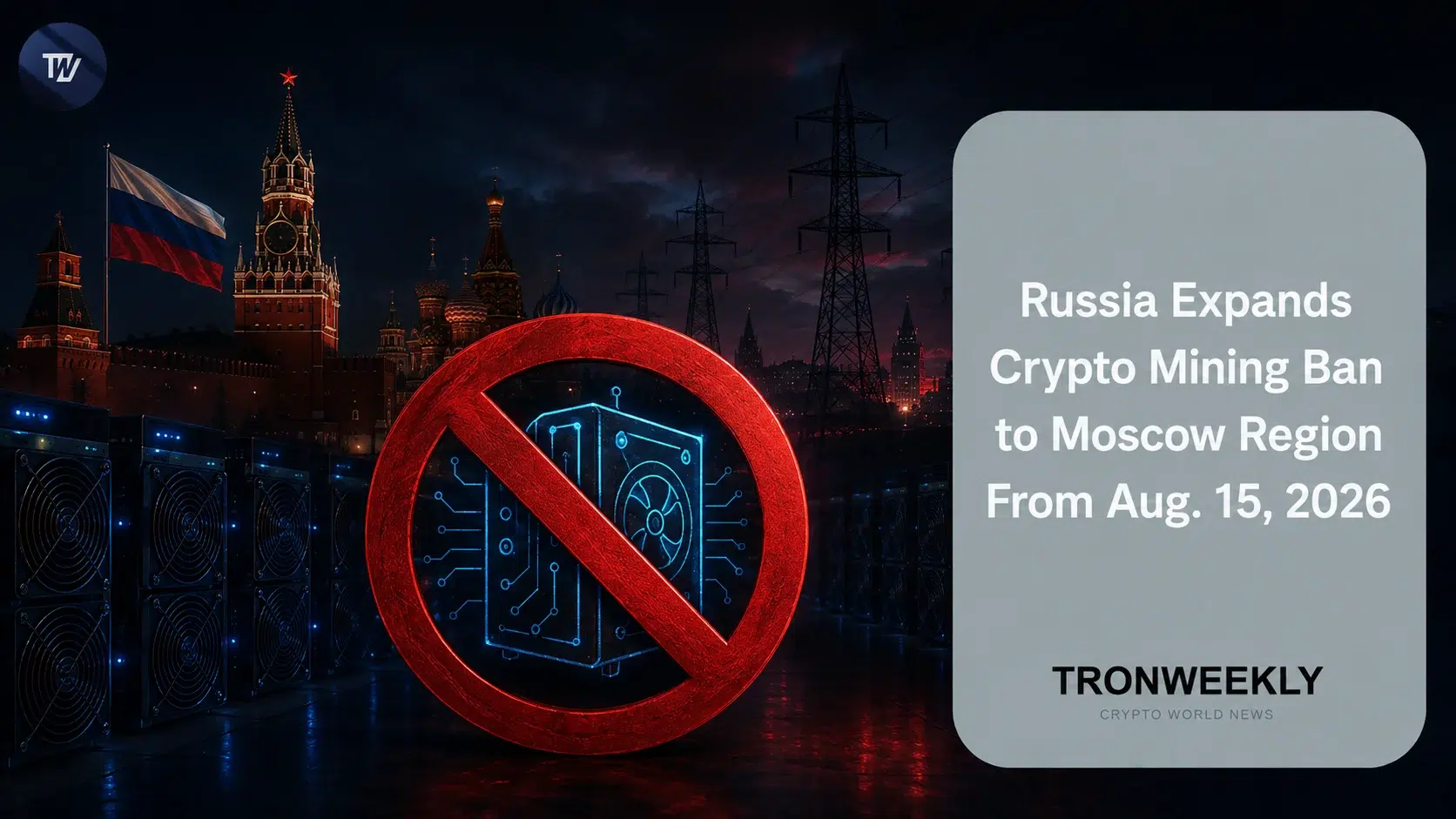
Russia will extend its cryptocurrency mining ban to Moscow, the Moscow Region, and selected areas of the Kursk Region beginning August 15, 2026. The restrictions, enacted under Resolution No. 936, will remain in force through December 31, 2032.
Prime Minister Mikhail Mishustin signed the decree on July 25, 2026, and the government published it on Russia's official legal information portal on July 31 (publication.pravo.gov.ru). The measure amends Resolution No. 1869, the territorial mining restriction order originally issued in December 2024, which itself followed Russia's federal law legalizing cryptocurrency mining that took effect in November 2024. That law established the first comprehensive regulatory framework for mining in Russia, creating the legal basis for both the operator registry and the territorial restrictions now being expanded.
Scope of the Expanded Ban
The decree prohibits all digital currency mining activity in Moscow and the Moscow Region. It also bars miners from participating in mining pools within these areas, meaning the ban covers both independent and pooled mining operations.
JUST IN: 🇷🇺 Russia has officially banned crypto mining in Moscow and parts of the Kursk Region from August 15, 2026, to December 31, 2032. — ChainDesk (@ChainDesk_) August 1, 2026
In the Kursk Region, the restrictions apply to eight municipal districts — Belovsky, Bolshesoldatsky, Glushkovsky, Korenevsky, Lgovsky, Rylsky, Sudzhansky, and Khomutovsky — as well as the city of Lgov. Several of these districts border Ukraine, where ongoing conflict has placed additional demands on regional infrastructure. These three new jurisdictions appear as entries 14 through 16 in the amended order.
The measure does not constitute a nationwide prohibition. Mining remains restricted in certain North Caucasus republics and other territories under existing regulations that remain valid until March 15, 2031. Russia has ranked among the world's largest Bitcoin mining jurisdictions by hash rate, alongside the United States, though precise current figures are difficult to verify independently.
Energy Infrastructure Concerns Drive the Decision
Energy Ministry officials linked the expansion to mounting pressure on electricity infrastructure. According to the ministry, unrestricted year-round mining poses capacity shortage risks for regional power systems. The energy authorities of the Moscow Region had formally requested the ban prior to its adoption. Russia's approach mirrors tensions seen in other major mining jurisdictions, where governments have moved to restrict or redirect mining activity to protect residential and industrial electricity supply.
Regional estimates place current mining demand at approximately one gigawatt within Moscow's power system. Official forecasts reported by Interfax indicate that local data center capacity could reach 3.6 gigawatts by 2032, equivalent to roughly 17% of maximum system load. This 2032 figure represents a government projection rather than current consumption.
Kursk officials raised parallel concerns about strain on local electricity infrastructure. Their request to the federal government covered the same eight districts plus the city of Lgov, all of which were included in the final decree.
Russia maintains a registry of mining operators and equipment. The framework distinguishes between registered and unregistered mining operations, permitting registered entities to conduct business in regions without supply limitations.
Compliance Deadline and Industry Impact
Affected mining companies must either cease local operations or relocate their equipment by August 15, 2026 — a deadline set 15 days after the decree's publication. The ban requires all participants to stop engaging in local mining pool activity.
These restrictions will stay in effect until December 31, 2032, unless the government amends the order. The decree provides no estimates of the mining capacity affected, the volume of equipment requiring relocation, or projections regarding the impact on national cryptocurrency production. Claims that the measure will materially alter Bitcoin's global hash rate remain unverified.

