Russia's New Crypto Law Takes Effect, but Market Infrastructure Is Still Incomplete
Key Takeaways
- •Russia’s crypto law became effective on Sept. 1, 2025, and is now officially in force.
- •The trading market and supporting infrastructure the law is meant to create are not fully available yet.
- •Russia’s central bank oversees the financial-market infrastructure needed for a regulated crypto market.
- •The immediate practical impact on ordinary crypto holders is limited because the law does not instantly create usable venues for buying, selling, or custody.
- •The article says the next key milestone is the completion of the remaining infrastructure and related implementation steps.
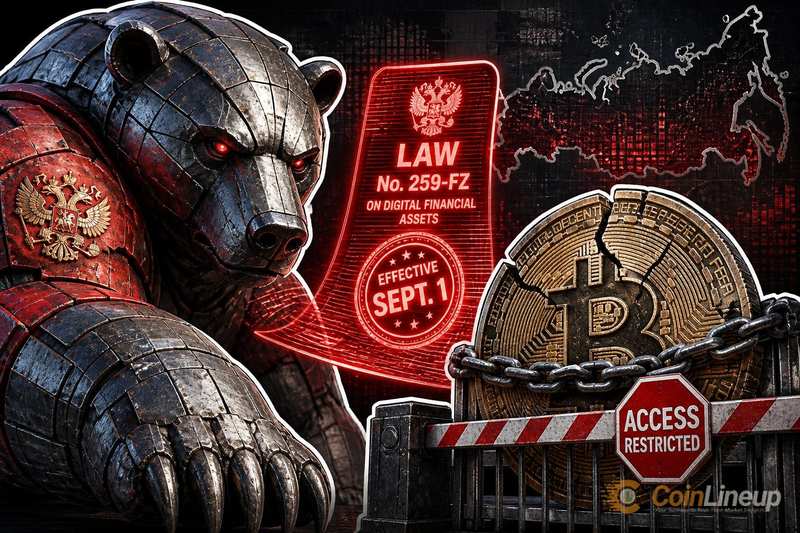
Russia’s new crypto law took effect on Sept. 1, 2025, but the market it is meant to create is not fully available yet. The law is now officially in force, while the practical trading and infrastructure it is supposed to support are still being built.
The change is legal first. The measure moved from paper to active law on Sept. 1, meaning the rules now apply even though the market itself is not ready, as reported by CryptoSlate. For related coverage, see US sanctions target $6.3B crypto pipeline linked to Iran and Russia.
Being “in force” and being “usable” are two different things. A law can take effect on a calendar date while the systems, licenses and venues it depends on lag behind. That gap is the core issue here. For related coverage, see US sanctions two crypto exchanges over alleged Iran-linked funds.
This matters because Russia has spent years debating crypto rules. The debate stage is over. The implementation stage has begun, and Sept. 1 marks its starting line. For market participants, that distinction is important: legal status can change before day-to-day access, custody and trading channels do. For related coverage, see MyTrade Founder Fined $10,000 Over Crypto Wash Trading.
Why the market is not fully available yet
The law creates a framework, but a framework is not the same as a working marketplace. According to the same CryptoSlate reporting, the market it describes is not fully available to participants yet. For related coverage, see Rashida Tlaib's Ethereum ETF IRA Holding Raises Crypto Questions.
The situation is similar to a new highway that has opened on the map but still has closed lanes. Drivers technically have a road, but they cannot yet use all of it.
Russia’s central bank oversees the country’s financial market infrastructure, the plumbing that any regulated crypto market would rely on. Details on that infrastructure are published by the Bank of Russia.
Until that plumbing is fully switched on, readers should not assume broad access began on Sept. 1. The safer reading is that some pieces are live while others are still pending, which is common when regulation moves faster than the systems that support it.
What the partial rollout means next
The people most affected are Russian traders and firms waiting for clear, legal venues. They now have a law, but not yet the full market it was designed to open.
For an ordinary person holding a small amount of crypto, the immediate practical change is limited. A law taking effect does not instantly create places to buy, sell or custody assets under it.
The key milestone to watch is the infrastructure itself. When the central bank and related bodies bring the remaining pieces online, the “not fully available” gap should begin to close.
Russia’s approach also sits within a tense global backdrop, where regulators elsewhere are tightening rules and enforcement, from the U.S. targeting crypto pipelines linked to Russia to a broader push reflected in the SEC’s own crypto regulation proposal. These moves show how differently governments are treating the same technology.
The practical takeaway is straightforward: Sept. 1 was the day Russia’s crypto law became real in the eyes of the state, not the day a full crypto market opened for everyone to use.
Disclaimer: This article is for informational purposes only and does not constitute financial or investment advice. Cryptocurrency and digital asset markets carry significant risk. Always do your own research before making decisions.
