Republicans Lash Out as Trump Budget Director Vought Moves to Control Federal Spending
Key Takeaways
- •Vought is accused of restricting the release of funds that Congress already approved for federal programs and grants.
- •The controversy includes reported “zombie programs” such as CDC Alzheimer’s work, epilepsy and sickle cell data collection, and a rape prevention unit.
- •Brown said OMB used rescissions and the apportionment process to support spending cuts and delays, including a prior $4.9 billion foreign aid reduction.
- •A proposed federal rule would give Vought’s office broader control over grants tied to the president’s policy priorities.
- •The Senate has passed a short-term budget measure that temporarily blocks the grant takeover effort, and the House still needs to act.
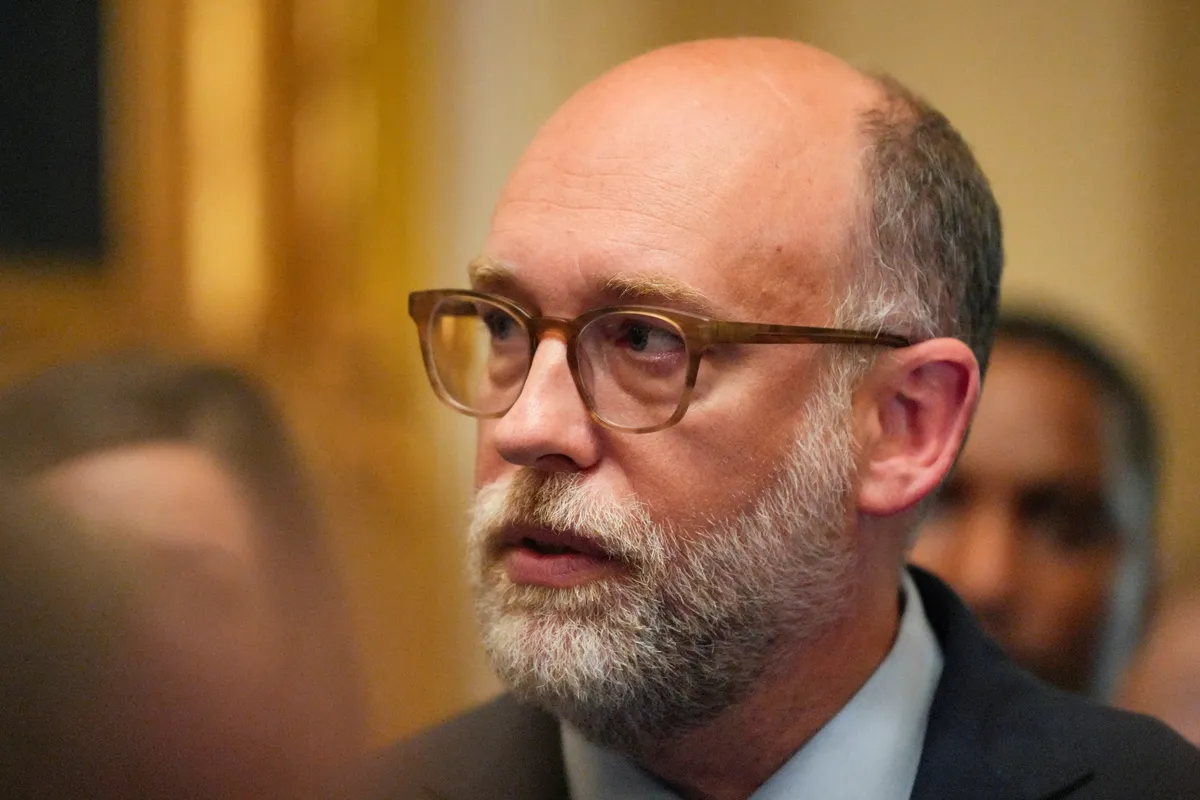
The director of the Office of Management and Budget is drawing anger from Republican lawmakers after being accused of going rogue on appropriations approved by the House and Senate.
MS NOW opinion writer Hayes Brown said Monday that Director Russell Vought has unilaterally moved to control whether funds approved by Congress are actually disbursed for federal projects.
At the center of the dispute is Article I’s Appropriations Clause, which states: “No Money shall be drawn from the Treasury, but in Consequence of Appropriations made by Law.” Under that constitutional framework, the president may not spend Treasury funds unless Congress has authorized the spending through law. Appropriations are laws passed by Congress. At the same time, Article II requires the president to “take Care that the Laws be faithfully executed.”
Brown wrote that the executive branch is refusing to release funds that have already been approved by law, adding that “Vought has used every lever he can reach to stanch the flow of federal dollars.”
A series of reports last week described a collection of so-called “zombie programs” across the federal government. Among them are the CDC’s Alzheimer’s disease program, programs tied to epilepsy and sickle cell disease data collection operations, and a rape prevention unit. Brown noted that all of those programs were approved and fully funded by Congress. He also said that after Elon Musk’s DOGE cuts, the employees working on those programs were let go.
According to Brown, Vought has encouraged the president to impound money that Congress has allocated, despite a law specifically forbidding the practice. After the DOGE cuts, Brown wrote, OMB sent a list of rescissions saying it would “undo” Musk’s moves to eliminate programs Congress had funded. That fight matters because it goes beyond one set of grants or programs: if the executive branch can slow or withhold funds after lawmakers approve them, it changes how Congress’s spending power works in practice.
“Congressional Republicans signed off on a package cutting $8 billion in foreign aid funding and roughly $1 billion from the Corporation for Public Broadcasting. But that wasn’t enough for Vought, who last fall enacted a ‘pocket rescission’ to cut another $4.9 billion in foreign aid,” Brown explained. “By only informing Congress of the hold less than 45 days before the end of the fiscal year, OMB argued, the money would be cut automatically.”
Vought then used the apportionment process to argue that federal spending must align with Trump’s budget proposals. Brown said that has allowed Trump’s administration to take tax dollars from blue states while refusing to allocate appropriated funds. The broader issue for agencies, states, and grant recipients is not just whether money was approved on paper, but whether it reaches the programs Congress funded on time and under the conditions lawmakers set.
Brown also pointed to a new federal rule under development that would give Vought’s office unprecedented control over federal grants. If adopted, the rule would act as a roundabout veto over spending that does not “demonstrably advance the president’s policy priorities,” even when the spending fits the specific guidelines set by Congress.
The approach has angered lawmakers, including Republicans.
“Congress has appropriated money, and you don’t have the authority to impound it,” Sen. Chuck Grassley (R-Iowa) said during a Senate Budget Committee hearing with Vought.
Rep. Mark Amodei (R-Nev.), a senior Republican on appropriations, told Politico, “Pocket rescissions would be a very interesting way to curry favor with the legislative branch — especially the one part of the legislative branch which has delivered on all of the administration’s s——.”
The Senate passed a short-term budget bill before leaving for the August recess, and its language temporarily blocks Vought’s takeover of federal grants. The House still has to approve the measure, but passage appears likely because lawmakers want to avoid a government shutdown weeks before the election.
Brown said the episode is one of the rare times in recent years that Congress has asserted its authority. He noted that over the past two years, lawmakers have ceded power over trade and war to the president. In this case, he said, it is good to see Congress finally drawing a line.

