North Carolina Senate Seat Flips to Democrats as Roy Cooper Defeats Michael Whatley
Key Takeaways
- •Roy Cooper's victory moves a Republican-held North Carolina Senate seat into the Democratic column, narrowing the GOP's slim majority.
- •The seat opened when Sen. Thom Tillis announced his retirement, and Lara Trump declined to run despite President Trump's initial preference, citing family priorities.
- •Republicans nominated Michael Whatley, a former chairman of the RNC and the North Carolina Republican Party who had never run for office, with the NRSC and Tim Scott consolidating support and fundraising behind him early.
- •National Republicans withdrew their funding support from North Carolina roughly a month before Election Day.
- •Cooper maintained a persistent lead over Whatley throughout the race, including a ten-point advantage in early-to-mid October polls and a lead even at his lowest polling point in late July 2025.
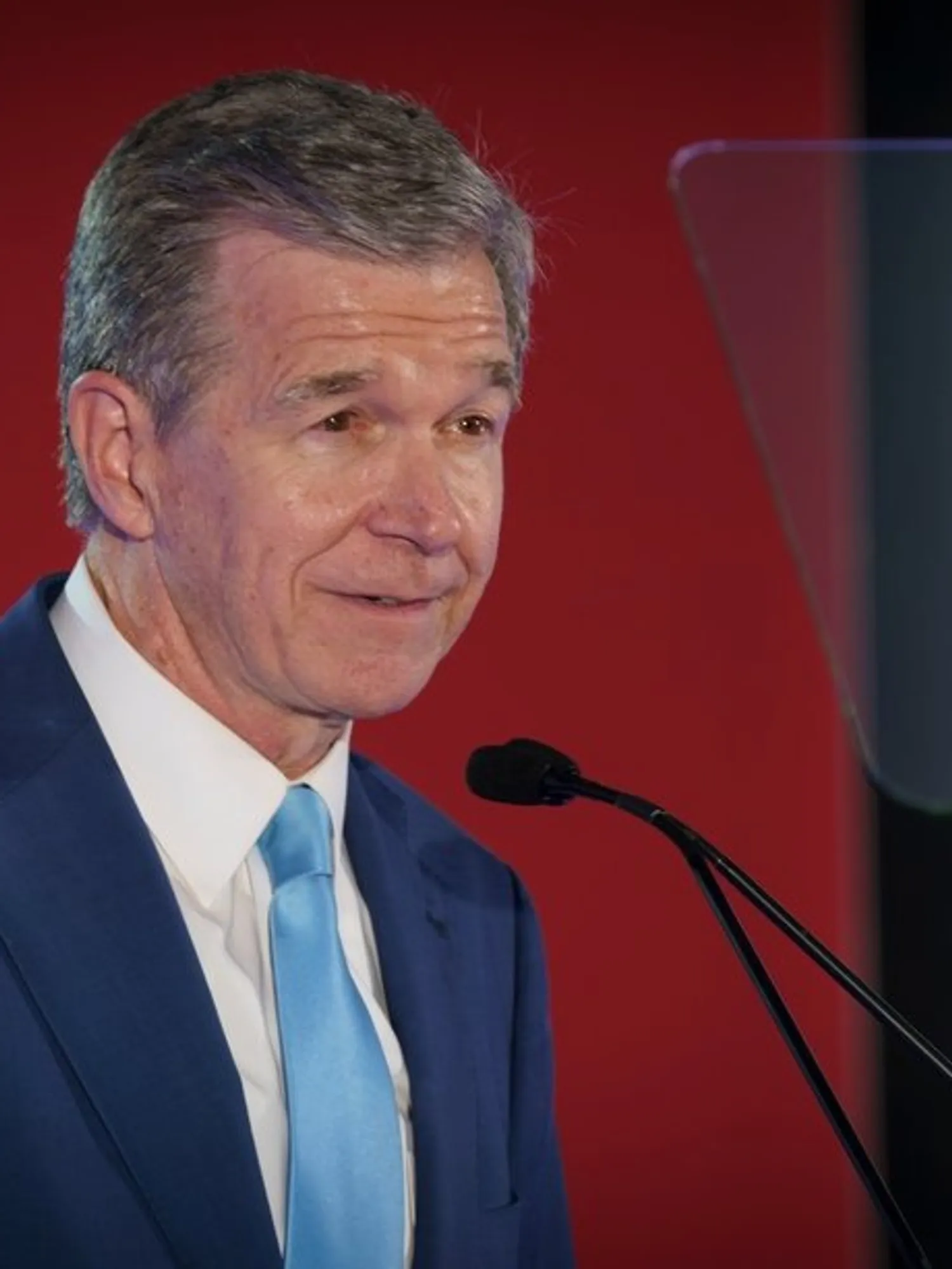
Republicans withdrew their funding support from North Carolina roughly a month before Election Day — a clear sign, observers noted, that party leaders saw the writing on the wall and believed the money was needed elsewhere.
On Tuesday night, the Associated Press and MS NOW officially called the race for former Gov. Roy Cooper (D), who will become the state's next U.S. senator. The result moves a seat that had been in Republican hands into the Democratic column, narrowing the GOP's margin in a Senate where Republicans hold a slim majority. Cooper is set to take office when the new Congress convenes in January 2027.
Cooper, a popular two-term governor, left office with high approval ratings. By early to mid-October, polling showed him ten points ahead of Republican Michael Whatley.
The seat opened when Sen. Thom Tillis (R-N.C.) announced his retirement. President Donald Trump initially hoped his daughter-in-law, Lara Trump, would be handed the nomination, but she ultimately announced she would not seek the election, citing family priorities. In a 2025 interview with TIME, she said it would be very difficult to serve as a U.S. senator with two young children at home, and that uprooting them and moving to Washington — assuming she won — would be hard. She also revealed that she had previously turned down a possible appointment to the U.S. Senate seat in Florida after now-Secretary of State Marco Rubio left it vacant.
Trump then chose Whatley, a former chairman of both the Republican National Committee and the North Carolina Republican Party, as well as a former chief of staff to U.S. Sen. Elizabeth Dole. Whatley held a powerful fundraising advantage over his GOP challengers and maintained longtime relationships with local Republican officials across the state. Yet despite being an established party operator, he had never actually run for office himself.
National Republicans wanted to consolidate quickly. National Republican Senatorial Committee Chairman Tim Scott (R-S.C.) endorsed Whatley, urged fellow senators to contribute, and helped organize fundraising. The strategy was to put a unified, well-supported nominee against Democrats' strongest recruit rather than spend months fighting an internal primary. The central gamble was that GOP infrastructure and Trump's backing could compensate for Whatley's lack of electoral experience.
The problem with that strategy was that Cooper entered the race as a twice-elected former governor and former state attorney general with strong statewide name recognition and public affection. Although Whatley is a dedicated North Carolinian, he was still forced to introduce himself to voters outside Republican Party politics — all while trying to appeal to less partisan voters amid growing dissatisfaction with Trump.
Looking back at the New York Times polling aggregator, it is unclear whether Whatley ever had much of a chance against a candidate as well-liked as Cooper. Even at his lowest point, in late July 2025, Cooper still led Whatley — a persistent gap in a state where federal races have often been decided by narrow margins.

