Robinhood's Vlad Tenev Doubles Down on 'Tokenization Supercycle' as Robinhood Chain Passes 100 Million Transactions
Key Takeaways
- •Robinhood launched Robinhood Chain on July 1, 2026, an EVM-compatible Layer-2 blockchain built for real-world asset tokenization that has already processed more than 100 million transactions.
- •The platform supports tokenized versions of more than 190 US stocks, each providing 1:1 economic exposure to the underlying equity, tradeable around the clock and accessible in over 120 countries.
- •Tenev's tokenization push follows a 30% quarter-over-quarter drop in crypto trading revenue in Q1 2026 that contributed to an earnings miss, with crypto's share of revenue having fallen from over a third to roughly 12.5% by late 2024.
- •Unlike institutional-focused initiatives such as BlackRock's BUIDL tokenized Treasury fund and JPMorgan's Kinexys platform, Robinhood's strategy is retail-first, stock-focused, and runs on its own blockchain.
- •Tokenized securities sit in a regulatory gray area across many jurisdictions, and Robinhood's global expansion adds compliance risk, though the SEC closed its Robinhood Crypto investigation in early 2025 without filing charges.
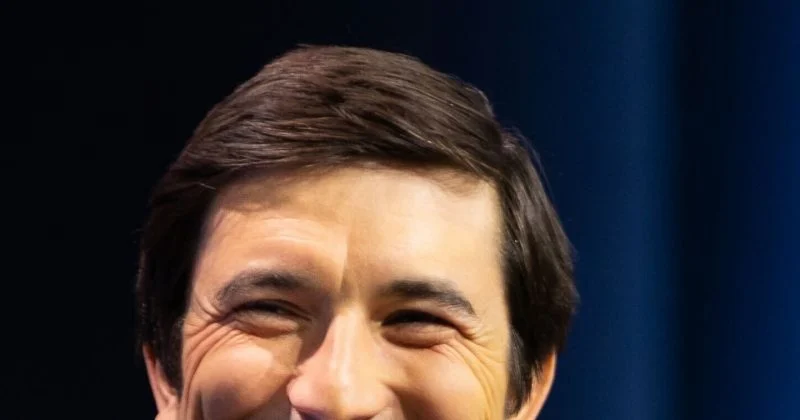
Robinhood CEO Vlad Tenev is making the case that the next big thing in finance is not a new meme coin. According to Tenev, it is the unglamorous side of the market — stocks, bonds, and equities — running on blockchain rails instead of the creaky infrastructure Wall Street has relied on for decades.
Tenev has championed the “tokenization supercycle” thesis since the company’s Q1 2026 earnings call on April 29, and he doubled down on the message in an August 18 post on X. The argument is straightforward: the real revolution is not volatile crypto prices bouncing around, but the underlying technology eating traditional finance from the inside out.
From Crypto Slump to Blockchain Infrastructure Play
The timing of Tenev’s tokenization push is no accident. Robinhood’s crypto trading revenue has been declining, with the segment dropping 30% quarter-over-quarter in Q1 2026 and contributing to an earnings miss that caught investors’ attention. For context, crypto trading once represented more than a third of the company’s total revenue; by late 2024, that figure had fallen to roughly 12.5%.
Robinhood’s answer arrived on July 1, 2026, when the company launched Robinhood Chain, a dedicated Layer-2 blockchain built specifically for real-world asset tokenization. As a Layer-2, it processes transactions on its own network and settles them back to an underlying base chain, and because it is EVM-compatible it can run Ethereum-style smart contracts with the developer tooling that already exists across the Ethereum ecosystem. The platform has already processed more than 100 million transactions, a figure the company says makes it the fastest EVM-compatible chain by that measure.
The chain supports tokenized versions of more than 190 US stocks, each offering 1:1 economic exposure to the underlying equity and tradeable around the clock rather than only during market hours. These stock tokens are now accessible in more than 120 countries.
Why Tokenization, and Why Now
The core value proposition is deceptively simple. Traditional stock markets operate on fixed schedules, close on weekends, and rely on settlement systems that can take days to finalize trades. US equities did move to T+1 settlement in May 2024, but final payment still routes through brokers, clearinghouses, and custodians, and much of the rest of the world settles on T+2 cycles. Tokenized stocks on a blockchain, by contrast, can trade continuously, settle almost instantly, and reach investors who might not otherwise have access to US markets through conventional channels.
For a retail investor in, say, Indonesia or Nigeria, buying fractional exposure to Apple or Tesla through a tokenized stock on Robinhood Chain could be dramatically easier than navigating the traditional brokerage infrastructure required to access US equities.
A Retail-First Bet in an Institutional Race
Robinhood is not operating in a vacuum. Major financial institutions, from BlackRock to JPMorgan, have been exploring the tokenization of various asset classes. BlackRock launched BUIDL, a tokenized Treasury fund, in March 2024, and JPMorgan has processed interbank payments and tokenized collateral on its own Onyx platform — since rebranded Kinexys — for years. Most of those efforts, however, have targeted institutional clients and large-ticket assets such as Treasury bonds or private equity stakes.
Robinhood’s angle is different: retail-first, stock-focused, and built on its own blockchain rather than someone else’s infrastructure. By controlling the chain itself, the company can optimize the platform for the specific use case of stock tokenization rather than trying to fit financial products onto a general-purpose blockchain.
The risk, of course, is regulatory. Tokenized securities exist in a gray area across many jurisdictions, and offering US stock exposure in more than 120 countries means navigating a patchwork of local securities laws. The European Union’s MiCA regime, in force since the end of 2024, is one of the few harmonized rulebooks, giving licensed operators a passport across member states; most other markets still decide case by case. Robinhood has already faced regulatory scrutiny in its home market — its crypto arm paid a $30 million penalty to New York State regulators in 2022, though the SEC closed an investigation into Robinhood Crypto in early 2025 without bringing charges. Expanding that surface area globally adds complexity that could slow the supercycle Tenev envisions. For now, the scoreboard Robinhood points to is transaction count; the open questions are whether that activity becomes sustained trading across the 120-plus markets it serves and how regulators in each of them respond.

