Robinhood Chain Resumes Block Production After 10-Minute Outage Halted Transaction Confirmations
Key Takeaways
- •Robinhood Chain stopped producing blocks for an estimated 10 to 14 minutes on Friday before resuming, with early post-restoration activity remaining intermittent.
- •The cause of the outage was not disclosed, and no official statement confirmed whether the sequencer, nodes, or other software was responsible.
- •No reports indicated stolen funds or altered account balances, and evidence pointed to a processing halt rather than a security breach.
- •Robinhood Chain ranked second in tokenized-stock wallets with 518,800, behind BNB Chain's roughly 730,000, with the two networks together accounting for about 73% of monitored wallets.
- •The network recorded about $989 million in decentralized exchange trading volume on Aug. 28 and $708 million in total value locked in its DeFi ecosystem.
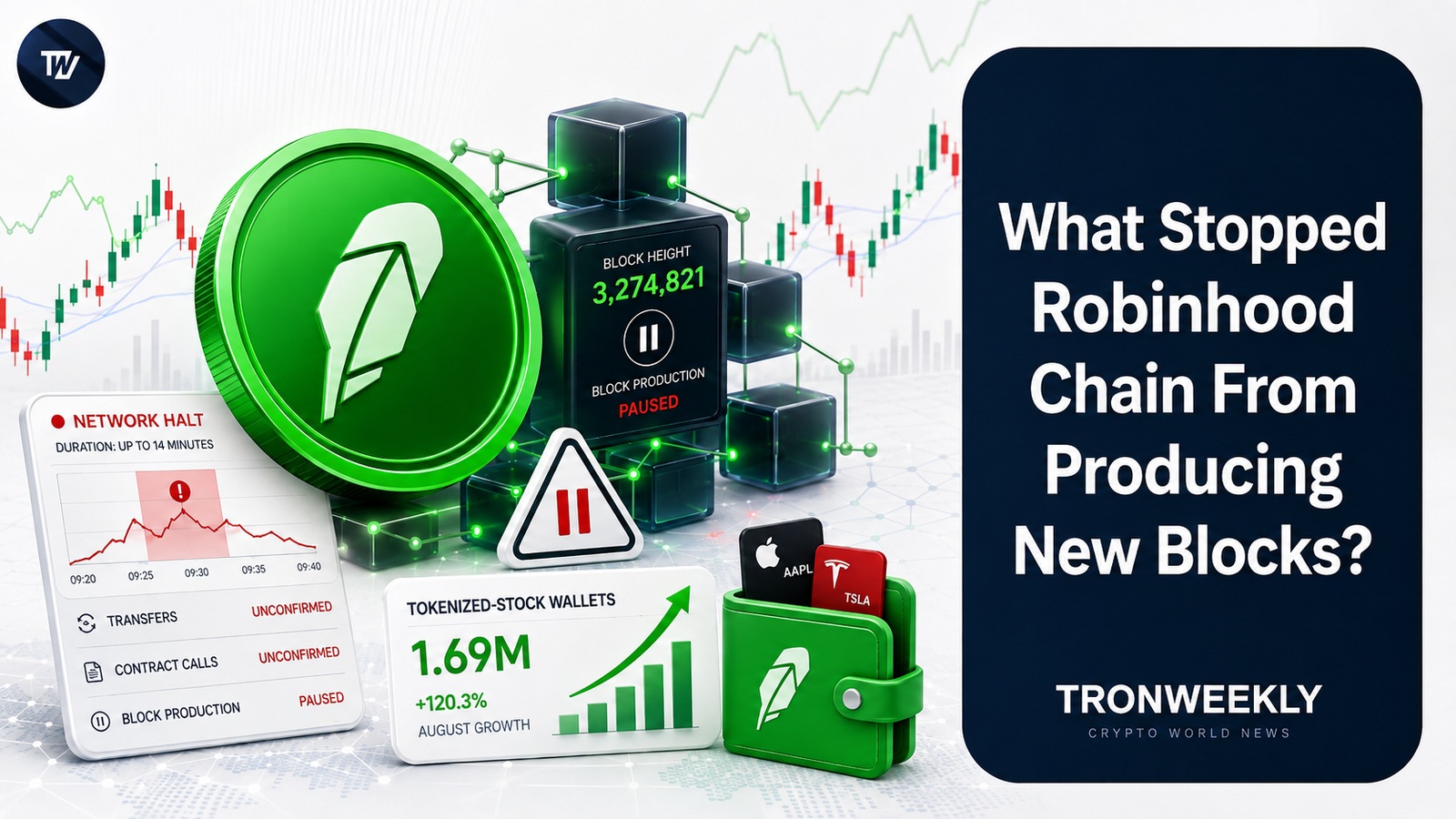
Robinhood Chain resumed block production on Friday after an outage lasting more than 10 minutes prevented the network from confirming new transactions. The interruption affected token transfers and smart contract calls during a period of rising activity across the platform's tokenized-stock and DeFi markets.
According to explorer data, the network began producing blocks again after an estimated 10 to 14 minutes. Early post-restoration activity remained intermittent, while transactions submitted during the pause waited for confirmation.
ROBINHOOD CHAIN GOES DOWN, NO NEW BLOCKS PRODUCING: WEBSITE pic.twitter.com/CNAIULfb89 — Aggr News (@AggrNews) September 4, 2026
https://x.com/AggrNews/status/2095858191972126998
Why Did Robinhood Chain Stop Producing New Blocks?
Robinhood Chain had not disclosed the cause of the interruption, nor had the company issued an update confirming network services returned to normal.
No reports indicated that funds were stolen or account balances were changed. Available records pointed to a processing halt rather than a confirmed security breach.
The latest block number remained unchanged throughout the incident. Transactions, contract calls, and routing operations continued to be recorded by the explorer, but they were not added to new blocks on the network. Some of these requests remained associated with the same block height, indicating that the chain had stopped advancing even though it could still receive transactions.
Robinhood Chain is an Ethereum-compatible Layer 2 built using Arbitrum technology. Transactions are processed off-chain and then settled back to Ethereum. Like other Arbitrum-based networks, it relies on a sequencer component to order and batch transactions, and sequencer or related infrastructure problems have caused temporary block-production halts on other Layer 2 networks in the past. The network launched its public mainnet on July 1, and was designed for tokenized shares, DeFi, real-world assets, lending platforms, and trading applications.
When Did Processing Return?
News aggregators first flagged the disruption on social media when the explorer stopped providing updates. A second notice indicated that block creation had resumed, though inconsistently. Later explorer updates confirmed that the blockchain had begun processing transactions again, but none of these updates offered a technical explanation for the disruption.
At no point did Robinhood Chain indicate whether the halt was caused by the sequencer, the blockchain nodes, or other software. Without an official statement, the cause cannot be determined.
Tokenized-Stock Growth Context
The halt occurred amid strong growth in blockchain-based equity products. More than 928,400 new tokenized-stock wallets were registered in August, according to RWA.xyz data, lifting the total from 771,000 to nearly 1.7 million — monthly growth of 120.3%. The wallet count refers to addresses rather than verified investors, meaning one individual can hold multiple addresses.
BNB Chain led the field with roughly 730,000 tokenized-stock wallets. Robinhood Chain ranked second with 518,800, while Solana held about 335,000. Together, BNB Chain and Robinhood Chain accounted for approximately 73% of all monitored wallets, showing that tokenized-stock activity was concentrated on just two blockchains by the end of August.
The Robinhood network recorded about $989 million in decentralized exchange trading volume on Aug. 28, according to reported figures. Total value locked in its DeFi ecosystem stood at $708 million. The growth means the network is now handling meaningful trading activity little more than two months after launch, which adds weight to how quickly operators resolve availability incidents.
Robinhood offers stock tokens through Robinhood Wallet in more than 120 countries, subject to each region's eligibility requirements and regulations, with several supported decentralized exchanges available for trading these products.
How Is Robinhood Expanding the Network?
Infrastructure providers have broadened their offerings since the July launch. Chainstack began offering mainnet and testnet nodes, while Alchemy, BitGo, Chainlink, and Uniswap joined the network's infrastructure ecosystem.
The outage surfaced amid ongoing controversy over Robinhood's tokenized stocks. AMC Entertainment CEO Adam Aron expressed dissatisfaction with the platform's AMC stock token and raised concerns about products that track share prices without conferring actual ownership. Robinhood's Classic Stock Tokens provide price exposure to securities but do not offer stock ownership or shareholder rights.
Robinhood Markets shares opened lower on Friday after gaining 16.6% on Thursday, when HOOD closed at $124.72 amid positive analyst commentary on the brokerage's growth potential. The stock traded within the $120-$123 range on Friday. No publicly available information suggested a connection between the price decline and the network issues.
