Robinhood Chain Overtakes Ethereum in Daily App Revenue Two Months After Launch
Key Takeaways
- •Robinhood Chain generated approximately $2.66 million in application revenue over 24 hours on August 30, 2026, according to DeFiLlama data.
- •The network's app revenue was more than double Ethereum's roughly $1.27 million and about six times Base's, ranking second only to Solana.
- •Robinhood Chain set records with 5.52 million transactions processed and roughly $875 million in DEX trading volume on the day.
- •Memecoin trading has been the primary driver of activity on the network, which launched only about two months earlier.
- •The figures reflect fees collected by applications on the network rather than the chain operator, and sustainability beyond the launch-phase surge remains unproven.
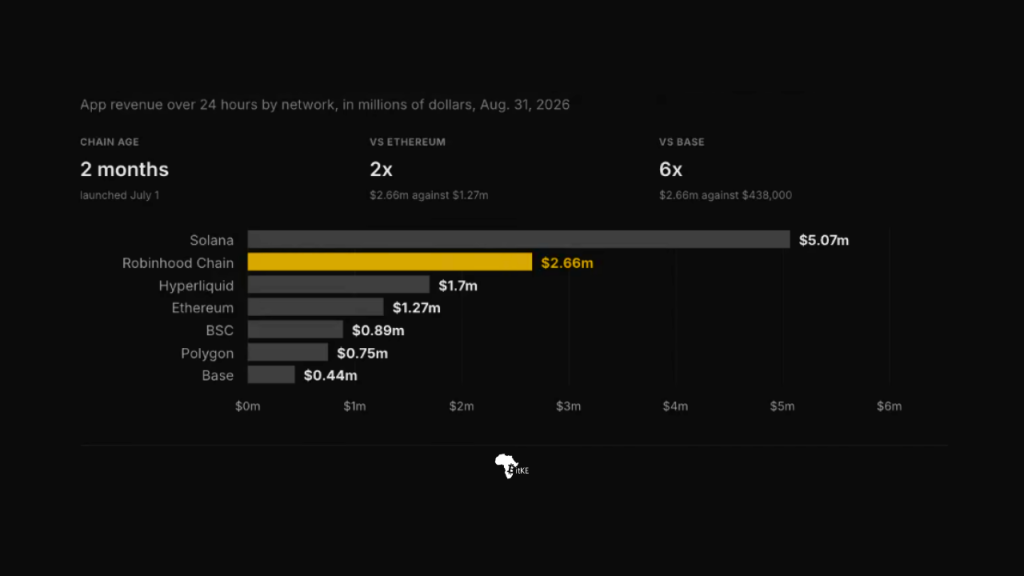
Robinhood Chain, the layer-2 network launched by the trading platform Robinhood roughly two months ago, generated approximately $2.66 million in application revenue over a 24-hour period on August 30, 2026, according to data from DeFiLlama. That figure was more than double the roughly $1.27 million earned by applications on Ethereum over the same period.
The young network ranked second only to Solana, whose applications generated about $5.07 million in revenue during the same window.
Robinhood Chain also posted record activity on the day, processing 5.52 million transactions and roughly $875 million in decentralized exchange (DEX) trading volume. The network's app revenue was:
- 2x what apps on Ethereum earned
- 6x what apps on Base earned
Much of the activity on the network has been driven by memecoin trading. Even so, the figures mark a remarkably rapid rise for a chain that is only weeks old and is already out-earning Ethereum in daily application revenue.
Robinhood Chain's growth comes amid a broader surge of interest in appchains — application-specific blockchains built on established layer-2 technology — as trading platforms and consumer apps seek deeper integration between their products and on-chain activity. For a platform like Robinhood, which built its business on commission-free retail trading, running its own chain allows trading activity to settle directly on infrastructure it controls rather than through third-party networks. Revenue figures of this kind reflect fees collected by applications built on the network, not the chain operator itself, so app-level earnings driven largely by memecoin trading can fluctuate sharply from day to day. Whether the network can sustain this pace beyond the early launch-phase surge remains to be seen.
Source: BitcoinKE (data via DeFiLlama)
