Robert Reich: Trump's Ultimate Nightmare Is Public Humiliation, Not Defeat
Key Takeaways
- •A federal judge barred the Kennedy Center from again adding President Trump's name to the building, after which fencing went up around the institution and Trump ordered its closure.
- •Trump said the Kennedy Center closure was needed for safety repairs, but indicated the work would proceed only if the board could move forward with adding his name to the building.
- •Ticket sales and fundraising at the Kennedy Center plunged after trustees added Trump's name in December, making a fiscal rescue necessary.
- •Robert Reich argues in his September 18 Alternet column that Trump's decision-making is driven by an inability to tolerate the humiliation of losing rather than by vanity or vindictiveness.
- •Reich projects that if Republicans perform badly in the 2026 midterms, Trump may resign and hand the presidency to Vice President JD Vance, though this is his speculation rather than a reported decision.
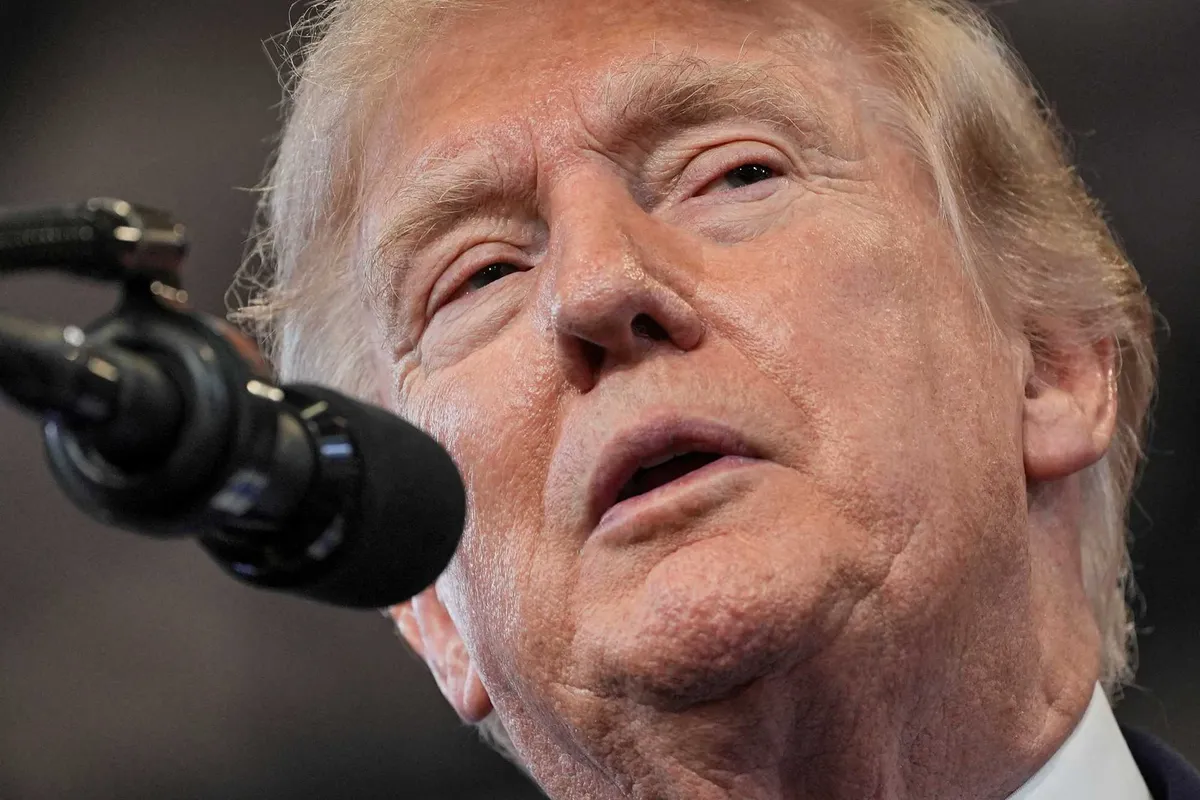
President Donald Trump's recent decision-making is driven less by vanity or vindictiveness than by an inability to tolerate the humiliation of losing, according to a column published by Alternet on September 18 by Robert Reich, a professor of public policy at the University of California, Berkeley and former US secretary of labor.
The column follows an episode earlier this week in which a federal judge barred the Kennedy Center, the performing arts institution in Washington, D.C., from once again adding Trump's name to the building. Trump then apparently ordered his handpicked trustees at the Center to close it down, and fencing went up around the building this week.
In a social media post, Trump said the closure was needed for safety repairs. But he also said the repairs would proceed only if the board were permitted to move forward with plans to add his name to the building.
The Center's trustees confirmed that without “appropriate recognition” on the building, Trump was unlikely to oversee the renovation or “lead the fiscal rescue of the Center.” A fiscal rescue is considered necessary because ticket sales and fundraising plunged after the trustees added Trump's name to the building in December. The upshot is that a dispute over naming has left the institution closed, with its finances and its reopening tied to the question of recognition.
Reich writes that while many observers attribute Trump's motives to vanity, flagrant narcissism, an insatiable need for self-glorification, or bottomless vindictiveness, those traits are, in his view, symptoms of something deeper: a mentally disturbed man-child who cannot abide the humiliation of losing. Any person or group that publicly puts Trump down, makes him appear to have surrendered, or displays domination over him threatens his self-worth, Reich argues. His ego, Reich writes, is so fragile that the mere prospect of being shown to be what he fears he is — “a loser, a bumbler, a clown” — drives him to distraction. Comparing Trump to a 6-year-old who kicks over the card table when losing a game, Reich contends that Trump would rather demolish the Kennedy Center than endure the public humiliation of having his name removed from it. These characterizations are Reich's interpretation of Trump's behavior, not established findings.
Reich extends the argument to foreign and domestic policy. He claims Trump is willing to wreak endless suffering in Iran and elsewhere in the Persian Gulf, cause death and injury to American service members, compromise the security of the United States, and impoverish Americans who can no longer afford gas, groceries, or their mortgage loans — rather than endure the public humiliation of being defeated.
He further asserts that Trump was willing to undermine the trust on which American democracy depends rather than accept the humiliation of losing the 2020 election, and that Trump will do whatever he can to sabotage the 2026 midterm elections.
According to Reich, the same pattern governs Trump's responses to those who have publicly challenged him: writer E. Jean Carroll, Harvard University, Canadian Prime Minister Mark Carney, members of the Supreme Court, and the few congressional Republicans who have crossed him. Reich claims Trump would prefer to see them purged and expunged, their careers ruined, their reputations in tatters, and their nations turned into America's enemies, rather than suffer the public humiliation of being defeated by them.
Reich also sees possible good news in the pattern. With Trump's polls in the basement and the likelihood of midterm losses mounting by the day, he suggests Trump may prefer to exit the game rather than publicly lose it. Trump has already said out loud that he is “getting a little bit tired of politics.” That remark, along with the approaching 2026 midterm elections, gives the column's argument concrete markers to watch.
If the midterms turn out as badly for Republicans as expected despite Trump's efforts, Reich writes, he would not be surprised if, before the start of the new year, Trump announced his resignation and handed the presidency to his handpicked successor, Vice President JD Vance. The scenario is Reich's projection, not a report of any decision by Trump.
Like his closing of the Kennedy Center, Reich concludes, Trump would rather close down his presidency than be seen losing it.
Robert Reich is a professor of public policy at Berkeley and former secretary of labor. His writings can be found at robertreich.substack.com.

