Robert Reich: The 'Rot at the Top' Quietly Siphoning American Money Into Billionaire Pockets
Key Takeaways
- •Nvidia CEO Jensen Huang resigned after it became known he had an affair with a Chinese spy who helped China obtain Nvidia's advanced chips.
- •Anthropic briefly reached a $2 trillion valuation after its mammoth public offering, with early investors selling more than $25 billion in stock at the start of trading.
- •Friday's selloff erased more than $4 trillion in market value, with Nvidia tumbling 20 percent, Anthropic losing $109 billion, and the Nasdaq giving back all of its 2026 gains.
- •AI now accounts for more than a third of the value of all US-traded shares and nearly half of all US economic growth over the past two years.
- •Reich laid out a dozen questions for the incoming Democratic majority, which takes over congressional oversight on January 3, covering chip exports, securities regulation, media consolidation, energy subsidies, and arms sales.
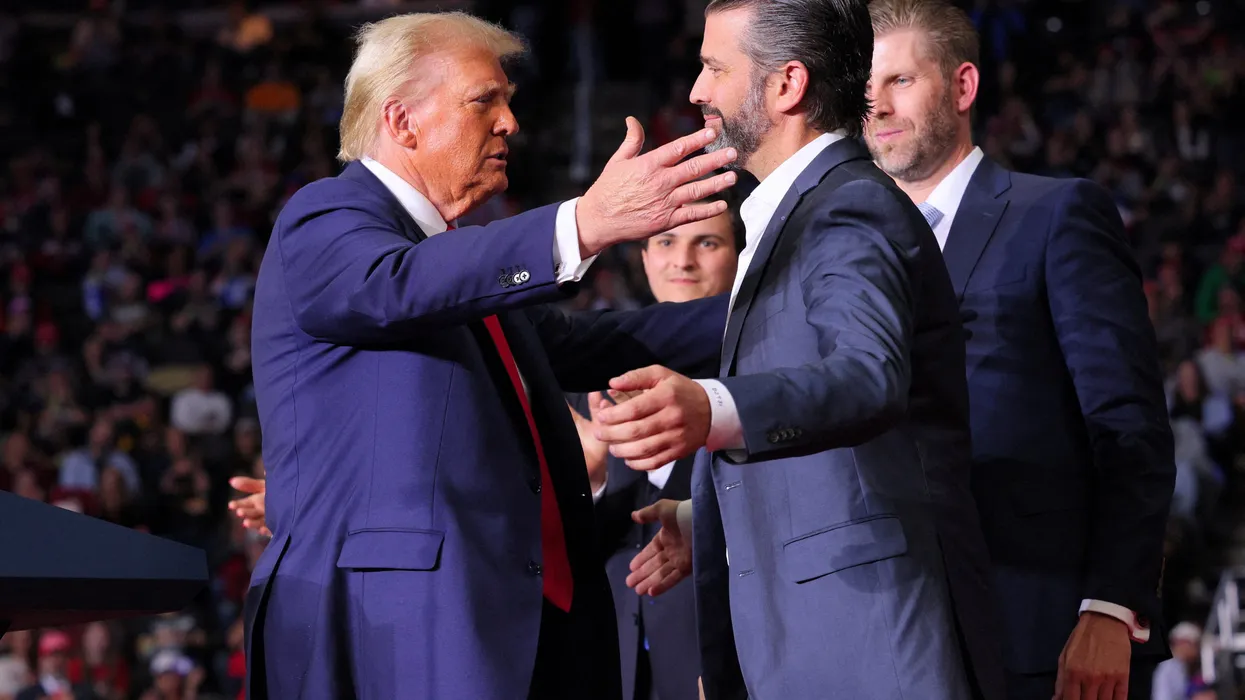
Americans are banding together against what commentator Robert Reich calls the “rot at the top” — the corruption, self-dealing, and crony capitalism that, in his view, have come to define the American political economy after a decade of Donald Trump.
The campaigns of nearly every newly elected Democratic member of Congress — whether branded “moderate,” “progressive,” or “Democratic socialist” — took aim at billionaires and corporate greed.
Public revulsion toward artificial intelligence and its billionaire leadership is mounting as well, Reich writes. Even in traditionally conservative rural America, communities are rejecting AI data centers.
Last week, Jensen Huang, chief executive of Nvidia — described in the column as the so-called “central bank” of AI and the maker of its most advanced chips — resigned after it became known that he had had an affair with a Chinese spy who helped China obtain Nvidia’s chips.
Reich argues that the U.S. economy has grown dependent on the decisions of a handful of AI chief executives: Huang, Anthropic’s Dario Amodei, OpenAI’s Sam Altman, and Elon Musk.
AI now accounts for more than a third of the value of all shares traded on the U.S. stock market and nearly half of all U.S. economic growth over the past two years. Both figures explain why Reich treats the sector’s stability as a mainstream economic concern rather than a niche tech story.
On Thursday, after its mammoth public offering, Anthropic briefly reached a valuation of $2 trillion, making each of its seven cofounders $20 billion wealthier. In what Reich describes as an unusual deal reminiscent of a Ponzi scheme, early investors sold more than $25 billion in stock at the start of trading. Why, he asks, did government regulators allow this?
On Friday, the bubble began to burst. Anthropic lost 9 percent of its market value, or $109 billion, raising the question of whether big early investors cashed out before smaller ones were left holding losses.
Nvidia tumbled 20 percent, and the Nasdaq composite index — made up of Big Tech stocks — gave back all of its 2026 gains. In total, more than $4 trillion in market value disappeared. Reich asks whether the bubble will continue to burst this week and whether AI companies can cover the interest on their massive debt, much of it kept off the books.
Even Americans who hold no Big Tech stocks will feel the fallout in their 401(k)s, which are tied to market indices such as the Nasdaq and the S&P 500 — both connected to Big Tech.
Trump’s, Reich contends, is not only the most corrupt administration in American history; its corruption has leached into the private sector, infecting Big Tech, Big Oil, Big Finance, Big Ag, and Big Aerospace.
Democrats, who will take charge of overseeing this mess starting January 3, need answers to many questions, Reich writes. He lays out a dozen:
-
Trump and Commerce Secretary Howard Lutnick have known for at least six months that Huang was sending advanced chips to China. Why didn’t they intervene? Was it because Nvidia contributed $25 million to Trump’s ballroom, because Trump owns $12.5 million worth of Nvidia shares, or because Lutnick’s children are making a fortune off Nvidia?
-
Why were Anthropic’s early investors allowed to cash out so early — and who were they?
-
Reich also urges Democrats to investigate why Elon Musk funneled half a billion dollars into the 2026 midterms. Was it to keep his satellite monopoly or his defense contracts, or because he does not want anyone to know how much Americans’ personal data his DOGE operation filched?
-
Why is billionaire Jeff Bezos allowed to monopolize online retailing? Is it because he gave a multimillion-dollar gift to Melania Trump and has prevented The Washington Post from editorializing against the president?
-
Why were billionaires Larry and David Ellison allowed to buy both CBS and CNN? Did dropping Stephen Colbert, paying Trump $16 million to settle his lawsuit, and agreeing to tone down “60 Minutes” help?
-
Why is Big Oil now allowed to drill on public lands and to receive $190 billion in subsidies, tax cuts, and tax loopholes from Trump and Republicans in Congress? Did the industry’s spending — $450 million on Trump and Republicans in the 2024 election and another $182 million on the 2026 midterms — buy that access?
-
Why did the Commodity Futures Trading Commission terminate its inquiry into Trump’s memecoin? And what do the token’s top buyers receive beyond gala dinners at the White House?
-
Why does Trump make nice with Xi Jinping and choose despots like Vladimir Putin over democracies like Ukraine? Is it because Xi and Putin tried to influence the 2024 election in Trump’s favor and the 2026 midterms for Republicans?
-
Why does Trump give safe haven to people facing corruption investigations, such as Brazil’s Flávio Bolsonaro, while sending asylum seekers back to countries where their lives may be in danger? Is it because Bolsonaro has used private funds to promote his political agenda with Trump?
-
Why did Trump approve sales of sensitive technology — including F-35 jet fighters to Saudi Arabia and Nvidia chips to the United Arab Emirates — despite some U.S. officials’ fears the technology would leak to China? Did Saudi and UAE investments in Trump and his family’s businesses have anything to do with it?
-
Why did Trump direct the United States to take direct stakes in companies such as Intel, critical minerals producers, and the missile business of L3Harris? Which investment banks made these deals? Do Trump, Lutnick, or Pete Hegseth — or their families, or any of Trump’s billionaire funders — own pieces of these companies?
-
Why did Trump give Apple an exemption from his tariffs on China?
Taken together, the questions map the oversight terrain the incoming Democratic majority inherits: chip exports, securities regulation, media consolidation, energy subsidies, crypto enforcement, arms sales, foreign alliances, and Washington’s direct stakes in private companies.
The list could go on, Reich acknowledges. The questions keep mounting, and answers are badly needed.
What if Americans learned the full scale of Trump and his family’s corruption? What if the extent of corruption in the billionaire class were revealed? What if the public knew how much the oligarchs are ripping them off — and how much public money is being siphoned away to enrich the politically connected?
Maybe then, Reich concludes, Americans would clean up the mess and defund the oligarchs.
Robert Reich is a professor of public policy at Berkeley and a former U.S. secretary of labor. His writings can be found at .

