Soaring Health Insurance Costs Are Quietly Eroding Wage Gains, Economist Says
Key Takeaways
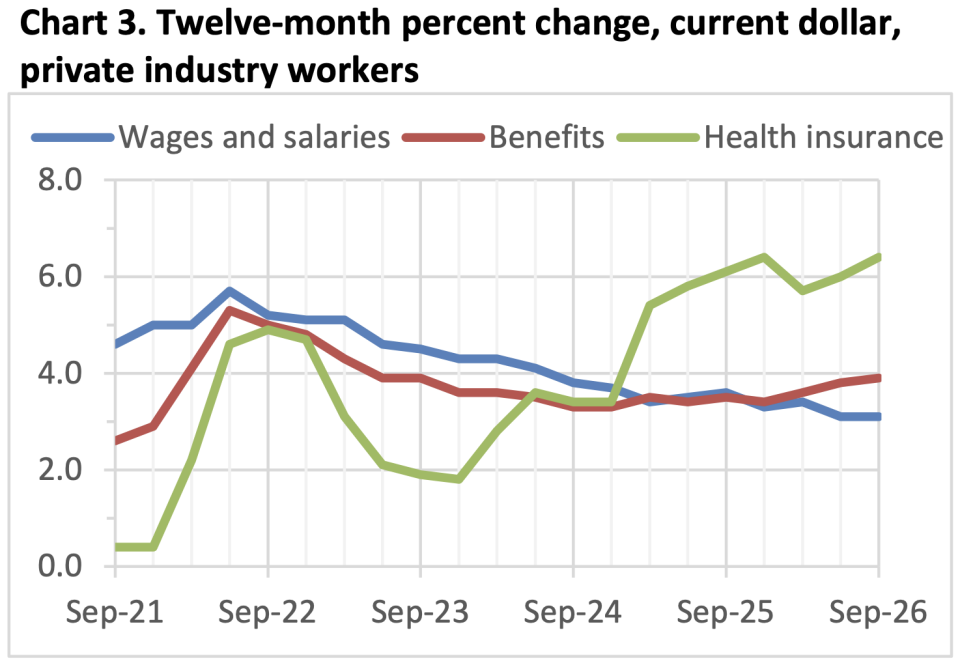
- •Wages and salaries grew 3.1% in the third quarter from a year earlier, while employer health insurance contributions rose 6.4%, the fastest growth in 20 years.
- •Economist Guy Berger estimates that if employer insurance contributions had grown at 3%, wage growth today would be roughly 0.2 to 0.3 percentage points faster.
- •ACA benchmark premiums will rise 13% in 2027 to an average of $704 per month for a 40-year-old on a mid-tier plan, following a 26% increase in 2026.
- •Enrollment in ACA plans dropped 12% year over year to about 19.2 million as of February, with healthier people leaving and a sicker remaining pool pushing premiums higher.
- •Insurers are retreating from the ACA marketplace, with 31 state-level exits compared with only eight new entrants as of late October, reducing consumer choices.
Open enrollment season for health care plans is set to begin, and many Americans may be in for sticker shock when they see how much their premiums will rise. But the damage from rising insurance costs extends beyond household budgets: according to one economist, it is quietly eroding wage gains, preventing workers from securing bigger raises than they would otherwise receive.
Health insurance costs have emerged as a major issue in the midterm election. Alongside higher gas prices and utility bills, they have stoked voter anxiety about the rising cost of living. So despite consistently solid wage gains and a labor market at full employment, consumer confidence gauges have tumbled as overall affordability deteriorates.
Fresh economic data illustrate why workers are not feeling upbeat about more pay. In the third quarter, wages and salaries increased 3.1% from a year ago, according to the employment cost index released Friday by the Bureau of Labor Statistics. The index captures cash pay and benefits together, giving a side-by-side view of the two pieces of total compensation.
At the same time, employer health insurance contributions jumped 6.4%, matching the fastest pace in two decades, according to Guy Berger, senior fellow at the Burning Glass Institute. In a Substack post, he calculated that if employer contributions had instead grown at 3%—the pace of a few years ago—wage growth would be about 0.2 to 0.3 percentage points faster today.
"That's not a lot, but not nothing either," Berger wrote.
Even those incremental gains could make a meaningful difference at a time when many Americans are resorting to buy now, pay later plans to purchase essentials.
Berger added that the data likely understates the squeeze workers are facing, as employer contributions might not be keeping pace with health insurance costs. "In other words, employees are paying a bigger share of premiums," he explained. On top of that, the plans themselves are covering less, forcing workers to pay more expenses out of pocket, he said.
Americans who get health insurance through their employers are not the only ones feeling the pain. Employer plans are the most common source of health coverage for working-age Americans, so that squeeze reaches a broad swath of households. The cost of coverage through Affordable Care Act plans, which mainly serve people buying insurance on their own, has also been surging.
Premiums will rise 13% in 2027, according to health-research nonprofit KFF, which drew on federal data released Friday. That is the second-biggest hike since 2018 and follows a 26% jump in 2026. The latest increase translates to a $704 average monthly premium for a 40-year-old purchasing a mid-tier Obamacare plan; such "benchmark" premiums were $624 in 2026 and $497 in 2025.
While spending on drugs and hospital care is going up, the ACA market has come under particular strain since 2025, because Congress did not renew the enhanced subsidies that were enacted during the pandemic. Those enhanced subsidies lowered the premiums enrollees paid and extended eligibility for financial help to households that previously did not qualify.
As a result, ACA enrollment has dropped by millions as people balked at higher premium expenses. Since most of those who opted out were healthier, those remaining tend to be sicker and drive up premiums. As of February, enrollment in ACA plans had plunged 12% from a year earlier—to around 19.2 million people—and the industry has indicated more have dropped out since then.
Meanwhile, insurers are choosing not to participate in the ACA marketplace, narrowing the choices available to consumers. According to KFF, there were 31 state-level departures by insurers as of late October, versus eight additions.
"Looking ahead to 2027, several insurers have said they expect the market to continue to deteriorate in 2027 as a continued result of the enhanced premium tax credits ending," KFF said on Friday. "Some enrollees who were able to keep coverage in 2026 may no longer be able to make ends meet."
On the employer side, future employment cost index releases will show whether benefit costs keep outpacing pay; on the ACA side, the open enrollment window now underway will show how much coverage—and choice—remains for 2027.
This story was originally featured on Fortune.com.

